 DriveQuest
How Much Should You Budget for a 1-Week Road Trip?
Wondering how much you should budget for a 1-week road trip? A road trip can seem affordable at first, but fuel, hotels, food, tolls, parking, activities, and unexpected expenses can quickly increase the total.
A realistic one-week road trip budget depends on your route, vehicle, number of travelers, accommodation choices, and spending habits. In this guide, you’ll learn how to estimate each major expense and build a budget that gives you enough room without unnecessarily overspending.
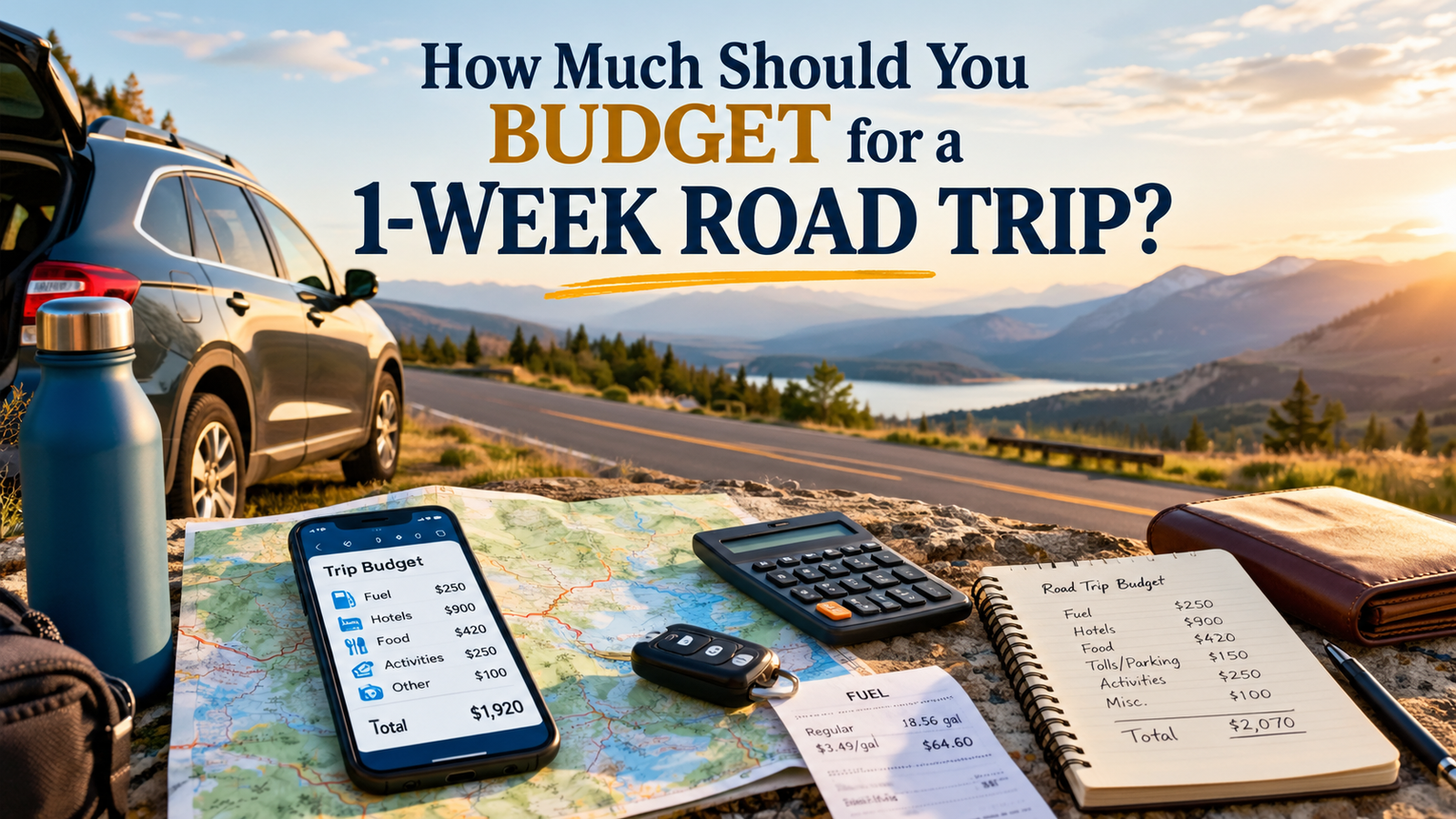
How Much Should You Budget for a 1-Week Road Trip?
For a one-week road trip, a useful starting point is to build your budget around fuel, accommodation, food, activities, tolls, parking, and an emergency buffer.
As an example, a moderate seven-day trip for two people might look like this:
| Expense | Example Budget |
|---|---|
| Fuel | $250 |
| Accommodation | $900 |
| Food | $420 |
| Tolls & Parking | $150 |
| Activities | $250 |
| Miscellaneous | $100 |
| Emergency Buffer | $200 |
| Estimated Total | $2,270 |
This is an example budget, not a universal price. Your actual cost could be much lower if you camp, stay with friends, cook meals, or drive a fuel-efficient vehicle. It could also be considerably higher if you stay in expensive hotels, eat at restaurants frequently, or travel during a busy season.
A good approach is to calculate your own numbers rather than relying on one average road trip cost.
What Does a 1-Week Road Trip Usually Cost?
There isn’t one correct answer because a one-week road trip can be designed in many different ways.
For example, a solo traveler staying in budget accommodation may spend far less than a family of four staying in hotels every night.
Your biggest cost categories are usually:
- Fuel
- Accommodation
- Food and drinks
- Tolls
- Parking
- Activities and attractions
- Vehicle-related costs
- Emergency or miscellaneous spending
Instead of asking only, “How much money do I need?”, think about your trip in terms of cost per day and total trip cost.
If you estimate that your trip will cost $2,100, that’s roughly:
$2,100 ÷ 7 days = $300 per day
That doesn’t mean you’ll spend exactly $300 every day. One day might cost $150 while another day with a hotel, restaurant dinner, and paid attraction could cost $400.
How to Calculate Your Road Trip Fuel Budget
Fuel is one of the easiest expenses to underestimate because travelers sometimes calculate only the distance between major destinations.
Start by estimating your total driving distance, including:
- The drive to your destination
- The return trip
- Detours
- Local sightseeing
- Driving around towns
- Unexpected route changes
Then use this formula:
Fuel needed = Total miles ÷ Vehicle MPG
After that:
Fuel cost = Fuel needed × Fuel price per gallon
Example Fuel Calculation
Suppose your total trip distance is 1,500 miles, and your vehicle gets 30 MPG.
1,500 ÷ 30 = 50 gallons
If you use an example fuel price of $3.50 per gallon:
50 × $3.50 = $175
Your estimated fuel cost would therefore be $175.
The $3.50 figure is simply an example for demonstrating the calculation. Actual fuel prices vary by location and date, so check current prices along your route before leaving.
Don’t Forget Local Driving
A common mistake is budgeting fuel based only on the distance between your home and destination.
If you’re spending several days exploring an area, those extra miles matter.
For example, a trip advertised as a 1,000-mile round trip could easily become 1,200 or 1,300 miles after sightseeing and detours.
Adding a mileage cushion to your calculation can make your budget more realistic.
How Much Should You Budget for Hotels?
Accommodation can become one of the largest expenses during a one-week road trip.
Your total depends on:
- Hotel location
- Room type
- Number of travelers
- Travel season
- Number of nights
- Hotel category
- Taxes and fees
- Parking charges
- Whether breakfast is included
For a seven-day trip, you might need six or seven nights of accommodation, depending on your departure and arrival schedule.
For example, if your average room cost is $130 per night:
$130 × 7 nights = $910
That gives you a basic accommodation estimate of $910 before any additional charges that may apply.
Don’t automatically assume the advertised room rate is your final bill. Taxes, resort fees, parking, or other charges can change the total.
Ways to Reduce Accommodation Costs
You don’t necessarily have to choose the cheapest room available.
Instead, look for ways to reduce the overall cost:
- Compare several hotels in the same area.
- Stay slightly outside expensive tourist districts.
- Look for accommodations with free parking.
- Consider rooms with breakfast when the total value makes sense.
- Avoid changing hotels every night when it creates unnecessary costs.
- Compare the total price rather than only the advertised nightly rate.
Sometimes paying slightly more for a hotel with free parking and breakfast can reduce your overall daily spending.
How Much Should You Budget for Food?
Food is another expense that can vary dramatically.
A one-week road trip can be relatively inexpensive if you prepare some meals yourself. It can become much more expensive if you eat at restaurants for breakfast, lunch, and dinner every day.
For two people, an example food budget might be:
| Food Expense | Example Daily Cost |
|---|---|
| Breakfast | $20 |
| Lunch | $30 |
| Dinner | $50 |
| Snacks & Drinks | $20 |
| Daily Total | $120 |
For seven days:
$120 × 7 = $840
That’s only an example. You could spend considerably less by preparing breakfast, packing lunches, and buying groceries.
A Practical Road Trip Food Strategy
You don’t have to avoid restaurants completely.
A balanced approach could include:
- Grocery-store breakfast items
- Packed snacks
- Water bottles
- Simple road-trip lunches
- A restaurant meal when you reach a destination
- Local food as part of the experience
This gives you some convenience without making every meal a restaurant expense.
Don’t Forget Tolls and Parking
Tolls and parking are easy to overlook when creating a road trip budget.
A route might appear inexpensive until you add:
- Highway tolls
- Bridge tolls
- Downtown parking
- Hotel parking
- Attraction parking
- Airport or tourist-area parking
Before your trip, check your planned route and identify toll roads.
Also check parking arrangements at your hotels and major attractions.
If you expect $100 in tolls and parking, consider budgeting slightly more rather than assuming you’ll hit the exact amount.
How Much Should You Budget for Activities?
Your activities budget depends almost entirely on what you plan to do.
A road trip focused on scenic drives, beaches, hiking, viewpoints, and public parks may have relatively low attraction costs.
A trip involving theme parks, museums, guided tours, concerts, boat trips, or other paid attractions can cost much more.
Create a simple activity list before leaving:
| Activity | Estimated Cost |
|---|---|
| Attraction 1 | $60 |
| Museum | $40 |
| Tour | $100 |
| Parking | $30 |
| Miscellaneous | $50 |
| Total | $280 |
This approach is better than simply adding an arbitrary entertainment amount to your budget.
What About Car Maintenance?
Your road trip budget should also account for vehicle-related expenses, especially if you’re driving an older vehicle or taking a long-distance trip.
Before leaving, check:
- Tire condition
- Tire pressure
- Engine oil
- Coolant
- Brakes
- Lights
- Windshield wipers
- Battery
- Spare tire
- Emergency equipment
Some maintenance expenses aren’t easy to assign to one trip because they are part of normal vehicle ownership.
Still, a long road trip can make existing problems more noticeable, so it’s wise to handle overdue maintenance before departure rather than waiting for a problem on the road.
Should You Include Rental Car Costs?
If you’re renting a vehicle, your budget needs another layer.
Don’t look only at the advertised rental price.
Consider:
- Base rental rate
- Taxes and fees
- Insurance or protection products
- Fuel
- Parking
- Tolls
- Additional driver fees
- Possible mileage charges
- Deposit requirements
For example, a rental advertised at $50 per day may not represent the full cost of using the vehicle for a week.
Calculate the complete rental cost, then add fuel and other road expenses.
Build an Emergency Buffer
One of the most useful parts of a road trip budget is an emergency buffer.
You don’t need to assume something will go wrong. The point is simply to avoid having a minor problem completely disrupt your trip.
Potential unexpected expenses include:
- Vehicle repairs
- Emergency accommodation
- Last-minute route changes
- Extra fuel
- Medical or pharmacy expenses
- Unexpected parking
- Replacing lost or damaged items
Instead of spending your entire planned budget, leave some money untouched.
For example, if your calculated trip cost is $2,000, you might create a total available budget of $2,200 or $2,300.
The exact buffer depends on your financial situation and trip circumstances.
Budget vs Comfortable vs Higher-Spend Road Trip
It can be useful to create three versions of your budget rather than one.
Budget Road Trip
A lower-cost trip might include:
- Fuel-efficient vehicle
- Budget hotels or camping
- Grocery meals
- Free attractions
- Limited paid activities
- Careful route planning
The goal is to control costs without making the trip unnecessarily uncomfortable.
Comfortable Road Trip
A comfortable budget might include:
- Mid-range hotels
- A mixture of groceries and restaurants
- Several paid attractions
- Convenient parking
- More flexibility for unexpected expenses
This can be a useful middle ground for travelers who want comfort without spending freely.
Higher-Spend Road Trip
A higher-spend trip could involve:
- Premium hotels
- Frequent restaurant meals
- More paid activities
- Longer detours
- Expensive tourist destinations
- Higher vehicle or rental costs
The important point is that a larger budget doesn’t automatically make a trip better. It simply gives you more spending flexibility.
How to Create Your Own 1-Week Road Trip Budget
Here’s a simple process you can reuse for almost any road trip.
Step 1: Calculate Your Total Distance
Add the complete driving route, including the return trip and expected local driving.
Step 2: Calculate Fuel
Use:
Total miles ÷ MPG = Estimated gallons
Then:
Estimated gallons × fuel price = Estimated fuel cost
Step 3: Calculate Accommodation
Multiply your expected nightly cost by the number of nights.
Remember to consider taxes, parking, and other applicable fees.
Step 4: Estimate Food
Create a realistic daily food allowance and multiply it by seven.
If you plan to cook some meals, reduce the restaurant portion and add an estimated grocery cost.
Step 5: Add Tolls and Parking
Check your route and major destinations for likely toll and parking expenses.
Step 6: Add Activities
List the attractions you actually plan to visit and estimate their costs.
Step 7: Add an Emergency Buffer
Keep additional money available for unexpected expenses.
Step 8: Add Everything Together
Your basic formula is:
Total road trip budget = Fuel + Accommodation + Food + Tolls + Parking + Activities + Vehicle costs + Miscellaneous + Emergency buffer
This gives you a much more realistic estimate than simply choosing a daily spending number.
Sample 1-Week Road Trip Budget for Two People
Here’s another example to show how the pieces can fit together:
| Expense | Estimated Cost |
|---|---|
| Fuel | $250 |
| Accommodation | $900 |
| Food | $420 |
| Tolls | $75 |
| Parking | $75 |
| Activities | $250 |
| Miscellaneous | $100 |
| Emergency Buffer | $200 |
| Total | $2,270 |
For two people:
$2,270 ÷ 2 = $1,135 per person
Again, these are illustrative figures, not guaranteed road trip prices.
Your actual budget could be very different depending on distance, destination, hotel rates, vehicle efficiency, fuel prices, and personal spending.
7 Ways to Save Money on a 1-Week Road Trip
You don’t need extreme travel hacks to reduce your road trip costs.
1. Compare Fuel Prices
Fuel prices can vary between locations, so compare prices along your route when practical.
Avoid making a long detour just to save a small amount of money.
2. Pack Snacks and Drinks
Buying snacks at convenience stores throughout the trip can add up quickly.
Pack practical items before you leave and refill water bottles when possible.
3. Plan Your Route Carefully
Unnecessary detours mean additional fuel, driving time, and potentially extra accommodation costs.
A simple route plan can prevent many avoidable expenses.
4. Compare the Full Hotel Cost
Don’t compare hotels based only on the nightly rate.
Consider parking, breakfast, taxes, and other applicable charges.
5. Mix Free and Paid Activities
You don’t need a paid attraction every day.
Scenic viewpoints, hiking areas, beaches, parks, and self-guided sightseeing can provide plenty to do without a large activity bill.
6. Watch Your Daily Spending
A $10 or $15 purchase may not seem important.
But several small purchases every day can create a surprisingly large expense by the end of the week.
7. Keep an Emergency Fund Separate
Don’t treat your emergency buffer as spending money.
Keeping it separate helps protect your main trip budget if something unexpected happens.
Common Road Trip Budgeting Mistakes
Budgeting Only for Fuel
Fuel is important, but it is rarely the only road trip expense.
Accommodation, food, parking, tolls, and activities can easily become major parts of the total.
Forgetting the Return Trip
Always calculate the complete driving distance.
A one-way estimate can make your fuel budget look much smaller than it really is.
Underestimating Food
Restaurant meals, drinks, coffee, snacks, and convenience-store purchases can quickly add up.
Create a realistic daily food allowance before leaving.
Ignoring Parking
Parking can be particularly important in cities and popular tourist areas.
Check hotel and attraction parking before finalizing your budget.
Spending Your Entire Budget
If your calculated budget is $2,000, don’t plan to arrive home with exactly $0 available.
An emergency buffer gives you room to deal with unexpected costs.
Forgetting Vehicle Preparation
A basic vehicle inspection before a long trip can help you identify maintenance issues before you’re far from home.
FAQs About Budgeting for a 1-Week Road Trip
Final Thoughts
Knowing how much you should budget for a 1-week road trip becomes much easier when you stop looking for one universal number and calculate the actual costs of your trip.
Start with your total mileage, estimate fuel, price your accommodation, plan your food spending, check tolls and parking, add activities, and then leave room for unexpected expenses.
Before you leave, take a few minutes to review your route, confirm major bookings and costs, check your vehicle, and make sure your emergency buffer is still available. A realistic budget gives you something more valuable than a low number: the confidence to enjoy the road without constantly worrying about what you’re spending.