 DriveQuest
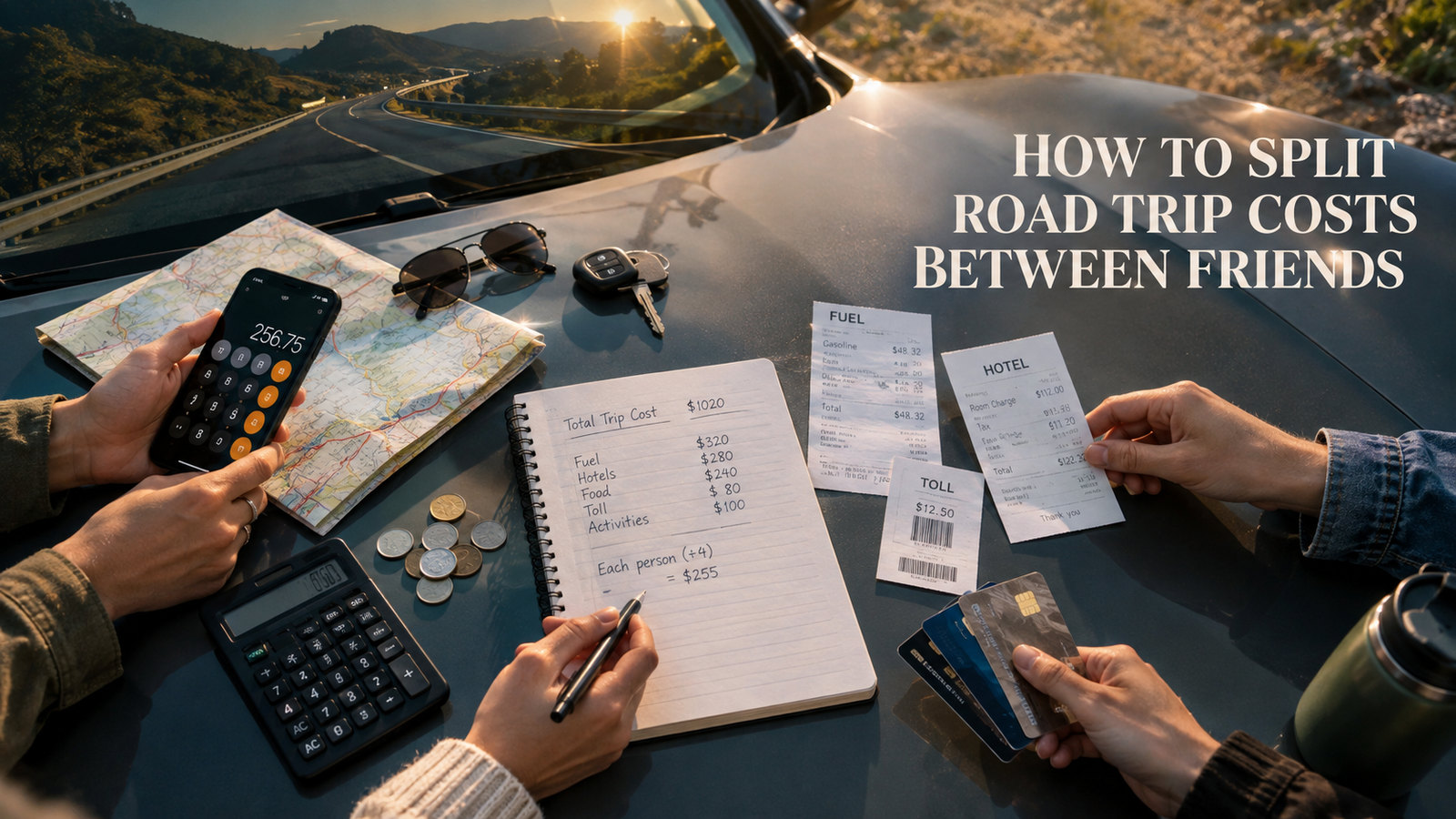
How to Split Road Trip Costs Between Friends: A Fair & Easy Guide
A road trip with friends can be one of the most affordable ways to travel, but money can get awkward fast when nobody agrees on who should pay for what.
Fuel, hotels, food, tolls, parking, rental cars, and unexpected expenses can add up quickly. The easiest way to avoid arguments is to agree on a simple cost-sharing system before you leave.
In this guide, you’ll learn how to split road trip costs between friends, which expenses should be shared equally, which should be divided differently, and how to handle situations where one person spends more than everyone else.
How to Split Road Trip Costs Between Friends
The simplest method is to add up the shared road trip expenses and divide them among the people who benefit from those expenses.
For example, if four friends spend:
- $240 on fuel
- $600 on hotels
- $160 on tolls and parking
- $400 on shared groceries
The total shared cost is:
$240 + $600 + $160 + $400 = $1,400
With four people:
$1,400 ÷ 4 = $350 per person
Each friend would owe $350 for those shared expenses.
This works well when everyone travels together, stays in the same accommodation, and shares most of the trip costs.
However, not every expense should automatically be divided four ways.
Which Road Trip Costs Should Be Split?
Before calculating everyone’s share, separate expenses into three groups:
- Shared expenses
- Personal expenses
- Expenses that should be divided based on usage
This small step makes the entire process much easier.
Shared Expenses
These are usually divided equally among everyone participating in the trip.
Examples include:
- Fuel
- Hotel rooms
- Tolls
- Parking
- Rental car
- Shared groceries
- Campsite fees
- Shared road-trip supplies
If everyone benefits equally, splitting the cost equally is usually straightforward.
Personal Expenses
Personal spending should generally stay with the person who made the purchase.
Examples include:
- Alcohol or specialty drinks
- Personal shopping
- Souvenirs
- Individual activities
- Personal meals
- Optional attractions
- Clothing
- Personal travel gear
If one friend spends $80 shopping at a tourist destination, there’s usually no reason for the other three friends to contribute.
Usage-Based Expenses
Some costs are more complicated because not everyone uses them equally.
For example, imagine five friends are traveling together, but only three people share a particular paid attraction.
Instead of dividing that attraction among all five people, divide it between the three people who participated.
The same idea can apply to food, activities, or separate hotel arrangements.
The Easiest Road Trip Cost-Splitting Method
For most friend groups, I recommend keeping the system simple.
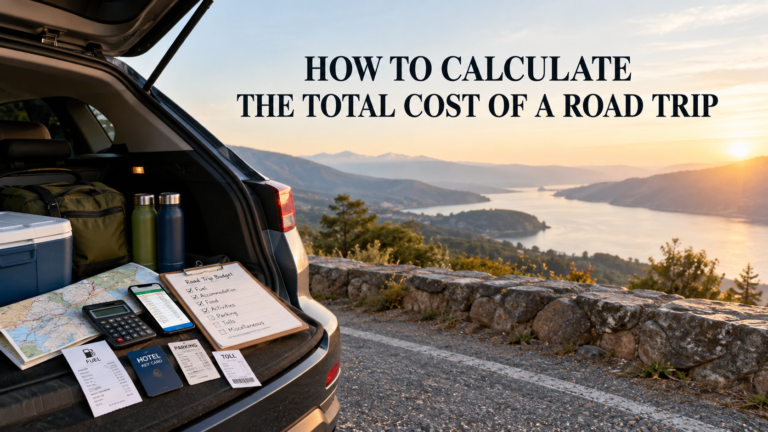
Step 1: Create a Shared Expense List
Before the trip, create a list of expenses you expect to share.
For example:
| Expense | Estimated Cost | Split Between |
|---|---|---|
| Fuel | $300 | 4 people |
| Hotels | $720 | 4 people |
| Tolls | $80 | 4 people |
| Parking | $60 | 4 people |
| Groceries | $240 | 4 people |
| Shared activities | $200 | 4 people |
| Total | $1,600 |
If four people are sharing everything:
$1,600 ÷ 4 = $400 per person
This gives everyone a clear starting budget.
Step 2: Decide Who Pays Up Front
One person does not necessarily need to pay for everything.
You might divide responsibilities:
- Friend A pays for fuel
- Friend B pays for hotels
- Friend C pays for groceries
- Friend D pays for tolls and parking
At the end of the trip, compare what everyone actually paid.
If one person paid more than their fair share, the others can reimburse them.
Step 3: Track Actual Costs
Don’t rely on memory.
Keep receipts, screenshots, or digital records for shared expenses. A simple spreadsheet or shared expense-tracking app can make the process much easier.
Record:
- Who paid
- What they paid for
- Amount
- Date
- Who should share the expense
This is especially useful on longer road trips where dozens of small purchases can accumulate.
How to Split Fuel Costs on a Road Trip
Fuel is often one of the biggest shared expenses.
A basic fuel calculation is:
Fuel needed = Total miles ÷ Vehicle MPG
Then:
Fuel cost = Fuel needed × Price per gallon
Example
Suppose your road trip is 1,200 miles and the vehicle averages 30 MPG.
1,200 ÷ 30 = 40 gallons
If fuel happens to cost $3.50 per gallon:
40 × $3.50 = $140
So the estimated fuel cost is $140.
With four friends:
$140 ÷ 4 = $35 per person
The actual amount will vary because fuel prices, traffic, driving conditions, vehicle load, and real-world fuel economy can differ from estimates.
Also make sure your mileage includes the return trip and local driving, not just the distance between your starting point and destination.
Should the Driver Pay Less for Fuel?
This depends on the situation.
If one friend provides their personal car for the entire trip, splitting fuel equally may not fully reflect their costs. The owner is also providing the vehicle and taking on wear and tear.
Some groups handle this by:
- Splitting fuel equally
- Splitting fuel and tolls equally
- Having passengers contribute extra toward vehicle-related costs
- Agreeing on a separate contribution for the car
There isn’t one universal formula that works for every group.
The important part is agreeing on the arrangement before the trip begins.
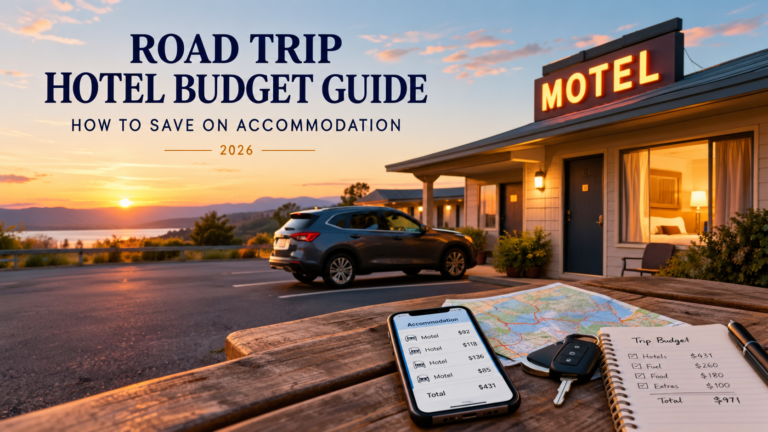
Should You Split Hotel Costs Equally?
Hotel costs can usually be divided equally when everyone gets roughly the same accommodation.
For example, four friends book two rooms for $800 total.
$800 ÷ 4 = $200 per person
But equal splitting becomes less straightforward when sleeping arrangements are different.
Suppose one friend gets a private room while two others share a room.
A simple four-way split might feel unfair because everyone isn’t receiving the same accommodation.
You could instead agree on different shares before booking.
For example:
| Traveler | Accommodation Share |
|---|---|
| Friend A — private room | $300 |
| Friend B — shared room | $200 |
| Friend C — shared room | $200 |
| Friend D — shared room | $100 |
The exact amounts should be agreed upon based on the actual accommodation arrangement.
The key is to discuss the difference before anyone books, rather than arguing about it afterward.
How to Split Food Costs on a Road Trip
Food is one of the easiest expenses to mishandle.
Not everyone eats the same amount, orders the same meals, or wants the same restaurants.
A practical system is to separate shared food from personal food.
Shared Food
Split these equally if everyone uses them:
- Bottled water
- Snacks
- Coffee supplies
- Bread
- Fruit
- Breakfast groceries
- Sandwich ingredients
- Ice
- Shared drinks
Personal Food
Let each person pay for:
- Restaurant meals they order individually
- Specialty drinks
- Desserts
- Expensive add-ons
- Food someone doesn’t want to share
If your group regularly eats at restaurants, paying individually may be simpler than trying to split every receipt equally.
How to Split Tolls and Parking
Tolls and parking are usually easy to divide.
If four friends pay $60 in tolls:
$60 ÷ 4 = $15 per person
If parking costs another $40:
$40 ÷ 4 = $10 per person
Total for each person:
$15 + $10 = $25
Keep these expenses in your shared trip budget so they don’t get forgotten.
What About Rental Car Costs?
If you’re renting a car specifically for the road trip, the rental cost is normally a shared expense.
But don’t forget the other costs associated with the rental.
Your total rental-car budget may include:
- Base rental price
- Taxes and fees
- Insurance or protection products
- Fuel
- Tolls
- Parking
- Additional driver fees, if applicable
For example:
| Rental Expense | Cost |
|---|---|
| Rental | $500 |
| Taxes & fees | $100 |
| Fuel | $240 |
| Tolls | $60 |
| Parking | $100 |
| Total | $1,000 |
With four travelers:
$1,000 ÷ 4 = $250 per person
Actual rental costs vary significantly by location, dates, vehicle type, rental company, and selected options, so check the final booking price rather than budgeting from the advertised base rate alone.
What If One Friend Joins for Only Part of the Trip?
This is where equal splitting can become unfair.
Imagine three friends travel for seven days, but a fourth friend joins for only three days.
You could divide expenses based on who actually benefited from them.
For example:
- Fuel used during the entire trip: divide according to the agreed travel arrangement
- Hotel rooms: divide based on the nights each person stayed
- Shared groceries: divide based on participation
- Personal meals: pay individually
- Activities: pay only if you participated
There’s no need to force every expense into one formula.
Split each expense according to who actually used or benefited from it.
A Simple Road Trip Cost-Splitting Example
Let’s say four friends take a five-day road trip.
Their shared expenses are:
| Expense | Total |
|---|---|
| Fuel | $280 |
| Hotels | $800 |
| Tolls | $70 |
| Parking | $50 |
| Shared groceries | $200 |
| Shared Total | $1,400 |
Four people share these costs:
$1,400 ÷ 4 = $350 per person
Now imagine:
- Alex paid $500
- Ben paid $300
- Chris paid $400
- Dana paid $200
Total paid:
$500 + $300 + $400 + $200 = $1,400
Each person’s fair share is $350.
So:
- Alex paid $150 extra
- Ben owes $50
- Chris paid $50 extra
- Dana owes $150
The group needs to settle the difference so everyone ultimately contributes $350.
This is much easier than trying to remember who bought what several weeks later.
Should You Use a Road Trip Expense App?
You can, especially for larger groups.
An expense-sharing app or shared spreadsheet can help track:
- Fuel purchases
- Hotels
- Food
- Tolls
- Parking
- Activities
- Other shared expenses
For a small trip, a simple phone note or spreadsheet may be enough.
The tool matters less than recording expenses consistently.
Settle Money During the Trip Instead of Waiting
Waiting until the final day can create a surprisingly large balance.
If one person pays for three hotel nights, another pays for fuel, and someone else buys groceries, one traveler could end up fronting hundreds of dollars.
A better approach is to review expenses every day or every couple of days.
For example:
Day 1: Record expenses
Day 2: Add new purchases
Day 3: Check everyone’s running balance
Final day: Make one final settlement
This keeps the numbers manageable.
How Much Money Should Each Person Budget?
Don’t budget only for the shared expenses.
Each traveler should have money available for personal spending and unexpected costs.
A basic road trip budget might look like this:
| Category | Example Per-Person Budget |
|---|---|
| Shared fuel | $75 |
| Hotels | $200 |
| Tolls & parking | $40 |
| Shared groceries | $60 |
| Activities | $75 |
| Personal food | $100 |
| Personal spending | $75 |
| Emergency buffer | $100 |
| Example Total | $725 |
These are illustrative amounts, not universal prices. Your actual budget depends on distance, destination, hotel prices, vehicle, fuel prices, number of travelers, activities, and personal spending habits.
Common Road Trip Cost-Splitting Mistakes
1. Agreeing on the System After the Trip
This is one of the easiest ways to create tension.
Discuss the payment system before leaving.
2. Splitting Every Expense Equally
Equal splitting is convenient, but it isn’t always fair.
Personal purchases and optional activities should generally stay with the person who chose them.
3. Forgetting Local Driving
People often calculate fuel based only on the main route.
Remember to account for:
- Detours
- Restaurant trips
- Sightseeing
- Hotel transfers
- Driving around the destination
4. Ignoring Small Expenses
A $5 parking fee doesn’t seem important.
But ten small expenses can become $50 or more.
Track them anyway.
5. Forgetting an Emergency Buffer
A flat budget leaves little room for unexpected costs.
Keep some extra money available for things such as an unexpected hotel night, vehicle issue, or other necessary expense.
6. Letting One Person Front Every Expense
It’s convenient at first, but it can put unnecessary pressure on one traveler.
Share the payment responsibility when practical.
7. Not Discussing Different Spending Habits
One friend may prefer budget hotels and cheap meals while another wants nicer restaurants and activities.
Talk about the expected spending level before booking anything.
Tips for Keeping Road Trip Money Fair and Stress-Free
A few simple rules can prevent most money-related problems.
Agree on These Things Before Leaving
Decide:
- Which expenses are shared
- Which expenses are personal
- How fuel will be divided
- How hotel costs will be handled
- Who pays for the rental car
- How restaurant meals will be paid
- How optional activities will be handled
- How unexpected expenses will be divided
- When everyone will settle their balance
Keep a Shared Budget
Create one simple document containing:
Estimated cost → Actual cost → Person who paid → Each person’s share
This gives everyone visibility into the budget.
Talk About Money Early
It can feel uncomfortable to discuss money with friends, but it is usually much easier before the trip than after someone has already spent hundreds of dollars.
A five-minute conversation before departure can prevent a much bigger disagreement later.
Frequently Asked Questions
Final Thoughts
Knowing how to split road trip costs between friends doesn’t require a complicated budgeting system.
The most important thing is to agree on the rules before the trip, separate shared expenses from personal spending, and keep track of who pays for what.
Start by estimating your fuel, accommodation, tolls, parking, food, and activity costs. Then divide the appropriate expenses among the people who actually share them and leave some room in the budget for unexpected costs.
A simple, transparent system lets everyone focus on the road trip instead of worrying about who owes whom money.