 DriveQuest
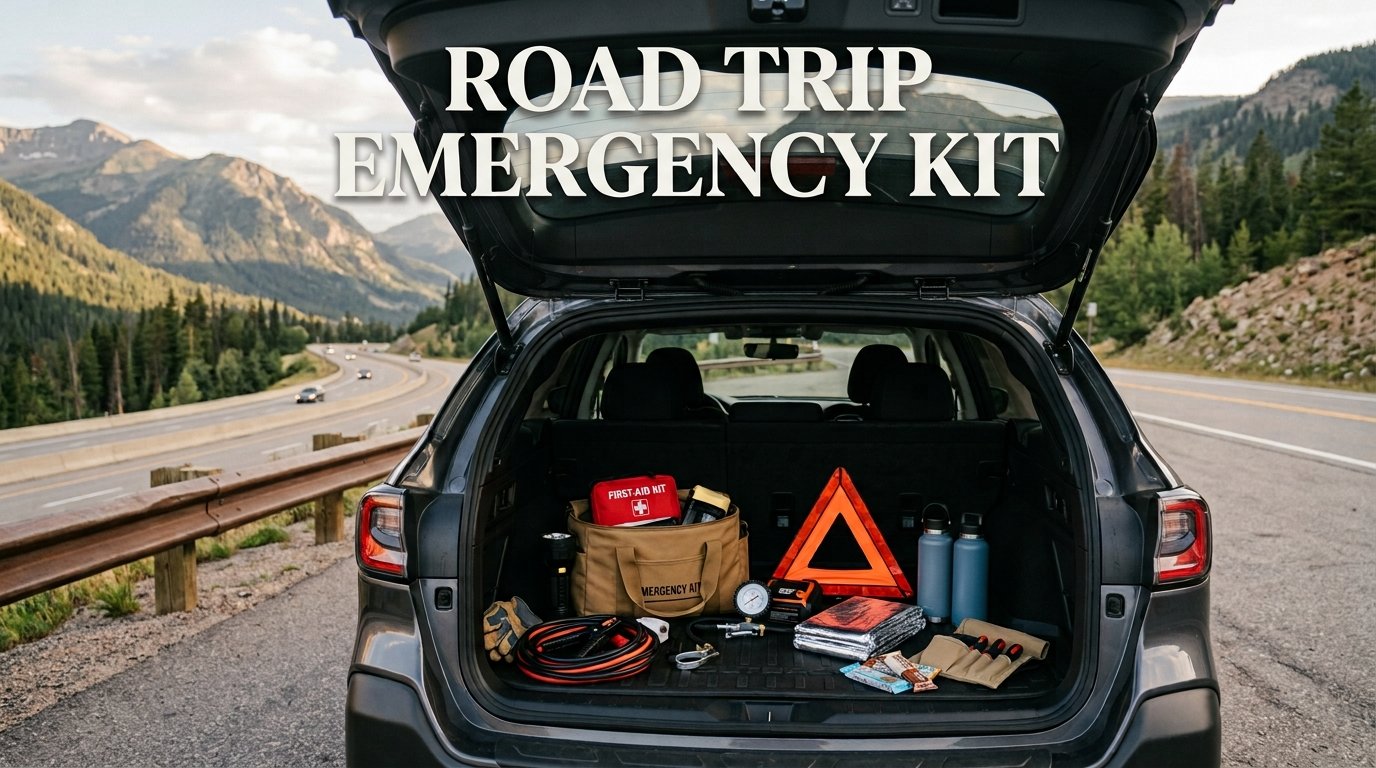
Road Trip Emergency Kit: Essential Items to Keep in Your Car
A road trip can be exciting until a flat tire, dead battery, bad weather, or unexpected delay turns a simple drive into a stressful situation.
That’s why a road trip emergency kit is worth preparing before you leave. You don’t need to fill your trunk with expensive survival gear. A practical kit with the right basics can help you handle minor problems while you arrange professional help.
In this guide, you’ll learn exactly what to keep in a road trip emergency kit, what is useful for different driving conditions, what you should keep accessible, and which common mistakes to avoid.
What Is a Road Trip Emergency Kit?
A road trip emergency kit is a collection of supplies kept in your vehicle for unexpected situations such as a flat tire, dead battery, minor injury, bad weather, or an unplanned roadside delay.
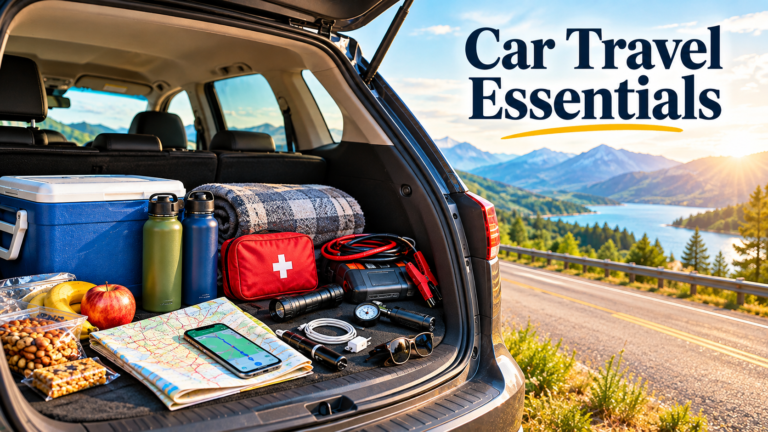
The National Highway Traffic Safety Administration (NHTSA) recommends carrying items such as a phone and charger, first-aid kit, flashlight, jumper cables, tire-pressure gauge, jack, basic repair tools, food, water, medicines, maps, and emergency blankets.
The exact contents should depend on your:
- Vehicle
- Route
- Weather
- Trip length
- Number of passengers
- Driving experience
- Distance from towns or services
A short highway trip and a multi-day drive through remote areas shouldn’t necessarily have identical kits.
Road Trip Emergency Kit Checklist
If you want a simple starting point, use this checklist.
| Emergency Item | Why You Need It |
|---|---|
| Cell phone | Calling for help |
| Car charger | Keeping your phone powered |
| Power bank | Backup charging |
| Flashlight | Seeing at night |
| Extra batteries | Backup lighting |
| First-aid kit | Minor injuries |
| Jumper cables | Dead battery assistance |
| Tire-pressure gauge | Checking tire pressure |
| Spare tire | Replacing a damaged tire |
| Car jack | Lifting the vehicle |
| Lug wrench | Removing wheel nuts |
| Work gloves | Protecting your hands |
| Reflective warning device | Making your vehicle more visible |
| Basic tools | Minor roadside problems |
| Duct tape | Temporary repairs |
| Drinking water | Hydration |
| Nonperishable snacks | Food during delays |
| Emergency blanket | Warmth |
| Paper towels | Cleaning and small spills |
| Extra clothing | Weather or spills |
| Windshield washer fluid | Maintaining visibility |
| Basic medicines | Personal needs |
| Paper map | Backup navigation |
You don’t necessarily need to buy everything separately. Some items may already be included with your vehicle or an existing roadside assistance kit.
1. Keep a Fully Charged Phone and Charger
Your phone is arguably one of the most useful items in your emergency kit because it can help you contact roadside assistance, emergency services, family members, or your accommodation.
Keep a car charger in the vehicle rather than relying only on your phone battery.
A small power bank is also useful because your car may not always be running when you need to make a call.
Don’t forget offline information
Cell service isn’t guaranteed everywhere.
Before a long trip, consider downloading offline maps and saving important addresses, booking information, and emergency contacts to your phone.
A paper map can also provide a useful backup. NHTSA specifically includes maps among its suggested roadside emergency supplies.
2. Carry a Proper First-Aid Kit
A basic first-aid kit is useful for small cuts, scrapes, blisters, or other minor problems that can happen during a long trip.
A practical kit might include:
- Adhesive bandages
- Gauze
- Medical tape
- Antiseptic wipes
- Disposable gloves
- Small scissors
- Tweezers
- Pain-relief medicine you normally use
- Personal medications
- Instant cold pack
Check the kit before each major trip and replace anything that has expired or been used.
For prescription medications, keep enough for your trip according to your normal medical needs rather than assuming you can easily replace them along the route.
3. Pack a Flashlight
A flashlight becomes extremely useful when something goes wrong after dark.
For example, checking a tire beside a poorly lit road is much easier with a proper flashlight than with your phone.
A good road trip setup includes:
- LED flashlight
- Spare batteries
- Small headlamp if available
Keep the flashlight somewhere you can reach without emptying the trunk.
4. Prepare for a Flat Tire
A flat tire is one of the most common roadside problems travelers should prepare for.
Your vehicle should have the equipment required to change a tire, if it is designed to be changed by the driver.
Check that you have:
- Spare tire
- Car jack
- Lug wrench
- Tire-pressure gauge
- Work gloves
- Flashlight
- Wheel wedges/chocks where appropriate
NHTSA recommends checking tire condition and pressure before long trips and making sure the vehicle has a spare tire and jack kit.
Check your spare before the trip
Don’t assume the spare tire is ready simply because it is sitting in the trunk.
Check its condition and pressure according to your vehicle manufacturer’s instructions.
Some modern vehicles don’t have a traditional spare tire, so understand what your particular vehicle provides before leaving.
5. Add Jumper Cables or a Suitable Battery Starter
A dead battery can leave you stranded even when the rest of your car is perfectly fine.
Traditional jumper cables can help if another vehicle is available and you know how to use them correctly.
You can also consider a portable jump starter designed for your vehicle.
Before using either option, check your owner’s manual. Some vehicles have specific procedures or restrictions for jump-starting.
6. Keep Reflective Warning Equipment
Visibility matters when your vehicle is stopped on or near a roadway.
Depending on local requirements and your route, useful equipment can include:
- Reflective warning triangles
- Roadside flares where appropriate
- High-visibility vest
- Emergency markers
- Reflective flashlight
NHTSA includes warning devices such as flares and a white flag in its roadside kit recommendations.
Important: Never place yourself in an unsafe position simply to set up roadside equipment. If you’re stopped somewhere dangerous, getting yourself and your passengers to a safer location can be more important than attempting a roadside repair.
7. Pack Water and Nonperishable Food
A breakdown that should take 20 minutes can sometimes turn into a much longer delay.
Keep some drinking water and easy-to-store food in your vehicle.
Good options include:
- Granola bars
- Crackers
- Nuts
- Dried fruit
- Shelf-stable snacks
- Other foods that tolerate your expected temperatures
Avoid packing foods that spoil quickly unless you have a suitable cooler.
Ready.gov also recommends maintaining emergency supplies in vehicles and considering individual needs such as food, water, medications, clothing, and climate.
How much water should you carry?
There’s no single amount that works for every road trip.
Consider:
- Number of passengers
- Trip length
- Weather
- Remote vs populated route
- Availability of services
For a long or remote trip, carrying more water than you would for a short city drive makes sense.
8. Bring Emergency Blankets and Extra Clothing
Weather can change quickly, and an unexpected breakdown may leave you sitting in the vehicle longer than planned.
An emergency blanket takes up very little space and can provide an additional layer of warmth.
You can also pack:
- Light jacket
- Extra socks
- Comfortable shoes
- Gloves
- Hat
- Rain jacket
For winter travel, your emergency supplies should be expanded significantly. NHTSA recommends items such as blankets, winter clothing, a snow shovel, ice scraper, and traction material for appropriate winter conditions.
9. Carry Basic Tools
You don’t need a full mechanic’s toolbox.
A small collection of useful tools can be enough for simple problems:
- Screwdrivers
- Pliers
- Adjustable wrench
- Utility knife
- Duct tape
- Zip ties
- Work gloves
- Small roll of electrical tape
The goal isn’t to perform complicated repairs beside the highway.
These tools are mainly for simple situations or temporary fixes while you arrange professional assistance.
10. Add Tire Repair and Inflation Equipment
A portable tire inflator can be useful for topping up a tire that has lost some pressure.
You can also carry a tire repair kit if your vehicle and tire manufacturer allow its use.
However, a repair kit should not be treated as a permanent solution for every type of tire damage.
If a tire has serious damage, a dangerous location, or a problem you cannot safely address, contact roadside assistance.
11. Keep Extra Windshield Washer Fluid
A dirty windshield can become a visibility problem, particularly when you’re driving through rain, insects, dust, or muddy conditions.
NHTSA includes extra windshield washer fluid among its suggested roadside supplies.
Choose fluid appropriate for your expected climate and vehicle rather than adding random liquids to the washer reservoir.
12. Carry Personal and Family-Specific Supplies
A good road trip emergency kit should be customized to the people actually traveling.
For example, a family with young children may need:
- Extra snacks
- Extra water
- Diapers
- Wipes
- Spare clothing
- Child-specific medications
- Comfort items
Traveling with a pet may require:
- Pet food
- Water
- Bowl
- Leash
- Waste bags
- Any necessary medication
Your emergency kit should support your actual passengers rather than simply following a generic checklist.
13. Don’t Forget Cash and Important Information
Electronic payments are convenient, but carrying a small amount of emergency cash can provide another backup.
You can also keep a secure record of:
- Emergency contacts
- Roadside assistance number
- Insurance information
- Vehicle information
- Accommodation details
- Important medical information
Don’t leave unnecessary sensitive documents openly visible inside the car.
A Simple Road Trip Emergency Kit by Priority
If trunk space is limited, build your kit in layers.
| Priority | Items |
|---|---|
| Essential | Phone, charger, flashlight, first-aid kit, water, food, spare tire equipment |
| Very Useful | Jumper cables, power bank, tire gauge, gloves, warning devices |
| Helpful | Basic tools, duct tape, washer fluid, extra clothing |
| Route-Specific | Snow shovel, ice scraper, traction material, extra blankets |
| Personal | Medications, children’s supplies, pet supplies |
This approach prevents you from buying dozens of items you may never use.
Where Should You Store Your Emergency Kit?
The best kit is not useful if you can’t reach it.
Keep frequently needed items somewhere accessible, such as:
- Glove compartment
- Center console
- Door storage
- A secured trunk organizer
Heavier equipment can remain in the trunk, but avoid burying your emergency supplies underneath every piece of luggage.
If you have to unload half the car just to find your flashlight, the kit isn’t organized effectively.
Also make sure luggage and other cargo are properly secured. NHTSA warns that unsecured cargo can become dangerous during sudden braking or a crash.
Build Your Kit Around the Road Trip
Not every road trip requires the same emergency supplies.
Short highway trip
A basic setup may be enough:
- Phone and charger
- First-aid kit
- Flashlight
- Water
- Snacks
- Tire equipment
- Jumper cables
- Warning device
Long-distance road trip
Consider adding:
- Extra water
- More food
- Power bank
- Extra clothing
- Blankets
- Basic tools
- Paper maps
- Personal medications
Remote road trip
If you’re traveling far from towns or reliable services, preparation becomes even more important.
Consider:
- Additional water
- More food
- Extra warm layers
- Backup navigation
- Tire-inflation equipment
- Appropriate recovery equipment
- More comprehensive first aid supplies
The farther you are from services, the more important it becomes to prepare for a delay rather than assuming help will arrive immediately.
Seasonal Items to Add to Your Emergency Kit
Your kit should change with the weather.
| Season/Condition | Useful Additions |
|---|---|
| Hot weather | Extra water, sun protection, cooling supplies |
| Cold weather | Blankets, warm clothing, gloves |
| Snow/ice | Ice scraper, snow shovel, traction material |
| Rain | Rain jacket, towels, waterproof storage |
| Remote areas | Extra food, water, navigation backup |
NHTSA recommends checking weather and road conditions before traveling and adjusting preparations accordingly.
Don’t Forget Vehicle Preparation
An emergency kit is a backup. It shouldn’t replace basic vehicle maintenance.
Before a long road trip, check:
- Tire pressure
- Tire condition
- Spare tire
- Oil
- Coolant
- Windshield washer fluid
- Lights
- Battery
- Wiper blades
- Brakes
- Belts and hoses
NHTSA recommends checking tire pressure and condition, fluid levels, batteries, cooling systems, and other vehicle components before long trips.
If you’re unsure about your vehicle’s condition, having it inspected before departure can be more useful than adding another gadget to your emergency bag.
How Much Does a Road Trip Emergency Kit Cost?
The cost can vary dramatically depending on what you already own.
You may already have a flashlight, first-aid supplies, phone charger, blankets, and basic tools at home.
A simple approach is to buy only the missing essentials rather than purchasing a large preassembled kit.
| Kit Level | Example Budget |
|---|---|
| Basic DIY kit | $30–$60 |
| More complete kit | $60–$120 |
| Extensive/route-specific setup | $120+ |
These are planning ranges, not fixed market prices. Actual costs depend on brands, equipment quality, vehicle requirements, and where you shop.
For many travelers, building the kit gradually is easier on the budget.
Common Road Trip Emergency Kit Mistakes
1. Buying a kit and never checking it
Supplies can expire, batteries can lose charge, and food can become unusable.
Review your kit before major trips.
2. Forgetting the spare tire
A spare that is damaged or improperly inflated won’t help much when you need it.
3. Packing everything in the trunk
Keep essential emergency supplies accessible.
4. Ignoring the weather
Your summer kit may not be enough for winter mountain driving.
5. Carrying tools you don’t know how to use
A large toolbox doesn’t automatically make you prepared.
Learn how your jack, tire equipment, jump starter, and other important equipment work before leaving.
6. Relying entirely on your phone
Phones are useful, but batteries can die and connectivity can disappear.
That’s why a power bank, offline maps, and basic physical supplies can still be valuable.
7. Treating the emergency kit as a substitute for maintenance
A flashlight and jumper cables won’t fix worn tires or an overdue brake inspection.
Prepare the vehicle first, then prepare the emergency kit.
How to Prepare Your Road Trip Emergency Kit
Use this simple process before departure:
- Check your vehicle’s owner’s manual.
- Inspect your tires and spare.
- Confirm that your jack and lug wrench are available.
- Charge your phone and power bank.
- Check your flashlight and batteries.
- Restock water and nonperishable food.
- Review medications and personal supplies.
- Add weather-specific equipment.
- Download offline maps.
- Store the kit where you can reach it easily.
- Secure your luggage and other cargo.
- Check weather and road conditions before leaving.
This takes much less time than dealing with an avoidable problem after you’re already hundreds of miles from home.
Road Trip Emergency Kit FAQ
Final Thoughts
A Road Trip Emergency Kit: Essential Items to Keep in Your Car doesn’t need to be expensive or complicated.
Start with the basics: communication, lighting, first aid, tire equipment, battery assistance, water, food, weather protection, and a few practical tools. Then customize the kit based on your vehicle, passengers, route, and season.
Before your next road trip, don’t just pack your bags. Check the car, organize your emergency kit, secure your luggage, review the route, and make sure the equipment you carry is actually usable.
A few minutes of preparation can make an unexpected roadside problem much easier to manage.