 DriveQuest
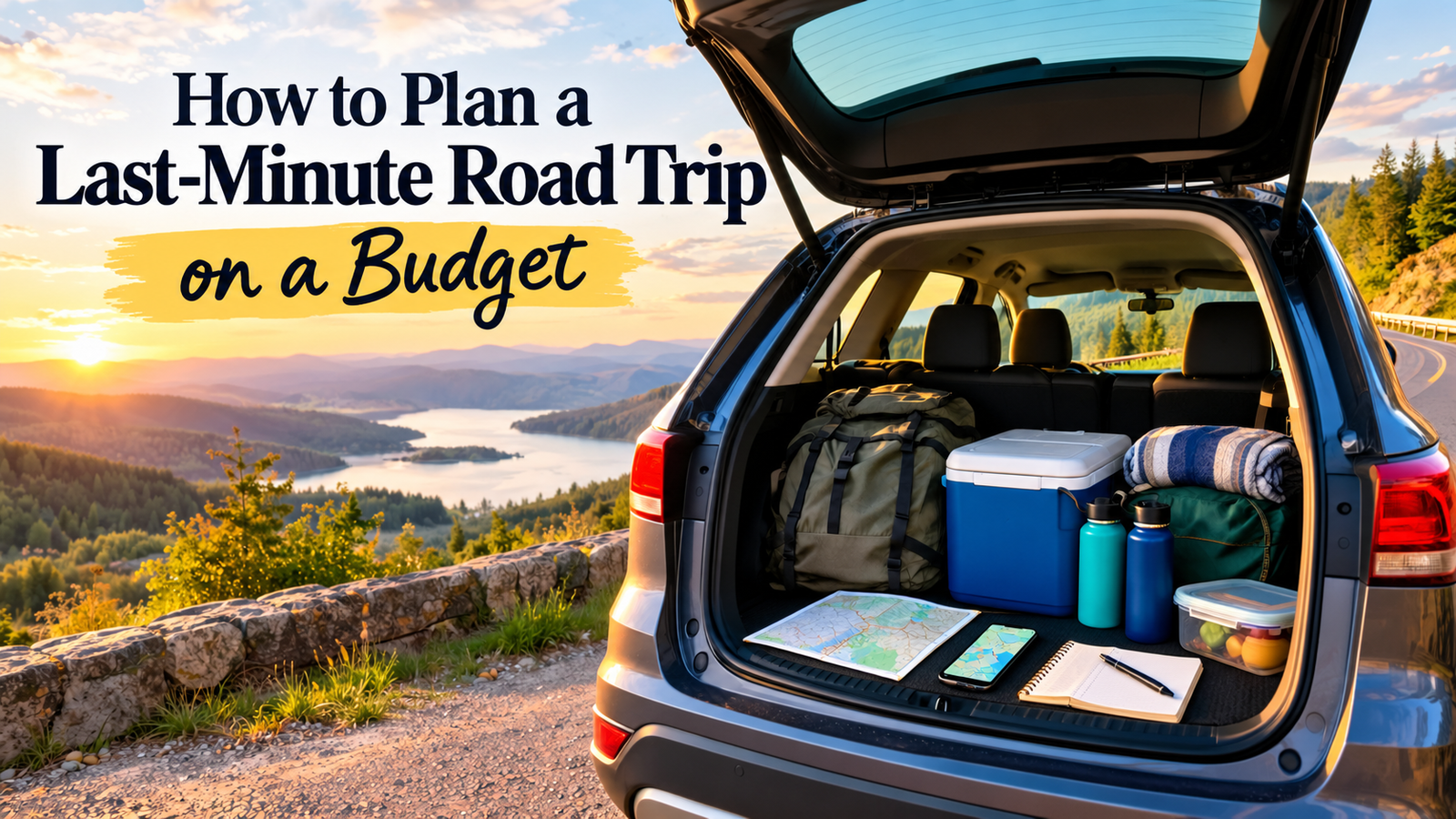
How to Plan a Last-Minute Road Trip on a Budget
A last-minute road trip can sound expensive because you have less time to compare hotels, plan meals, and find the cheapest route. But with a simple plan, you can still get on the road without turning a spontaneous trip into a financial headache.
The key is to control the big expenses first: fuel, accommodation, food, tolls, and activities. You also need enough flexibility to change your destination or overnight stop if prices are too high.
In this guide, you’ll learn how to plan a last-minute road trip on a budget, including how to choose a destination, estimate fuel costs, find affordable accommodation, plan food, avoid unnecessary expenses, and build a realistic emergency buffer.
How to Plan a Last-Minute Road Trip on a Budget
When you have only a day or two to prepare, don’t try to plan every minute of the trip.
Instead, focus on five things:
- Set your total spending limit.
- Choose a realistic destination and route.
- Calculate fuel before leaving.
- Lock down the most important accommodation.
- Keep a cash buffer for unexpected costs.
This approach gives you structure without taking away the spontaneous part of the trip.
A last-minute road trip is also easier to manage when you are willing to adjust your destination. If a hotel or attraction makes the original destination too expensive, look for a nearby town or alternative stop.
Step 1: Set Your Maximum Road Trip Budget First
Before searching for hotels or attractions, decide how much you can actually spend.
For example, suppose you have $600 available for a three-day road trip. You shouldn’t treat the entire $600 as money available for hotels and activities.
A safer starting point might look like this:
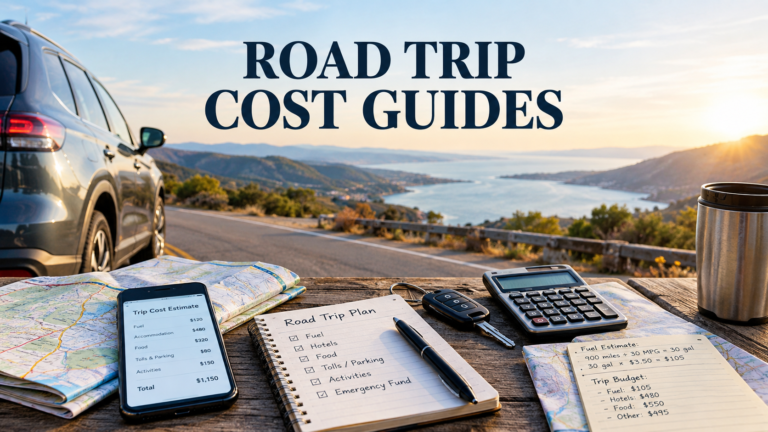
| Expense | Example Budget |
|---|---|
| Fuel | $140 |
| Accommodation | $180 |
| Food | $120 |
| Tolls & parking | $50 |
| Activities | $50 |
| Emergency buffer | $60 |
| Total | $600 |
These are illustrative amounts, not current market prices. Actual costs depend on your vehicle, destination, fuel prices, hotel rates, number of travelers, and travel dates.
The important part is the structure.
If accommodation suddenly costs $250 instead of $180, you can see immediately that something else needs to change.
Use a Simple Budget Rule
Divide your available money into:
- Essential costs: fuel, accommodation, basic food
- Trip costs: parking, tolls, activities
- Emergency money: unexpected repairs, extra hotel night, medical needs, or other surprises
Don’t spend your entire budget before departure.
Step 2: Choose a Destination That Fits Your Budget
When planning at the last minute, the destination itself can determine whether the trip stays affordable.
Instead of asking:
“Where do I want to go?”
Start with:
“Where can I go comfortably within my budget?”
A destination that is 150 miles away may be much easier on your wallet than one that is 500 miles away.
Look at:
- Total driving distance
- Fuel requirements
- Hotel availability
- Parking costs
- Tolls
- Food prices
- Attraction costs
- Weather and road conditions
- Number of nights required
Consider a Nearby Alternative
Suppose your original destination has expensive hotels because of a major event.
Search for accommodation in a nearby town and drive into the destination during the day if the extra driving still makes financial sense.
However, don’t automatically choose the cheapest hotel far away. Extra fuel, parking, and driving time can erase the savings.
Step 3: Calculate Fuel Before You Leave
Fuel is one of the easiest road trip expenses to estimate.
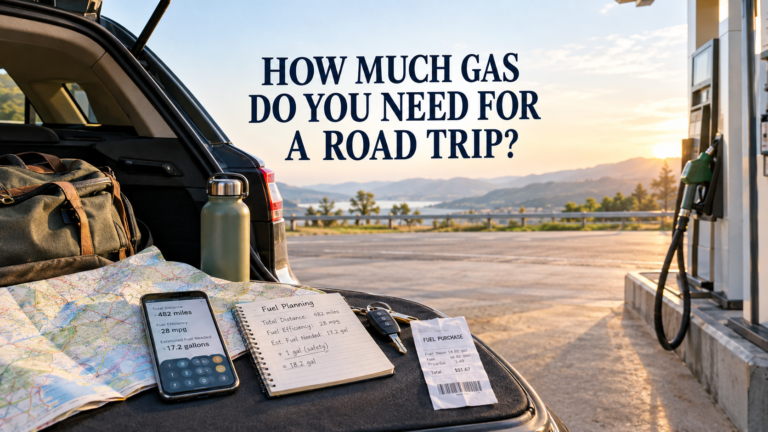
The basic formula is:
Fuel needed = Total miles ÷ Vehicle MPG
Then:
Fuel cost = Fuel needed × Price per gallon
Example Fuel Calculation
Imagine your road trip covers 900 miles in total.
Your vehicle gets 30 MPG, and for this example, fuel costs $3.50 per gallon.
900 ÷ 30 = 30 gallons
Then:
30 × $3.50 = $105
So your estimated fuel cost would be $105.
Again, $3.50 per gallon is only an example. Actual fuel prices vary by location and date.
Don’t Forget the Return Trip
One of the easiest mistakes is calculating only the distance to the destination.
If your destination is 300 miles away, the road trip could involve approximately:
300 miles × 2 = 600 miles round trip
You should also account for local driving after you arrive.
If you expect another 100 miles of sightseeing and local travel, your estimated driving distance becomes:
600 + 100 = 700 miles
That extra driving can make a noticeable difference to the fuel budget.
Step 4: Give Yourself a Little Extra Fuel Budget
Your real-world fuel economy may not exactly match the vehicle’s advertised MPG.
Your vehicle can use more fuel because of:
- Heavy luggage
- Multiple passengers
- Stop-and-go traffic
- Mountain roads
- Strong winds
- Air-conditioning use
- High speeds
- Poor tire pressure
- Frequent short trips
For a last-minute road trip, it’s sensible to leave some room in the fuel budget instead of planning around the absolute minimum.
You don’t need to predict the exact amount of fuel you’ll use. You just want enough flexibility that a few unexpected miles don’t break the budget.
Step 5: Find Accommodation Quickly Without Overpaying
Last-minute accommodation can become one of the biggest road trip expenses.
Start by comparing:
- Hotels
- Motels
- Budget inns
- Vacation rentals
- Campgrounds, where appropriate
- Accommodation slightly outside the main tourist area
Look at the total price, not just the advertised nightly rate.
Check whether the final price includes or adds:
- Taxes
- Parking
- Resort or destination fees
- Cleaning fees
- Extra guest charges
- Cancellation restrictions
A room that appears to cost $90 may cost considerably more at checkout.
Consider One Less Night
Sometimes changing your itinerary can save more money than finding a slightly cheaper room.
For example, instead of staying three nights, you might be able to:
- Leave earlier
- Drive farther on the first day
- Stay two nights
- Return home after breakfast on the third day
Don’t force this if it creates an exhausting or unsafe driving schedule.
A cheaper trip isn’t useful if you have to drive while dangerously tired.
Step 6: Plan Your Food Before You Leave
Food can quietly destroy a road trip budget.
A few inexpensive purchases at a gas station or fast-food restaurant may not seem significant, but several meals and drinks over multiple days can add up quickly.
Before leaving, decide which meals you’ll:
- Pack
- Prepare yourself
- Buy at restaurants
- Buy from grocery stores
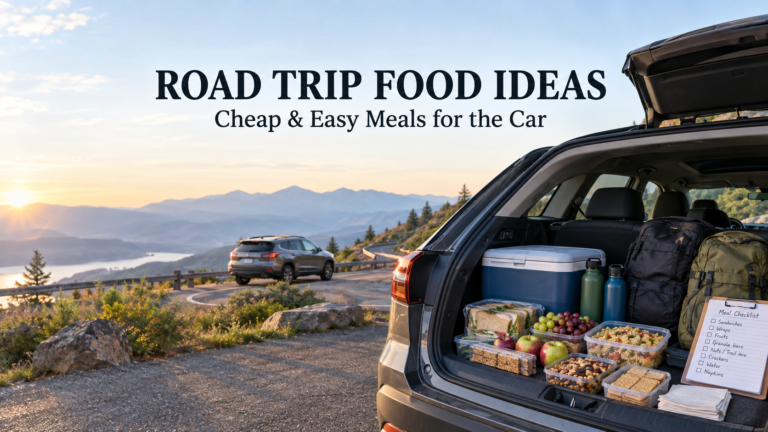
Pack Simple Road Trip Food
Depending on your trip and food-storage options, consider:
- Sandwiches
- Fruit
- Granola bars
- Crackers
- Nuts
- Water
- Simple snacks
- Reusable drinks containers
You don’t have to pack every meal.
Even replacing a few expensive roadside purchases with food you already have can make the trip easier on your budget.
Set a Daily Food Limit
For example, if you have $120 available for food over three days:
$120 ÷ 3 = $40 per day
You can then divide that amount between breakfast, lunch, dinner, and snacks.
The exact amount will depend on your location and eating habits.
Step 7: Check Tolls and Parking Before Departure
Tolls and parking are easy to forget when planning quickly.
Before leaving, check your planned route for toll roads and consider whether an alternative route makes financial sense.
But don’t automatically choose the route with zero tolls.
A toll-free route that adds 100 miles could require much more fuel and several additional hours of driving.
The better comparison is:
Toll route cost = Tolls + fuel
versus
Alternative route cost = Extra fuel + value of extra travel time
You don’t have to assign a dollar value to your time if you don’t want to. Just understand that the cheapest toll option isn’t always the cheapest overall trip.
Parking deserves the same attention.
A hotel with cheap rooms but expensive daily parking may cost more than a slightly pricier hotel with parking included.
Step 8: Choose Free or Low-Cost Activities
A last-minute road trip doesn’t need an expensive attraction every few hours.
Look for activities such as:
- Scenic drives
- Public parks
- Beaches where access is free
- Hiking trails
- Viewpoints
- Historic districts
- Local markets
- Free museums or community events
- Walking tours
- Lakes and picnic areas
Check opening hours and access conditions before you rely on a free attraction.
If your trip is built around one paid attraction, make that the priority and keep the rest of the itinerary inexpensive.
Step 9: Don’t Skip the Vehicle Check
Saving money shouldn’t mean skipping basic vehicle preparation.
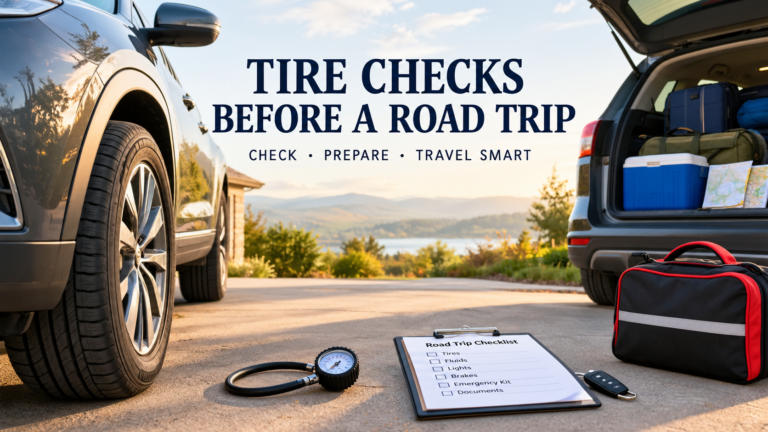
Before a long drive, check the vehicle’s tire pressure, fluids, lights, wipers, battery condition, and other items relevant to your vehicle.
The National Highway Traffic Safety Administration recommends checking vehicle condition before road trips and carrying an emergency roadside kit. It also advises checking weather, traffic, and road conditions before departure.
A basic emergency kit can include:
- Phone and charger
- First-aid supplies
- Flashlight
- Jumper cables
- Tire-pressure gauge
- Water
- Nonperishable food
- Basic tools
- Necessary medication
- Emergency blankets or suitable clothing
NHTSA also provides a vehicle recall lookup using the VIN or license plate, which can be useful before a longer trip.
Step 10: Build a Last-Minute Road Trip Budget
Once you’ve chosen the route and destination, put everything into one simple budget.
Here’s an example for a three-day, two-night road trip:
| Expense | Example Cost |
|---|---|
| Fuel | $105 |
| Hotel: 2 nights | $180 |
| Food | $120 |
| Tolls | $30 |
| Parking | $25 |
| Activities | $50 |
| Miscellaneous | $30 |
| Emergency buffer | $60 |
| Estimated total | $600 |
These figures are examples for budgeting practice rather than a prediction of what a particular trip will cost.
Your actual total could be much lower or higher.
What If Your Budget Is Too High?
Don’t immediately cancel the trip.
Try changing one variable at a time.
Option 1: Reduce the driving distance
Choose a closer destination.
Option 2: Reduce accommodation costs
Stay fewer nights or compare nearby towns.
Option 3: Reduce restaurant spending
Pack food and buy groceries.
Option 4: Reduce paid activities
Replace some attractions with free outdoor activities.
Option 5: Change the travel date
If your schedule allows, moving the trip by even one day may change accommodation availability and pricing.
A Quick 24-Hour Last-Minute Road Trip Plan
If you need to leave tomorrow, you don’t need a complicated planning system.
1. Choose the destination
Pick somewhere that fits your maximum driving time and budget.
2. Calculate total mileage
Include:
- Outbound distance
- Return distance
- Local driving
3. Estimate fuel
Use:
Total miles ÷ MPG × fuel price
4. Check accommodation
Compare the total checkout price for your preferred dates.
5. Estimate food
Set a daily food limit and decide what you’ll pack.
6. Check tolls and parking
Look at your route and destination.
7. Set aside emergency money
Don’t treat your emergency buffer as spending money.
8. Check the vehicle
Inspect tires, fluids, lights, fuel level, and other important items.
9. Check the weather and road conditions
NHTSA recommends checking weather, traffic, and road conditions before heading out.
10. Share your route
Let someone you trust know your planned route and expected arrival time, particularly when traveling long distances or through unfamiliar areas.
How Much Emergency Money Should You Keep?
There isn’t one universal emergency amount because the right figure depends on the trip.
A short local road trip may need a smaller buffer than a multi-day trip hundreds of miles from home.
For budgeting purposes, you could create a separate emergency category rather than spending every dollar on planned expenses.
Potential unexpected costs include:
- Flat tire
- Minor vehicle repair
- Extra fuel
- Unexpected accommodation
- Roadside assistance
- Weather-related changes
- Unplanned meals
- Extra parking
The goal isn’t to predict every problem.
It’s to avoid being financially unprepared when something doesn’t go according to plan.
Common Last-Minute Road Trip Budgeting Mistakes
1. Budgeting Only for Fuel
Fuel may be one of the most visible expenses, but accommodation, food, parking, and activities can quickly exceed it.
2. Forgetting the Return Journey
Always budget for the complete trip, not just the drive to your destination.
3. Booking the Cheapest Hotel Without Checking the Total
Taxes, parking, and additional fees can change the final cost.
4. Spending the Emergency Fund
Your emergency money should stay separate from your entertainment budget.
5. Planning Too Many Activities
A packed itinerary can increase admission fees, parking costs, food spending, and fuel consumption.
6. Driving Too Far to Save a Little Money
A cheaper hotel several hours away may not be a bargain once extra fuel and driving time are included.
7. Skipping Vehicle Preparation
A last-minute trip is not a reason to ignore basic safety checks. A small problem before departure can be much easier to address than a breakdown far from home.
8. Forgetting That Prices Change
Fuel, hotels, attractions, and other travel expenses can vary by location, date, demand, and availability.
Last-Minute Road Trip Budget Checklist
Before you leave, make sure you can answer these questions:
- What is my maximum total budget?
- How many miles will I drive?
- What is my vehicle’s realistic MPG?
- How much fuel should I budget for?
- Where will I sleep?
- What is the total accommodation price?
- How much will I spend on food?
- Are there tolls?
- Where will I park?
- Which activities are free or low-cost?
- How much emergency money am I keeping?
- Have I checked the vehicle?
- Have I checked weather and road conditions?
- Does someone know my route and expected arrival time?
If you can answer those questions, you’re already much better prepared for a spontaneous trip.
FAQs
Final Thoughts
Learning how to plan a last-minute road trip on a budget is mostly about making a few good decisions before you start driving.
You don’t need a perfect itinerary.
Start with your total spending limit, calculate the complete driving distance, estimate fuel, find accommodation that fits the budget, plan your food, check tolls and parking, and keep an emergency buffer.
Most importantly, leave some flexibility in your plan. If a destination, hotel, or attraction costs too much, changing one part of the trip can often make the entire road trip work without putting unnecessary pressure on your budget.
Before you turn the key, take a few minutes to check the vehicle, weather, traffic, and route. That small amount of preparation can make a spontaneous road trip much more comfortable and predictable.