 DriveQuest

Family & Solo Road Trips: How to Plan, Budget & Enjoy the Journey
A road trip can be one of the easiest ways to travel on your own terms. You choose the route, decide when to stop, bring what you need, and adjust your plans when something unexpected happens.
But family and solo road trips come with very different planning challenges. A solo traveler may need to think more about personal safety, fatigue, and keeping costs manageable, while a family has to account for passengers, meals, entertainment, luggage, child-friendly stops, and a vehicle that can comfortably handle everyone.
The good news is that neither type of trip needs to be complicated. With a realistic budget, sensible driving schedule, and a little preparation, you can make your road trip much easier to manage.
Family vs. Solo Road Trips: What’s Different?
The basic road trip formula is the same: distance + vehicle + fuel + food + accommodation + activities.
What changes is how those costs and responsibilities are distributed.
| Factor | Family Road Trip | Solo Road Trip |
|---|---|---|
| Fuel | Shared across several travelers | Paid by one person |
| Food | Higher total cost but can be shared | Usually easier to control |
| Accommodation | Larger room or multiple beds may be needed | Smaller room or budget lodging may work |
| Driving | More opportunities to share driving | One person handles all driving |
| Stops | Usually more frequent | More flexible |
| Activities | Often multiplied by number of travelers | Usually one admission |
| Luggage | More space required | Easier to pack light |
| Safety planning | Focus on passengers and children | Greater focus on personal safety |
| Schedule | Usually needs more structure | Can be more spontaneous |
There isn’t one universally correct way to plan either trip. The right approach depends on your distance, destination, vehicle, travel dates, and how much comfort you want.
How to Plan a Family Road Trip
Family trips often become stressful when everything is planned around reaching the destination as quickly as possible.
A better strategy is to plan the journey as part of the trip.
1. Choose a Realistic Driving Schedule
Don’t plan your day based only on the number of miles you think you can drive.
Add time for:
- Fuel stops
- Restroom breaks
- Meals
- Traffic
- Construction
- Child breaks
- Unexpected delays
- Stretching and walking
A route that looks manageable on a map can feel completely different when you’re traveling with young children.
If a long driving day is unavoidable, identify several potential stopping points before leaving.
2. Pack for Convenience, Not Just Necessity
A family vehicle can quickly become cluttered.
Instead of putting everything into one large bag, consider using separate bags or containers for:
- Snacks
- Drinks
- Entertainment
- Toiletries
- Emergency supplies
- Children’s clothing
- Electronics and chargers
Keep frequently needed items within easy reach rather than buried under luggage.
3. Plan Food Before You Leave
Food can become one of the easiest areas to overspend on a family road trip.
You don’t need to pack every meal. Even carrying basic snacks and drinks can reduce the number of unplanned stops.
Useful road trip foods can include:
- Fruit
- Granola bars
- Sandwiches
- Crackers
- Nuts, if appropriate for your group
- Water
- Reusable drink bottles
Remember that food safety matters. Perishable foods should be stored and transported appropriately rather than sitting unrefrigerated for hours.
4. Build in Breaks
Children usually don’t care how many miles remain.
A short stop at a rest area, park, scenic viewpoint, or appropriate attraction can make a long driving day much easier.
For families, a slightly longer trip with manageable breaks may be more comfortable than trying to reach the destination as quickly as possible.
How to Plan a Solo Road Trip
Solo road trips offer something families don’t always have: flexibility.
You can leave early, stop whenever you want, change the route, or spend extra time somewhere interesting.
That flexibility still needs boundaries.
1. Avoid Overloading Your Driving Day
When you’re driving alone, you don’t have another driver to take over.
Fatigue can become a serious problem, so don’t treat your estimated arrival time as a deadline.
Plan regular breaks and stop driving when you’re too tired to continue safely.
2. Share Your Basic Itinerary
Before leaving, tell someone you trust:
- Where you’re going
- Your general route
- Where you’re staying
- Your expected arrival time
You don’t necessarily need to provide a minute-by-minute itinerary. A simple plan can make it easier for someone to know when to check in if your plans change.
3. Keep Your Phone and Navigation Ready
Before driving, make sure you know the general route and have your phone charged.
A car charger or power bank can be useful, particularly on longer stretches between major stops.
If your route could include areas with weak cellular coverage, don’t rely entirely on live navigation.
4. Be Selective About Stops
Solo travelers have more freedom, but that doesn’t mean every roadside stop is worth making.
Choose places where you feel comfortable stopping, especially after dark, and avoid making your schedule so tight that you feel pressured to continue driving when you need a break.
How Much Does a Family or Solo Road Trip Cost?
The total cost depends heavily on the trip itself.
A useful starting formula is:
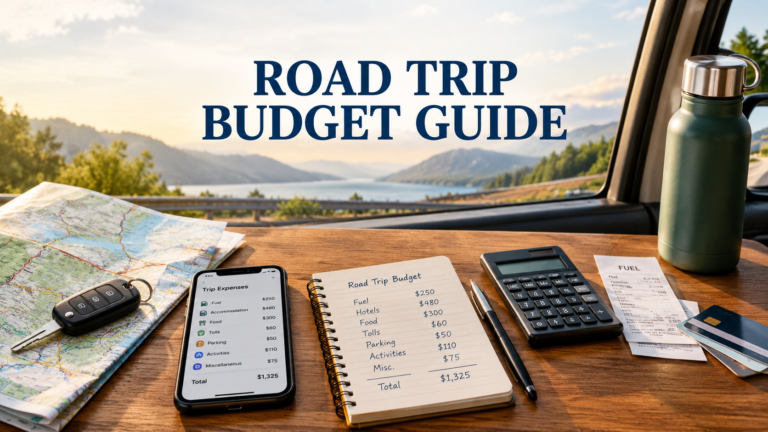
Total Road Trip Cost = Fuel + Accommodation + Food + Tolls + Parking + Activities + Vehicle Costs + Emergency Buffer
For a family trip, some expenses increase with the number of travelers.
For a solo trip, many costs are carried by one person.
Here’s a simple example budget:
| Expense | Family Example | Solo Example |
|---|---|---|
| Fuel | $180 | $180 |
| Accommodation | $450 | $300 |
| Food | $350 | $180 |
| Tolls & Parking | $100 | $80 |
| Activities | $250 | $100 |
| Miscellaneous | $100 | $75 |
| Emergency Buffer | $150 | $100 |
| Example Total | $1,580 | $935 |
These are illustrative planning numbers, not current price estimates. Actual costs can vary significantly based on destination, trip length, fuel prices, hotel rates, number of travelers, activities, and travel dates.
The important part is the structure of the budget, not the exact numbers.
How to Calculate Your Road Trip Fuel Cost
Fuel is one of the easiest road trip expenses to estimate once you know your vehicle’s fuel economy.
For vehicles rated in miles per gallon:
Fuel Needed = Total Miles ÷ MPG
Then:
Fuel Cost = Fuel Needed × Price Per Gallon
Example
Suppose your round trip is 900 miles.
Your vehicle averages 30 MPG.
Fuel needed:
900 ÷ 30 = 30 gallons
If fuel costs $3.50 per gallon, the estimated fuel cost would be:
30 × $3.50 = $105
So your estimated fuel expense would be $105.
The actual amount can differ because highway mileage, traffic, weather, vehicle load, driving speed, tire condition, and driving habits can affect fuel consumption.
Don’t Forget the Return Trip
One common mistake is calculating fuel based on the distance to the destination only.
If you’re returning by car, calculate the entire driving distance, including:
- Outbound distance
- Return distance
- Local driving
- Detours
- Side trips
- Driving around the destination
If your destination is 450 miles away and you return to the starting point, that’s already 900 miles before adding local driving.
Family Road Trip Budgeting Tips
A family trip can become expensive through lots of small purchases rather than one huge expense.
Pack Snacks and Drinks
Buying food at every stop can quickly increase the daily budget.
Pack what makes sense for your group and plan where you’ll buy meals instead of making every food decision while hungry.
Look Beyond the Hotel Room Price
The cheapest room isn’t always the cheapest accommodation overall.
Check whether the property charges separately for things such as parking or whether breakfast is included.
Also consider how many rooms you actually need and whether a larger room or family-friendly accommodation could reduce the need for multiple bookings.
Choose Activities Carefully
You don’t need to pay for an attraction at every stop.
Consider mixing paid activities with:
- Parks
- Scenic viewpoints
- Beaches where appropriate
- Walking areas
- Free public attractions
- Self-guided sightseeing
This gives the family something to do without turning every stop into another expense.
Solo Road Trip Budgeting Tips
Solo travelers have fewer people to split costs with, so accommodation can take up a larger percentage of the budget.
Keep Your Accommodation Flexible
Compare the total cost rather than looking only at the advertised nightly rate.
A slightly more expensive room closer to your route may save fuel, parking costs, and extra driving.
Avoid Unnecessary Detours
A scenic detour can be worthwhile, but every extra mile consumes fuel and time.
Before adding a side trip, ask yourself:
Is this something I genuinely want to see, or am I adding it simply because it’s nearby?
That simple question can help keep a flexible trip from becoming an expensive one.
Use a Daily Spending Limit
Create a rough daily allowance for:
- Food
- Drinks
- Parking
- Attractions
- Small purchases
You can still spend more when something worthwhile comes up, but having a target makes accidental overspending less likely.
A Simple Road Trip Budget Formula
You can create your own budget using four steps.
Step 1: Calculate Fuel
Distance ÷ Vehicle MPG × Fuel Price
For example:
900 miles ÷ 30 MPG × $3.50 = $105
Step 2: Estimate Accommodation
Multiply the expected nightly cost by the number of nights.
For example:
4 nights × $120 = $480
Remember that taxes, parking, and other charges may change the final amount.
Step 3: Estimate Daily Food
If you expect to spend approximately $50 per day:
5 days × $50 = $250
A family will usually need a larger food budget than a solo traveler, but the actual amount depends on how often you eat at restaurants versus preparing or carrying food.
Step 4: Add a Buffer
Don’t make your planned budget equal to the absolute maximum you can afford.
Keep an additional amount available for things such as:
- Unexpected fuel stops
- Minor vehicle issues
- Additional accommodation
- Route changes
- Unplanned meals
- Parking
- Emergency needs
Don’t Forget Vehicle Costs
Road trips put additional mileage on your vehicle.
Your budget should account for more than just gasoline.
Potential vehicle-related expenses include:
- Oil and routine maintenance
- Tire wear
- Tire pressure checks
- Wiper replacement
- Fluids
- Unexpected repairs
You don’t necessarily need to assign a large repair bill to every trip. Instead, recognize that vehicle use has a cost beyond fuel.
If your car is overdue for important maintenance, address that before starting a long trip.
Family and Solo Road Trip Safety
Safety should be part of the planning process rather than an afterthought.
Before Leaving
Check:
- Tire condition and pressure
- Engine oil
- Coolant and other relevant fluids
- Lights
- Brakes
- Spare tire or tire repair equipment
- Emergency supplies
- Phone charging equipment
Also make sure you have the documents and items you normally need for your vehicle and destination.
During the Drive
Never allow the desire to stay on schedule to override safe driving.
Avoid:
- Driving while seriously fatigued
- Excessive speed
- Distracted driving
- Driving under the influence
- Ignoring dangerous weather or road conditions
If conditions become unsafe, changing your schedule is usually simpler than trying to force the original plan.
What to Pack for a Road Trip
A basic checklist can prevent surprisingly annoying problems.
Essential Items
- Driver’s license and required travel documents
- Vehicle registration and insurance information
- Phone and charger
- Navigation option
- Water
- Basic snacks
- First-aid supplies
- Flashlight
- Basic emergency supplies
- Weather-appropriate clothing
Family Additions
Families may also want:
- Children’s entertainment
- Extra clothing
- Wipes and tissues
- Comfort items
- Child-specific travel equipment
- Extra snacks and drinks
Solo Additions
Solo travelers may find these particularly useful:
- Power bank
- Offline navigation information
- Basic roadside emergency supplies
- A simple itinerary shared with someone at home
Don’t pack emergency equipment you don’t know how to use. A small, practical kit is more useful than a vehicle packed with equipment that never gets used.
Common Road Trip Budgeting Mistakes
1. Budgeting Only for Fuel
Fuel is visible, but it isn’t the entire trip cost.
Accommodation, meals, parking, tolls, and activities can easily become significant expenses.
2. Forgetting Local Driving
Your destination isn’t the end of your mileage.
Driving to restaurants, attractions, stores, beaches, parks, or nearby towns can add hundreds of miles to a longer trip.
3. Ignoring Parking Costs
Parking can be easy to overlook when building a budget.
Check likely parking costs for major stops when you’re planning your route.
4. Making the Schedule Too Aggressive
A tightly packed schedule can increase stress and leave you with little flexibility when traffic or weather changes your plans.
5. Not Keeping a Buffer
A budget with no room for surprises isn’t really a flexible travel budget.
Even a modest emergency reserve can make unexpected expenses easier to handle.
6. Comparing Only the Advertised Price
A hotel, attraction, or rental vehicle may have additional taxes, fees, deposits, or optional costs.
Look at the expected total rather than assuming the first advertised price is what you’ll ultimately pay.
How to Make Family and Solo Road Trips More Comfortable
Saving money doesn’t mean making the trip unnecessarily difficult.
A better approach is to spend deliberately.
For example, you might save on breakfast by eating something simple before leaving, then use that money for an attraction your family genuinely wants to visit.
A solo traveler might choose a reasonably priced hotel near the route instead of the cheapest option that requires a long detour.
The goal isn’t to spend as little as possible. It’s to make sure your money goes toward the parts of the trip that matter most to you.
A Simple Road Trip Planning Checklist
1–2 Weeks Before
- Choose your route
- Estimate total mileage
- Calculate fuel costs
- Set an accommodation budget
- Research major stops
- Check your vehicle’s maintenance needs
- Review expected weather and road conditions
- Reserve important accommodation or activities if necessary
A Few Days Before
- Check tire pressure
- Check fluids
- Charge electronics
- Download useful navigation information
- Prepare snacks and drinks
- Organize luggage
- Confirm reservations
- Review your budget
Before You Drive Away
- Check fuel level
- Secure luggage
- Adjust mirrors and seating
- Make sure passengers are properly secured
- Start navigation before moving
- Tell your contact you’re leaving if you’re traveling solo
FAQs About Family & Solo Road Trips
Final Thoughts on Family & Solo Road Trips
The biggest difference between family and solo road trips isn’t simply the number of people in the vehicle. It’s how you need to manage time, money, comfort, safety, and flexibility.
Families usually benefit from a little more structure, planned stops, organized food, and realistic driving days. Solo travelers have more freedom but need to pay closer attention to fatigue, personal safety, and the fact that many fixed costs are carried by one person.
Before you leave, start with four numbers: total mileage, expected fuel cost, accommodation cost, and daily spending budget. Then add tolls, parking, activities, vehicle costs, and an emergency buffer.
That simple process gives you a much clearer picture of what your trip could actually cost and makes it easier to enjoy the road without constantly worrying about your budget.