 DriveQuest
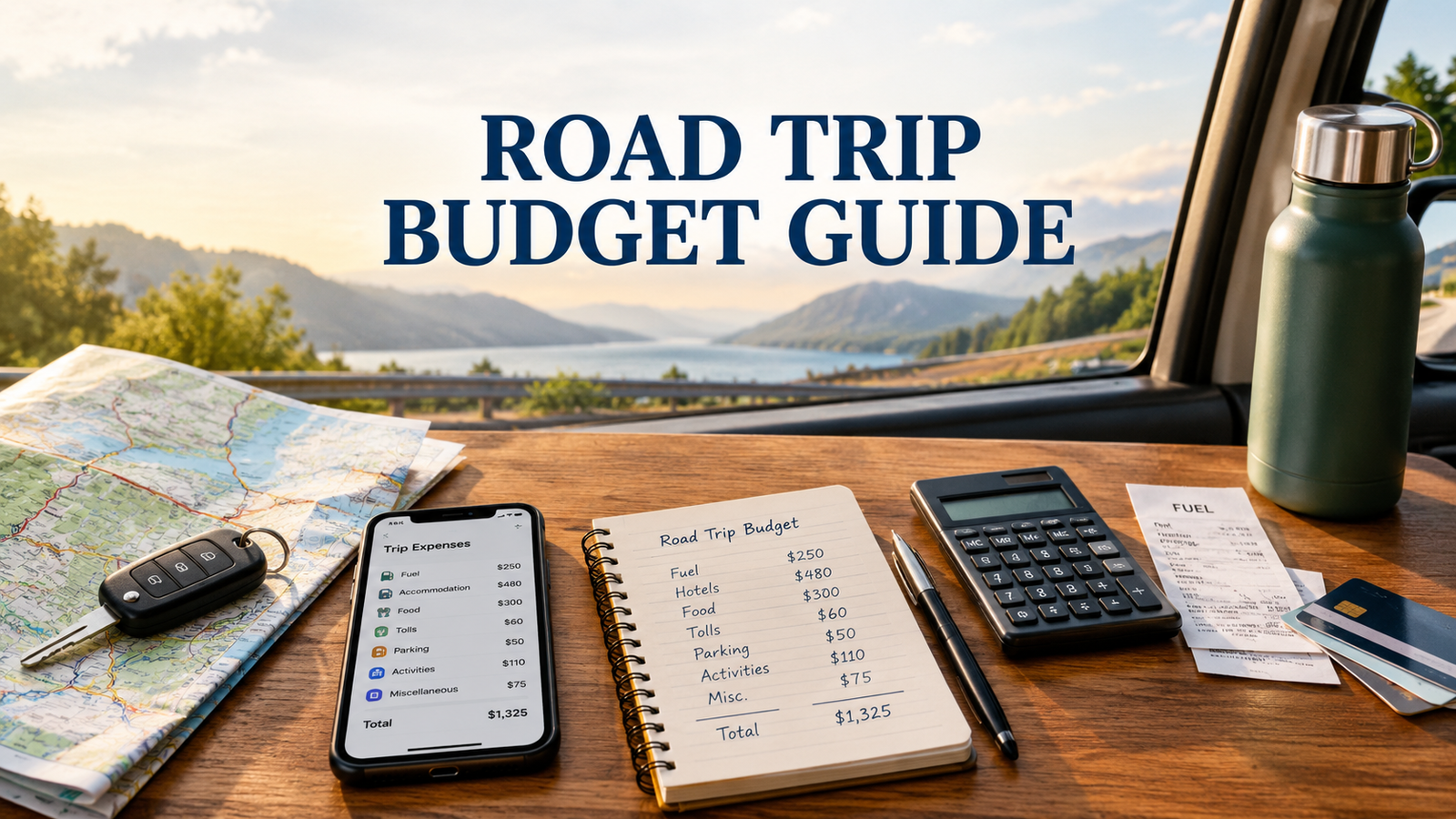
Road Trip Budget Guides: How to Plan Your Trip Without Overspending
Planning a road trip can seem affordable at first. Then fuel, hotels, food, tolls, parking, activities, and unexpected expenses start adding up.
A simple road trip budget can help you see the real cost before you leave. Instead of guessing how much money you will need, you can estimate each major expense, set a daily spending limit, and keep some money aside for emergencies.
In this guide, you’ll learn how to build a realistic road trip budget from scratch, calculate fuel costs, estimate accommodation and food expenses, and find practical ways to save money without making your trip uncomfortable.
What Should a Road Trip Budget Include?
A useful road trip budget should cover more than just gasoline.
Your total cost can include:
- Fuel
- Accommodation
- Food and drinks
- Tolls
- Parking
- Rental car costs
- Car maintenance
- Insurance
- Attractions and activities
- Emergency expenses
- Miscellaneous spending
The exact amount depends on your vehicle, route, travel dates, number of travelers, accommodation choices, and spending habits.
The goal isn’t to predict the exact final bill. It’s to create a realistic estimate that gives you enough room for normal changes and unexpected costs.
Road Trip Budget Guides: The Main Expenses to Plan For
Let’s break the budget into categories so you can estimate each part separately.
1. Fuel Costs
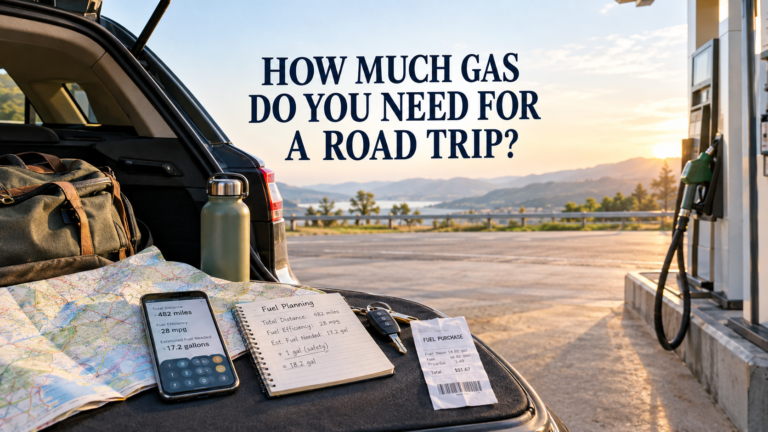
Fuel is often one of the first expenses people think about when planning a driving trip.
To estimate it, you need three basic numbers:
- Total driving distance
- Your vehicle’s fuel economy
- Fuel price
For a vehicle measured in miles per gallon (MPG), use:
Fuel needed = Total miles ÷ MPG
Then:
Fuel cost = Fuel needed × Price per gallon
Example
Suppose your road trip covers 900 miles, your vehicle gets 30 MPG, and fuel costs $3.50 per gallon.
Fuel needed:
900 ÷ 30 = 30 gallons
Estimated fuel cost:
30 × $3.50 = $105
So your estimated fuel cost would be $105.
This is only an example. Actual fuel prices and real-world fuel economy can vary by location, traffic, weather, vehicle load, and driving conditions.
Don’t Forget the Return Trip
One common mistake is calculating fuel for the destination but forgetting the drive home.
If your route is 450 miles each way, your budget should normally use approximately 900 miles for the full round trip.
Also consider extra driving for:
- Restaurant stops
- Sightseeing
- Detours
- Hotel changes
- Local exploration
- Visiting attractions
Adding a little extra mileage to your estimate can make your budget more realistic.
2. Accommodation
Hotels can become one of the largest parts of a road trip budget, especially on longer journeys.
Start by calculating:
Number of nights × Cost per night = Accommodation cost
For example, if you stay four nights at an estimated $120 per night:
4 × $120 = $480
Remember that the advertised room rate may not always represent your complete cost. Taxes, parking charges, resort fees, or other property-specific charges can affect the final amount.
When planning your budget, check the actual booking total whenever possible.
Ways to Reduce Hotel Costs
You don’t necessarily need to choose the cheapest possible hotel.
Instead, compare:
- Hotel location
- Total booking price
- Parking costs
- Breakfast availability
- Cancellation terms
- Distance from your planned route
- Number of nights required
Sometimes paying slightly more for a conveniently located hotel can reduce extra driving and parking expenses.
3. Food and Drinks
Food is easy to underestimate because individual purchases can seem small.
A better approach is to create a daily food allowance.
For example:
| Food Expense | Example Daily Budget |
|---|---|
| Breakfast | $10 |
| Lunch | $15 |
| Dinner | $25 |
| Snacks & drinks | $10 |
| Daily total | $60 |
For a five-day trip:
$60 × 5 = $300
This is only a sample budget, not a universal food cost. Your actual spending may be much lower or higher depending on where you eat and how many people are traveling.
Packing snacks, drinks, or some simple meals can help reduce the number of expensive roadside stops.
4. Tolls
Tolls can be easy to forget when you’re focused on fuel and hotels.
Before leaving, check whether your planned route includes toll roads and estimate the cost for the entire trip.
If you’re comparing routes, don’t automatically choose the route with the lowest toll cost. Consider the total picture, including:
- Extra miles
- Additional fuel
- Driving time
- Traffic
- Number of stops
A toll road may sometimes save enough distance or time to make the additional cost reasonable for your particular trip.
5. Parking
Parking is another small expense that can become significant over several days.
You may encounter parking charges at:
- Hotels
- Downtown areas
- Tourist attractions
- Airports
- Beaches
- National or city attractions
- Restaurants or entertainment venues
Check parking costs when creating your itinerary instead of treating them as an afterthought.
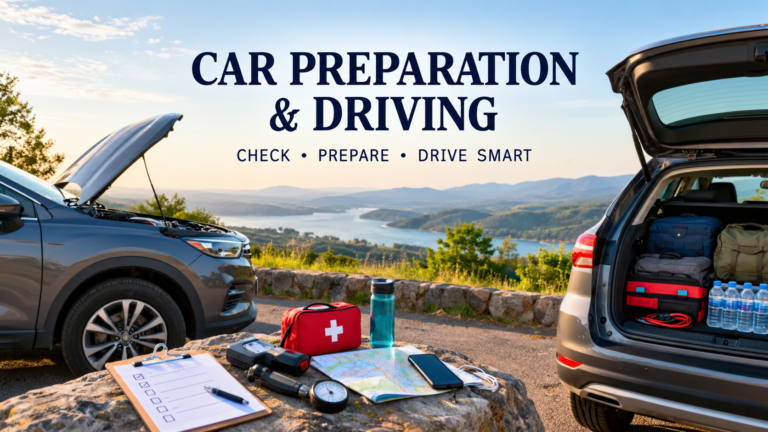
6. Car Maintenance
A road trip puts additional miles on your vehicle, so basic vehicle preparation should be part of your planning.
Depending on the vehicle and its maintenance schedule, you may need to consider:
- Oil or scheduled maintenance
- Tire condition
- Tire pressure
- Fluids
- Wiper blades
- Battery condition
- Spare tire or tire repair equipment
You don’t necessarily need to add a large maintenance charge to every trip. However, if your vehicle is due for service, it’s better to handle it before a long journey than ignore the issue.
7. Rental Car Costs
If you aren’t using your own vehicle, your budget needs another layer of calculations.
Rental expenses can include:
- Base rental price
- Taxes and fees
- Fuel
- Insurance or protection products
- Additional driver charges
- Parking
- Mileage-related costs, if applicable
Don’t compare rental vehicles using only the advertised daily rate. Calculate the estimated total rental cost for the complete trip.
8. Activities and Attractions
Entertainment can quickly push a road trip over budget.
Make a simple list of the activities you already expect to pay for.
For example:
| Activity | Estimated Cost |
|---|---|
| Attraction 1 | $30 |
| Attraction 2 | $25 |
| Museum | $20 |
| Local activity | $35 |
| Total | $110 |
You can then decide which activities are priorities and which ones are optional.
This gives you more control than simply paying for things as you encounter them.
9. Emergency Buffer
Even a carefully planned road trip can have unexpected expenses.
You might face:
- A vehicle problem
- An unplanned hotel night
- Higher-than-expected fuel costs
- A route change
- Unexpected food or parking expenses
- Minor travel emergencies
That’s why an emergency buffer is an important part of a realistic road trip budget.
Instead of treating every dollar as available spending money, keep a separate amount for unexpected costs.
The exact amount depends on your trip length, financial situation, vehicle, and how much flexibility you have.
How to Build a Road Trip Budget Step by Step
If you’re starting from scratch, use this simple process.
Step 1: Calculate Your Total Distance
Determine the approximate mileage for:
- Starting point to destination
- Return trip
- Local driving
- Planned detours
Add these together to get a more realistic total distance.
Step 2: Estimate Fuel
Use:
Total distance ÷ Vehicle MPG = Estimated gallons
Then:
Estimated gallons × Fuel price = Estimated fuel cost
For vehicles using kilometers and liters, you can use the equivalent KM/L calculation instead.
Step 3: Count Your Nights
Write down where you expect to sleep each night.
Then calculate:
Number of nights × Estimated nightly rate
Check whether parking, taxes, or other charges need to be included.
Step 4: Create a Daily Food Budget
Instead of guessing one large number, estimate your typical daily food spending.
Include snacks and drinks because these small purchases can add up.
Step 5: Add Tolls and Parking
Look at your planned route and major stops.
Include both predictable charges and a small allowance for incidental parking.
Step 6: Add Activities
List the attractions and activities you already expect to pay for.
Keep optional activities separate so you can adjust your spending if the trip starts running over budget.
Step 7: Add Your Emergency Buffer
Keep some money available for expenses that weren’t included in your original estimate.
Step 8: Calculate the Total
A simple road trip budget formula is:
Total trip cost = Fuel + Accommodation + Food + Tolls + Parking + Activities + Maintenance/Rental + Emergency buffer + Miscellaneous
This gives you a much clearer picture of the trip’s potential cost.
Sample Road Trip Budget
Here’s a simple example for a multi-day road trip.
| Expense | Estimated Cost |
|---|---|
| Fuel | $250 |
| Hotels | $480 |
| Food | $300 |
| Tolls | $60 |
| Parking | $50 |
| Activities | $110 |
| Miscellaneous | $75 |
| Emergency Buffer | $200 |
| Estimated Total | $1,525 |
These numbers are illustrative only. Actual costs can vary significantly based on location, travel dates, vehicle, number of passengers, accommodation choices, fuel prices, and personal spending.
The important part is the method. You can replace the example amounts with your own estimates.
How Much Does a Road Trip Cost Per Person?
Once you have a total trip estimate, you can calculate the approximate cost per traveler.
Use:
Total trip cost ÷ Number of travelers = Cost per person
For example, if a trip costs $1,525 and four people share the expenses:
$1,525 ÷ 4 = $381.25 per person
This calculation works best when the expenses are actually shared.
Personal purchases, individual activities, or separate accommodation arrangements may need to be handled separately.
Budget vs. Comfortable vs. Higher-Spend Road Trips
Not every traveler wants the same experience.
You can think about your budget in three broad levels:
Budget Trip
A budget-focused trip may involve:
- Lower-cost accommodation
- More meals prepared or packed
- Fewer paid attractions
- Careful fuel planning
- Free or low-cost activities
- Limited unnecessary driving
Comfortable Trip
A comfortable budget might allow for:
- Mid-range accommodation
- A mixture of restaurants and simple meals
- Several paid activities
- Convenient parking
- Some flexibility for spontaneous stops
Higher-Spend Trip
A higher-spend trip may include:
- Premium hotels
- Frequent restaurant meals
- More paid attractions
- Rental upgrades
- Additional activities
- More flexibility for unexpected purchases
These aren’t strict categories. Your own travel style should determine where your spending falls.
How to Save Money on a Road Trip
Saving money doesn’t have to mean making the trip miserable.
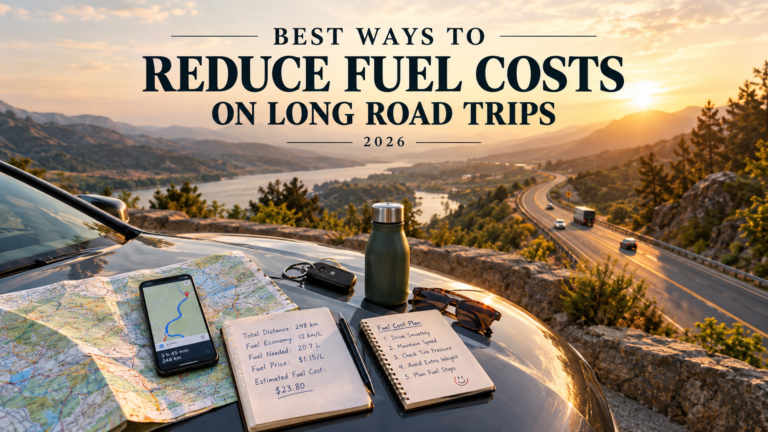
Compare Fuel Prices Along Your Route
Fuel prices can differ between locations. Checking prices along your planned route can help you avoid unnecessary expensive stops.
Don’t drive a long distance just to save a small amount, though. The extra fuel and time can cancel out the savings.
Pack Snacks and Drinks
Roadside convenience stores can be convenient but expensive for frequent purchases.
Bring some snacks and drinks when practical, especially for long stretches between stops.
Avoid Unnecessary Detours
Every extra mile can potentially mean more fuel, more time, and sometimes additional parking or food expenses.
Keep sightseeing detours in the plan when they are worth the cost, rather than adding random miles throughout the trip.
Book Accommodation Strategically
Look at the complete cost rather than simply choosing the lowest nightly rate.
A hotel farther from your route may appear cheaper but could increase fuel, parking, and driving time.
Keep Your Tires Properly Inflated
Check tire pressure according to your vehicle manufacturer’s recommendations before a long trip.
Proper vehicle preparation is useful for safety, comfort, and predictable vehicle operation.
Avoid Aggressive Driving
Smooth acceleration and braking can help you avoid unnecessary fuel use compared with aggressive driving habits.
More importantly, drive according to road conditions and posted speed limits rather than trying to save time by driving unsafely.
Set a Daily Spending Limit
A daily spending target can make it easier to notice when you’re going over budget.
You can also divide your expenses into:
- Essential
- Planned
- Optional
If you’re already spending more than expected, optional purchases are the easiest place to adjust.
Common Road Trip Budgeting Mistakes
Budgeting Only for Fuel
A full road trip budget should include accommodation, food, tolls, parking, activities, and other relevant expenses.
Forgetting Return-Trip Fuel
Always calculate the complete driving distance, not just the distance to your destination.
Ignoring Small Purchases
Coffee, snacks, parking, and convenience-store purchases may look insignificant individually but can add up over several days.
Not Keeping an Emergency Buffer
Using your entire planned budget leaves little room when something unexpected happens.
Underestimating Food
If you plan restaurant meals but budget as though you’ll eat inexpensive food every day, your estimate may be unrealistic.
Forgetting Vehicle Costs
A long drive adds mileage to your vehicle. If scheduled maintenance is due, include it in your overall travel planning.
Assuming the Hotel’s Advertised Rate Is the Final Cost
Check the complete booking price and look for additional charges that apply to your stay.
Planning an Overly Aggressive Schedule
Trying to cover too much distance every day can increase stress and leave less time for rest.
A realistic road trip budget should work alongside a realistic itinerary.
Frequently Asked Questions
Final Road Trip Budget Checklist
Before you leave, make sure you’ve estimated:
- Total driving distance
- Fuel cost
- Accommodation
- Food and drinks
- Tolls
- Parking
- Activities
- Rental car or maintenance costs
- Miscellaneous spending
- Emergency buffer
You don’t need to predict every dollar perfectly. You just need a budget that reflects the way you actually plan to travel.
A good road trip budget gives you a starting point, while some extra flexibility protects you from normal surprises. Calculate the mileage, estimate your major expenses, add an emergency buffer, and check your vehicle before you leave.
That small amount of preparation can make it much easier to enjoy the drive without constantly wondering how much money you’re spending.