 DriveQuest
Driving & Travel Savings: 25 Practical Ways to Save Money on Road Trips
A road trip can look affordable at first. Then fuel, hotels, food, tolls, parking, activities, and unexpected car expenses start adding up.
The good news is that you don’t need to cut out everything enjoyable to reduce your road trip costs. A few smart decisions before you leave — plus some simple habits while you’re driving — can make a noticeable difference.
This guide covers practical driving and travel savings that work for beginners, families, couples, solo travelers, and anyone trying to keep a road trip within budget.
What Does Driving & Travel Savings Actually Mean?
Driving and travel savings means reducing the amount you spend on transportation and travel without creating unnecessary stress or sacrificing safety.
That can include saving on:
- Fuel
- Hotels
- Food
- Tolls
- Parking
- Rental cars
- Attractions
- Vehicle operating costs
- Unplanned expenses
The goal isn’t always to choose the absolute cheapest option. Sometimes paying slightly more for a convenient hotel near your route can save you money on fuel, parking, and extra driving.
Good road trip savings are about spending intentionally, not simply spending less.
Start With Your Total Road Trip Cost
One of the easiest mistakes is thinking about fuel as the main expense.
For a realistic budget, consider:
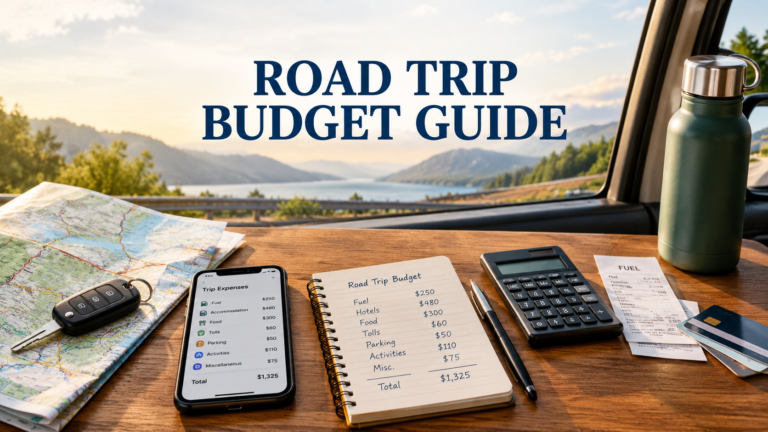
| Expense | What to Estimate |
|---|---|
| Fuel | $___ |
| Accommodation | $___ |
| Food & drinks | $___ |
| Tolls | $___ |
| Parking | $___ |
| Activities | $___ |
| Vehicle costs | $___ |
| Emergency buffer | $___ |
| Estimated Total | $___ |
These are planning categories rather than fixed prices. Your actual costs will depend on your vehicle, route, travel dates, fuel prices, number of travelers, accommodation choices, and spending habits.
Use a Simple Formula
A basic road trip budget can be calculated as:
Total trip cost = Fuel + Accommodation + Food + Tolls + Parking + Activities + Vehicle costs + Miscellaneous expenses
Once you have this number, you can decide where savings are actually possible.
For example, if your fuel estimate is already reasonable, cutting your food budget by an unrealistic amount may not make sense. You might save more by choosing a different hotel or avoiding expensive parking.
1. Calculate Fuel Costs Before You Leave
Fuel is one of the easiest road trip expenses to estimate.
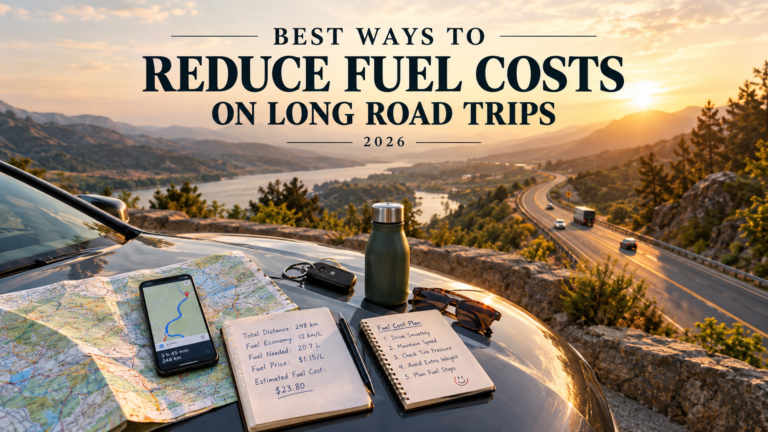
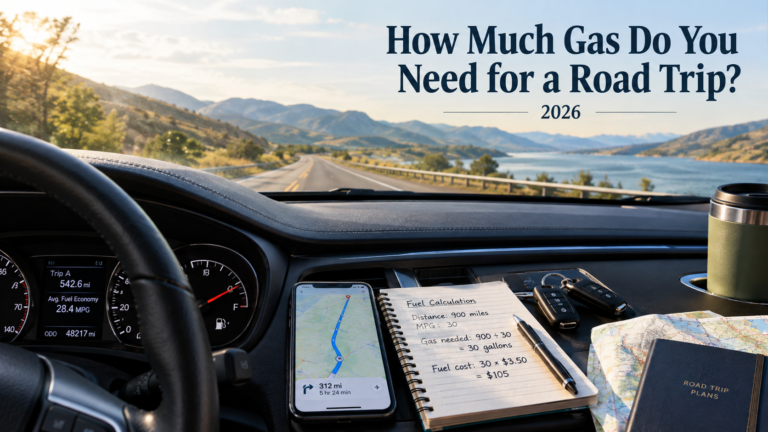
If your vehicle gets 30 MPG and you expect to drive 900 miles:
900 ÷ 30 = 30 gallons
If fuel costs $3.50 per gallon:
30 × $3.50 = $105
So your estimated fuel cost would be $105.
For a round trip, make sure your mileage includes both directions.
Fuel Cost Formula
Fuel required = Total miles ÷ MPG
Then:
Fuel cost = Fuel required × Price per gallon
If you use kilometers and liters, the calculation changes, but the principle is the same: estimate the total distance, determine your vehicle’s fuel consumption, and multiply by the local fuel price.
2. Don’t Budget Only for the Distance on Your Main Route
Your navigation app might show a 900-mile trip, but your actual driving could be higher.
You may add miles through:
- Restaurant stops
- Hotel detours
- Attractions
- Scenic routes
- Wrong turns
- Local sightseeing
- Driving around unfamiliar cities
For a long trip, consider adding a reasonable mileage cushion to your estimate instead of assuming you’ll drive exactly the distance shown on the first route.
That gives you a more realistic fuel budget.
3. Compare Fuel Prices Along Your Route
Fuel prices can vary between locations, so don’t assume every station will charge the same amount.
Before a long drive, check fuel prices along your planned route and identify reasonable places to refuel.
But don’t drive far out of your way just to save a few cents per gallon.
A Simple Example
Suppose you need 12 gallons.
A station charging $3.40 per gallon costs:
12 × $3.40 = $40.80
At $3.60 per gallon:
12 × $3.60 = $43.20
The difference is only $2.40.
If reaching the cheaper station requires a significant detour, the extra driving may cancel out much of the savings.
4. Keep Your Tires Properly Inflated
Tire pressure is easy to overlook when you’re focused on packing and route planning.
Before leaving, check your tire pressure according to the vehicle manufacturer’s recommended specification.
Properly maintained tires can also support normal vehicle operation and help you avoid unnecessary problems on the road.
More importantly, checking them before a long trip is a simple safety habit.
5. Avoid Aggressive Driving
Rapid acceleration, unnecessary speeding, and harsh braking can make driving less efficient and place additional stress on the vehicle.
For better driving and travel savings:
- Accelerate smoothly
- Maintain a steady speed when conditions allow
- Avoid unnecessary rapid braking
- Anticipate traffic
- Don’t race between traffic lights
- Follow posted speed limits
Fuel savings should never come from unsafe driving. Arriving safely matters more than saving a small amount of fuel.
6. Pack Snacks and Some Meals
Food can quietly become one of the largest variable expenses on a road trip.
Buying every coffee, drink, snack, and meal at restaurants or convenience stores adds up quickly.
Consider packing:
- Water
- Fruit
- Sandwiches
- Nuts
- Granola bars
- Crackers
- Other foods that travel well
You don’t have to bring every meal from home. Even replacing a few expensive roadside purchases can help keep your budget under control.
7. Use a Daily Food Budget
Instead of deciding what you can spend every time you’re hungry, establish a rough daily food allowance.
For example:
| Food Category | Example Daily Budget |
|---|---|
| Breakfast | $10 |
| Lunch | $15 |
| Dinner | $20 |
| Snacks & drinks | $5 |
| Total | $50 |
These numbers are only an example. Restaurant prices vary widely by location and the type of food you choose.
The useful part is having a target before spending begins.
8. Choose Hotels Based on Total Cost
The cheapest room isn’t always the cheapest overnight stay.
A hotel might advertise a lower nightly price but require expensive parking. Another property could cost slightly more while offering free parking or breakfast.
When comparing hotels, look at:
Room price + taxes/fees + parking + transportation + other required costs
Also consider location.
A hotel several miles away from your route might save money on the room but increase driving time and fuel costs.
9. Book Accommodation Strategically
For popular destinations and busy travel periods, leaving accommodation until the last minute can reduce your options.
When possible, compare several properties before booking.
Look for:
- Free parking
- Breakfast included
- Convenient location
- Flexible cancellation policies
- Reasonable taxes and fees
- Family-friendly room options
- Kitchen or refrigerator facilities when useful
Don’t automatically choose the lowest advertised rate.
10. Consider a Hotel With a Kitchen
If you’re traveling for several days, accommodation with a refrigerator, microwave, or kitchen can sometimes make food budgeting easier.
You could buy groceries and prepare some simple meals instead of eating at restaurants for every meal.
This works particularly well for families and longer road trips.
11. Plan Your Stops Before You Drive
Unplanned stops can increase both spending and driving time.
If you know you’ll need fuel, food, bathroom breaks, and rest stops, plan them around your route.
For example, combining a fuel stop with lunch means you don’t need to leave the highway multiple times.
This isn’t about making your road trip rigid. It’s about avoiding unnecessary detours.
12. Look at Tolls Before the Trip
Tolls can be easy to forget when creating a road trip budget.
Before leaving, check whether your route includes toll roads and estimate the likely charges.
Then compare the toll route with alternatives.
A toll-free route isn’t automatically cheaper if it adds significant distance and fuel consumption. Compare the total cost and travel time, not just the toll itself.
13. Reduce Parking Costs
Parking can become surprisingly expensive in downtown areas, airports, attractions, and hotels.
Before arriving, check:
- Hotel parking charges
- Public parking rates
- Street parking rules
- Parking garages
- Park-and-ride options
- Free parking restrictions
Always follow local parking signs and regulations.
A small amount of research can prevent an unnecessary parking charge.
14. Combine Multiple Errands Into One Stop
If you need fuel, groceries, cash, and food, try to handle them in the same area.
Every unnecessary detour means additional mileage and time.
This is particularly useful during long road trips when you’re repeatedly leaving and rejoining the main route.
15. Avoid Unnecessary Detours
Scenic detours can be one of the best parts of a road trip — if they’re intentional.
The problem comes when navigation keeps sending you on small diversions for convenience or when you repeatedly backtrack.
Before taking a detour, consider:
- Additional miles
- Additional fuel
- Extra driving time
- Parking costs
- Whether the attraction is actually worth the detour
If the experience matters to you, include it in your budget rather than treating it as an unexpected expense.
16. Travel During Less Expensive Periods When Possible
Accommodation and attractions can cost more during busy travel periods.
If your schedule is flexible, compare different travel dates.
You may find meaningful differences between:
- Weekdays and weekends
- Peak and off-peak periods
- Holiday dates and ordinary dates
- High-demand destinations and nearby alternatives
Prices vary considerably by destination, so compare actual rates for your trip rather than assuming one travel period is always cheaper.
17. Don’t Overpack the Schedule
Trying to visit five places in one day may sound efficient, but it can create additional costs.
You might spend more on:
- Fuel
- Parking
- Food
- Last-minute accommodation
- Attractions
- Unplanned stops
A slower itinerary can sometimes be easier on your wallet and much less tiring.
Give yourself enough time to enjoy the trip instead of constantly racing toward the next destination.
18. Check Your Vehicle Before Leaving
A basic vehicle check can help you identify problems before they become inconvenient roadside expenses.
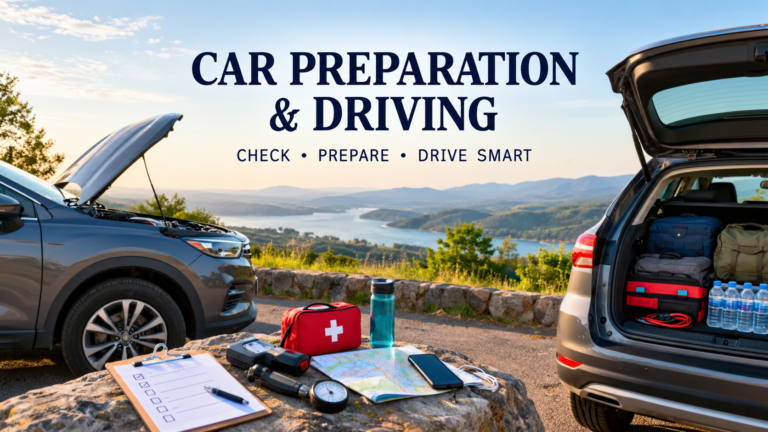
Depending on your vehicle, check:
- Tire condition and pressure
- Engine oil
- Coolant
- Lights
- Windshield washer fluid
- Spare tire or tire repair equipment
- Battery condition
- Wipers
- Brakes
Follow your vehicle manufacturer’s maintenance recommendations.
Don’t postpone necessary repairs simply to save money before a trip. A small maintenance issue can become much more expensive if it causes a breakdown far from home.
19. Build an Emergency Buffer
Even a carefully planned road trip can have unexpected expenses.
Your emergency buffer might cover:
- Unexpected repairs
- Extra accommodation
- Medical or travel needs
- Additional fuel
- Weather-related changes
- Unplanned transportation
Keep this money separate from your normal spending budget.
The exact amount depends on the trip length, vehicle, destination, and your financial situation. The important point is to avoid planning a trip that uses every dollar of your available budget.
20. Use a Simple Spending Tracker
You don’t need complicated budgeting software.
A basic note on your phone can track:
| Category | Budget | Actual |
|---|---|---|
| Fuel | $200 | $___ |
| Hotels | $400 | $___ |
| Food | $250 | $___ |
| Tolls | $75 | $___ |
| Parking | $60 | $___ |
| Activities | $150 | $___ |
| Miscellaneous | $100 | $___ |
Update it once or twice a day.
This helps you notice if you’re spending more than planned while there’s still time to adjust.
21. Compare Driving With Other Travel Options
Driving isn’t always the cheapest way to reach a destination.
For longer journeys, compare the full cost of driving with alternatives.
For driving, consider:
Fuel + tolls + parking + accommodation during the drive + vehicle costs
For flying, consider:
Airfare + baggage + airport transportation + rental car or local transportation + parking
For a road trip with several passengers, driving may distribute transportation costs across multiple people. For a solo traveler, the comparison may look very different.
Don’t compare airfare alone with fuel alone.
22. Share Costs With Travel Companions
If you’re traveling with family or friends, some expenses can be shared.
Depending on your arrangement, these might include:
- Fuel
- Hotel rooms
- Parking
- Tolls
- Rental vehicle costs
- Groceries
Agree on how expenses will be divided before the trip.
A simple shared expense tracker can prevent awkward conversations later.
23. Be Careful With “Cheap” Travel Deals
A discount isn’t automatically a saving.
Before accepting a deal, check what you’re actually paying for.
For example:
- Does the hotel rate include all mandatory fees?
- Is parking extra?
- Does the rental car have mileage restrictions?
- Is insurance included or separate?
- Is the cancellation policy restrictive?
- Does the cheaper route add hours of driving?
Always compare the final cost rather than the headline price.
24. Don’t Cut Safety to Save Money
Some expenses should not be treated as optional savings opportunities.
Don’t save money by:
- Skipping necessary vehicle maintenance
- Driving while dangerously tired
- Ignoring unsafe weather
- Exceeding passenger limits
- Using unsuitable tires
- Driving aggressively to reduce travel time
- Avoiding necessary rest stops
The cheapest road trip is not the one where you eliminate every expense.
It’s the one where you avoid unnecessary expenses while still making sensible decisions about safety and comfort.
25. Use a “Worth It?” Test Before Spending
Before making an unplanned purchase, ask three questions:
- Do I actually need this?
- Will it improve the trip enough to justify the cost?
- Was this expense part of my original plan?
You don’t need to say no to everything.
If a special dinner, attraction, or scenic excursion is important to you, spend the money intentionally and adjust another part of the budget if necessary.
A Simple Road Trip Savings Example
Let’s say two people are taking a 900-mile road trip in a vehicle that gets 30 MPG.
Estimated fuel requirement:
900 ÷ 30 = 30 gallons
If fuel costs $3.50 per gallon:
30 × $3.50 = $105
Now imagine the travelers create this example budget:
| Expense | Example Cost |
|---|---|
| Fuel | $105 |
| Accommodation | $300 |
| Food | $200 |
| Tolls | $50 |
| Parking | $40 |
| Activities | $100 |
| Miscellaneous | $75 |
| Total | $870 |
This means the trip’s estimated cost is $870, or:
$870 ÷ 2 = $435 per person
These figures are purely illustrative. Actual prices can be much higher or lower depending on the destination, hotel choices, fuel prices, trip dates, and activities.
The important lesson is that fuel is only one part of the budget.
Common Driving & Travel Savings Mistakes
Budgeting Only for Fuel
Fuel is visible and easy to calculate, but it may not be your largest expense.
Always include accommodation, food, tolls, parking, activities, and unexpected costs.
Forgetting the Return Trip
A common mistake is calculating fuel for the destination but forgetting the drive home.
Make sure your total mileage covers the entire trip.
Treating the Cheapest Hotel as the Best Deal
A low room rate can be offset by parking, transportation, or extra driving costs.
Compare the complete overnight cost.
Skipping the Emergency Buffer
If your budget has no room for surprises, one unexpected expense can disrupt the entire trip.
Leave some money unassigned.
Cutting Food Too Aggressively
Trying to survive on an unrealistically tiny food budget can make the trip frustrating.
Plan a reasonable amount for meals and snacks, then look for practical ways to reduce unnecessary purchases.
Driving When You’re Too Tired
Saving the cost of an additional hotel night isn’t worth creating an unsafe driving situation.
If you’re too tired to drive safely, stop and rest.
Quick Road Trip Savings Checklist
Before leaving, ask yourself:
- Did I calculate total trip mileage?
- Did I estimate fuel consumption?
- Did I check current fuel prices along my route?
- Did I include return-trip fuel?
- Did I budget for hotels?
- Did I estimate food costs?
- Did I check tolls?
- Did I research parking?
- Did I inspect the vehicle?
- Did I plan important fuel and rest stops?
- Did I leave room for unexpected expenses?
- Did I compare the full cost of driving with alternatives?
- Did I avoid making the itinerary unnecessarily aggressive?
Frequently Asked Que
Final Thoughts
Good driving and travel savings don’t require turning your road trip into a strict no-spending challenge.
The biggest improvement usually comes from knowing where your money is going before you leave. Calculate your mileage, estimate fuel, compare accommodation, plan meals, check tolls and parking, and keep an emergency buffer.
Then look for savings that don’t reduce the quality or safety of your trip.
Before you start the engine, take 15 minutes to build a simple budget. Total distance → fuel estimate → accommodation → food → tolls and parking → activities → emergency buffer.
That small amount of planning can make the entire road trip easier to manage.