 DriveQuest
Car Preparation & Driving: How to Get Your Car Ready for a Road Trip
A road trip can be exciting, but a poorly prepared car can turn a simple drive into an expensive and stressful problem.
Before you leave, it is worth spending a little time checking your vehicle, planning your driving schedule, and making sure you have the essentials you may need along the way. Good car preparation and driving habits can help you avoid preventable breakdowns, reduce unnecessary fuel use, and make long hours behind the wheel more comfortable.
This guide explains how to prepare your car for a road trip, what to check before departure, how to drive more efficiently, and which common mistakes to avoid.
Why Car Preparation Matters Before a Road Trip
Your car may perform perfectly during normal daily driving but still need attention before a long-distance trip.
A road trip usually means more continuous driving, heavier luggage, changing weather, highway speeds, and longer distances between home and a familiar repair shop.
Before leaving, check:
- Tires and tire pressure
- Engine oil and other fluids
- Brakes
- Battery
- Lights
- Windshield wipers
- Spare tire or tire repair equipment
- Emergency equipment
- Registration and insurance documents
- Fuel level and expected fuel stops
You do not need to become a mechanic. The goal is to identify obvious problems before they become bigger problems on the road.
Car Preparation Checklist for a Road Trip
A simple checklist can make vehicle preparation much easier.
1. Check Your Tires
Tires are one of the first things you should inspect before a long drive.
Check the recommended tire pressure using your vehicle’s owner’s manual or the tire-pressure information provided by the manufacturer. Do not assume the number printed on the tire sidewall is the recommended pressure for your vehicle.
Look for:
- Low tire pressure
- Uneven tread wear
- Cracks or visible damage
- Bulges
- Nails or other objects
- Excessively worn tread
If you are unsure about the condition of your tires, have them inspected by a qualified tire professional before leaving.
2. Inspect the Spare Tire
A spare tire is only useful if it is actually ready for use.
If your vehicle has a spare, check its condition and make sure you know where the jack and lug wrench are stored.
Some newer vehicles do not include a traditional spare tire, so check whether your car has a tire repair kit, inflator, or another manufacturer-provided solution.
3. Check Engine Oil
Engine oil helps protect the engine during operation, and long road trips can put your vehicle through many hours of continuous driving.
Check the oil according to the procedure in your owner’s manual. If the oil is due for a change, consider taking care of it before the trip rather than waiting until you return.
If you notice an oil leak or unusually low oil level, have the problem investigated instead of simply adding oil and continuing the trip.
4. Check Important Fluids
Depending on your vehicle, you may also want to check:
- Coolant
- Brake fluid
- Windshield washer fluid
- Transmission fluid, if your vehicle provides a way to check it
- Power steering fluid, on vehicles that use hydraulic power steering
Never open a hot cooling system. If you are unsure about checking a fluid, ask a qualified technician to inspect it.
5. Test the Lights
Before a road trip, check that your:
- Headlights
- Brake lights
- Turn signals
- Hazard lights
- Reverse lights
- License plate lights
are working properly.
This becomes particularly important if you expect to drive early in the morning, after sunset, or through poor weather.
Get Your Brakes Checked
Brakes deserve extra attention before a long road trip.
Warning signs can include:
- Squealing or grinding noises
- Vibrations while braking
- A soft or unusual brake pedal
- The vehicle pulling to one side when braking
- A brake warning light
Do not ignore a brake problem because the car still appears to stop normally.
If you notice something unusual, have the vehicle inspected before starting a long journey.
Check the Battery
A weak battery can become especially inconvenient when you are far from home.
Look for obvious signs of battery problems, such as difficulty starting the vehicle or visible corrosion around the battery terminals.
If your battery is already showing signs of weakness, consider having it tested before your trip.
For longer journeys, it is also useful to know where your vehicle’s battery is located and whether your roadside assistance provider covers battery-related problems.
Prepare Your Windshield and Wipers
Clear visibility is essential for road-trip driving.
Check that:
- Wiper blades clean the windshield properly
- Washer fluid is filled
- The windshield has no major damage that requires attention
- Mirrors are clean and correctly adjusted
A dirty windshield can become especially difficult to see through when sunlight, rain, or oncoming headlights hit the glass.
Do Not Overload Your Car
Packing too much can make a road trip less comfortable and may affect handling and fuel consumption.
Before loading the vehicle, think about what you genuinely need.
Useful items may include:
- Luggage
- Water
- Snacks
- Phone chargers
- First-aid supplies
- Flashlight
- Basic emergency supplies
- Vehicle documents
- Spare tire equipment
- Cleaning supplies
- Weather-appropriate clothing
Keep heavy items positioned securely and avoid blocking your view through the windows.
Check your vehicle owner’s manual for its load and passenger limits rather than guessing how much weight is acceptable.
Plan Your Road Trip Driving Schedule
Vehicle preparation is only part of the equation. Your driving plan matters too.
One common mistake is planning a route based only on distance.
A 500-mile drive may sound manageable on paper, but traffic, construction, weather, fuel stops, meals, rest breaks, and unexpected delays can make the actual journey much longer.
Before leaving, consider:
- Total distance
- Expected driving time
- Fuel stops
- Meal breaks
- Rest stops
- Overnight accommodation
- Traffic conditions
- Weather
- Road closures or construction
- Your own comfort level with long-distance driving
Give yourself some flexibility instead of planning every minute of the trip.
How to Drive More Efficiently on a Road Trip
Your driving style can affect fuel consumption and overall comfort.
Maintain a Smooth Driving Style
Repeated hard acceleration followed by heavy braking can waste fuel and make driving more tiring.
Instead, where traffic and road conditions allow, aim for smooth acceleration and gradual braking.
This does not mean driving unusually slowly. Always follow posted speed limits and adjust your speed for traffic, weather, visibility, and road conditions.
Avoid Unnecessary Idling
If you are stopped for an extended period and local conditions allow you to safely turn the engine off, unnecessary idling can waste fuel.
However, never turn the engine off in situations where doing so could create a safety problem.
Keep Tires Properly Inflated
Incorrect tire pressure can affect handling, tire wear, and fuel economy.
Check your tires when they are cold and use the manufacturer’s recommended pressure.
Do not increase tire pressure beyond the recommended level simply because you want to save fuel.
How Much Fuel Will Your Road Trip Use?
A simple calculation can give you a useful starting estimate.
Basic Formula
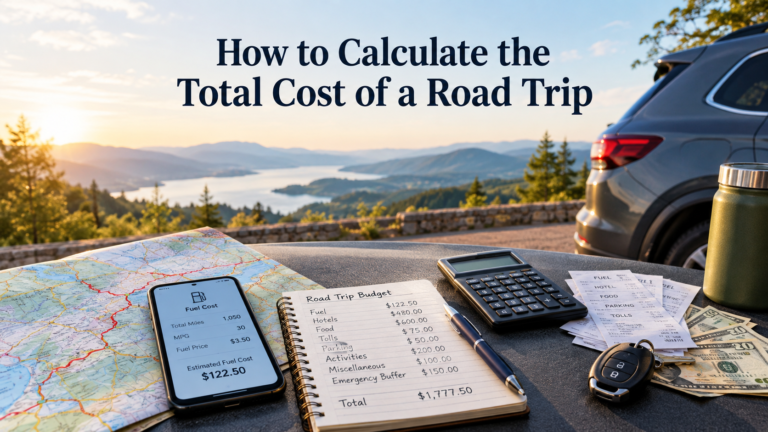
Fuel required = Total distance ÷ Vehicle MPG
Then:
Estimated fuel cost = Fuel required × Fuel price
For example, suppose:
- Trip distance = 900 miles
- Vehicle fuel economy = 30 MPG
- Fuel price = $3.50 per gallon
First calculate the fuel required:
900 ÷ 30 = 30 gallons
Then calculate the estimated fuel cost:
30 × $3.50 = $105
So the estimated fuel cost would be $105.
This is only an example. Actual fuel consumption can vary because of traffic, weather, driving style, vehicle load, road conditions, and real-world fuel economy.
Simple Road Trip Fuel Table
| Trip Distance | Vehicle MPG | Estimated Fuel |
|---|---|---|
| 300 miles | 30 MPG | 10 gallons |
| 600 miles | 30 MPG | 20 gallons |
| 900 miles | 30 MPG | 30 gallons |
| 1,200 miles | 30 MPG | 40 gallons |
If your road trip is round-trip, remember to calculate the total driving distance rather than budgeting only for the outbound journey.
City Driving vs. Highway Driving
Your vehicle’s actual fuel economy can differ from its advertised rating.
Frequent stops, traffic, hills, heavy loads, weather, and aggressive acceleration can all change fuel consumption.
A long highway trip may produce different results from your normal city driving.
For budgeting purposes, it is often better to use a realistic estimate based on your own vehicle rather than assuming you will always achieve the highest MPG figure.
Build a Complete Road Trip Budget
Car preparation is also about preparing financially for the vehicle itself.
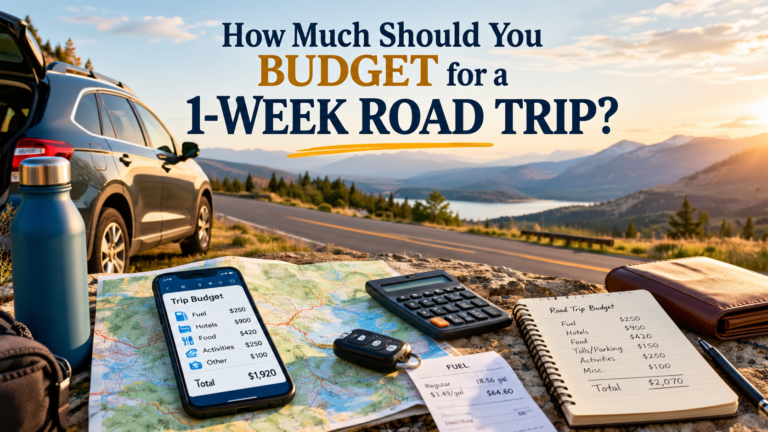
Your road trip budget may include:
| Expense | Example Budget |
|---|---|
| Fuel | $105 |
| Accommodation | $200 |
| Food | $120 |
| Tolls | $30 |
| Parking | $25 |
| Activities | $75 |
| Emergency buffer | $100 |
| Total | $655 |
These numbers are illustrative only, not universal prices.
Actual costs depend on your destination, trip length, vehicle, fuel prices, accommodation choices, number of travelers, activities, toll roads, parking rates, and travel dates.
Don’t Forget Vehicle Maintenance Costs
A road trip budget should not always stop at fuel.
If your vehicle is due for maintenance before a long journey, include that expense when calculating the true cost of your trip.
Potential maintenance expenses can include:
- Oil changes
- Tire replacement
- Tire rotation
- Brake service
- Wiper replacement
- Battery replacement
- Scheduled maintenance
You do not necessarily need to perform every possible maintenance task immediately before every trip. The important point is to avoid ignoring maintenance that is already due.
What to Keep in Your Car
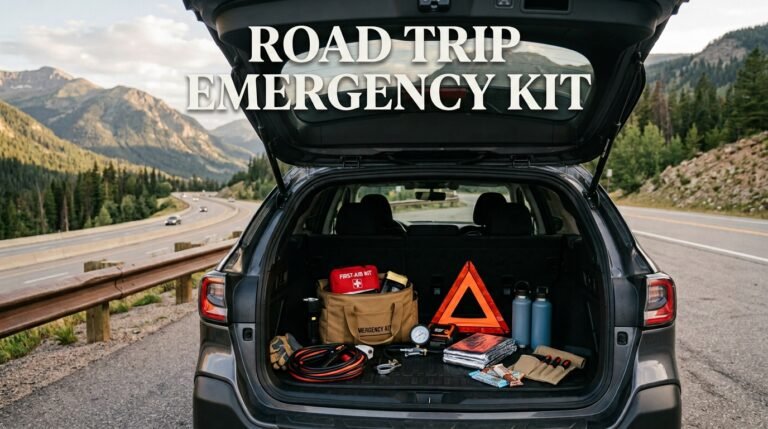
A practical road-trip emergency kit can save time when something unexpected happens.
Consider carrying:
- Phone charging cable
- Portable phone power bank
- Flashlight
- First-aid kit
- Water
- Basic snacks
- Jumper cables or an appropriate jump-start device
- Tire inflator
- Tire pressure gauge
- Reflective warning equipment
- Basic tools appropriate for your vehicle
- Blankets or extra clothing for cold conditions
- Paper or digital copies of important vehicle information
The exact items you need depend on your destination, weather, vehicle, and the type of roads you will be traveling.
Plan Fuel Stops Before You Need Them
Do not always wait until the fuel warning light appears before thinking about your next fuel stop.
On unfamiliar roads, stations may be farther apart than expected.
Before entering a long rural stretch, check where your next reliable fuel stops are located. If weather or road conditions could cause delays, allow additional flexibility.
This is especially useful when traveling through areas where services are limited.
Take Regular Breaks
Long-distance driving can become tiring even when your vehicle is running perfectly.
Plan regular stops to:
- Stretch your legs
- Drink water
- Eat
- Use the restroom
- Check your route
- Take a mental break
If you become sleepy while driving, do not try to push through it just to reach the next destination.
Pull over somewhere safe and take an appropriate break. If you are too tired to continue safely, change your plan.
Keep the Driver Comfortable
Small comfort issues can become major annoyances after several hours.
Before leaving, adjust:
- Seat position
- Steering wheel position
- Mirrors
- Climate controls
- Phone mount
- Navigation setup
Keep frequently used items within easy reach without creating distractions.
Do not handle your phone while driving. Set navigation before you start or use a system that allows you to interact with it safely and legally.
Weather Can Change Your Driving Plan
A road trip itinerary should never be treated as more important than safe driving conditions.
Rain, snow, ice, strong winds, extreme heat, flooding, and poor visibility can all affect travel.
Before departure, check the forecast and road conditions for the areas you expect to travel through.
If conditions deteriorate, consider slowing down, taking a longer break, changing your route, or delaying travel when necessary.
Common Car Preparation & Driving Mistakes
1. Only Checking the Fuel Tank
Having a full tank does not mean the vehicle is ready for a 1,000-mile journey.
Tires, fluids, brakes, battery, lights, and maintenance deserve attention too.
2. Ignoring Small Warning Signs
A strange noise or warning light may seem minor during normal driving.
On a long road trip, however, a small issue can become much more inconvenient. If something unusual appears before departure, investigate it.
3. Packing Too Much
Overpacking can reduce available space and make the vehicle uncomfortable.
Pack according to the length of the trip and keep important emergency items accessible.
4. Planning Too Much Driving in One Day
A route that looks efficient on a map may be exhausting in real life.
Allow time for breaks, food, traffic, fuel stops, and unexpected delays.
5. Forgetting the Return Trip
When calculating fuel, make sure you include the entire journey.
For a round trip, use the total distance for both directions rather than calculating only the first leg.
6. Skipping the Emergency Buffer
Even a carefully planned trip can produce unexpected expenses.
A separate emergency amount can help cover things such as an unexpected repair, extra accommodation, or changes caused by weather.
A Simple Pre-Road-Trip Car Checklist
Use this checklist the day before departure:
Vehicle
- Check tire pressure
- Inspect tire condition
- Check spare tire or tire repair equipment
- Check engine oil
- Check important fluids
- Test lights
- Check windshield and wipers
- Check brakes for unusual symptoms
- Check battery condition
- Confirm scheduled maintenance is up to date
Trip Planning
- Confirm your route
- Estimate total mileage
- Calculate fuel requirements
- Identify fuel stops
- Check weather
- Check road conditions
- Plan reasonable breaks
- Confirm accommodation
- Keep an emergency budget
Documents & Essentials
- Driver’s license
- Vehicle registration
- Insurance information
- Phone and charger
- Emergency supplies
- Water and snacks
Frequently Asked Questions
Final Thoughts
Good car preparation and driving are important parts of a successful road trip.
Before leaving, check the vehicle, calculate your expected fuel needs, plan reasonable driving days, prepare for changing weather, and keep some money aside for unexpected expenses.
You do not need a perfect vehicle or an elaborate travel system. A few practical checks, a realistic driving plan, and a sensible emergency buffer can make the entire road trip easier.
Before you start the engine, take a few minutes to complete your vehicle checklist, confirm your route, and make sure you are prepared for the conditions ahead.