 DriveQuest
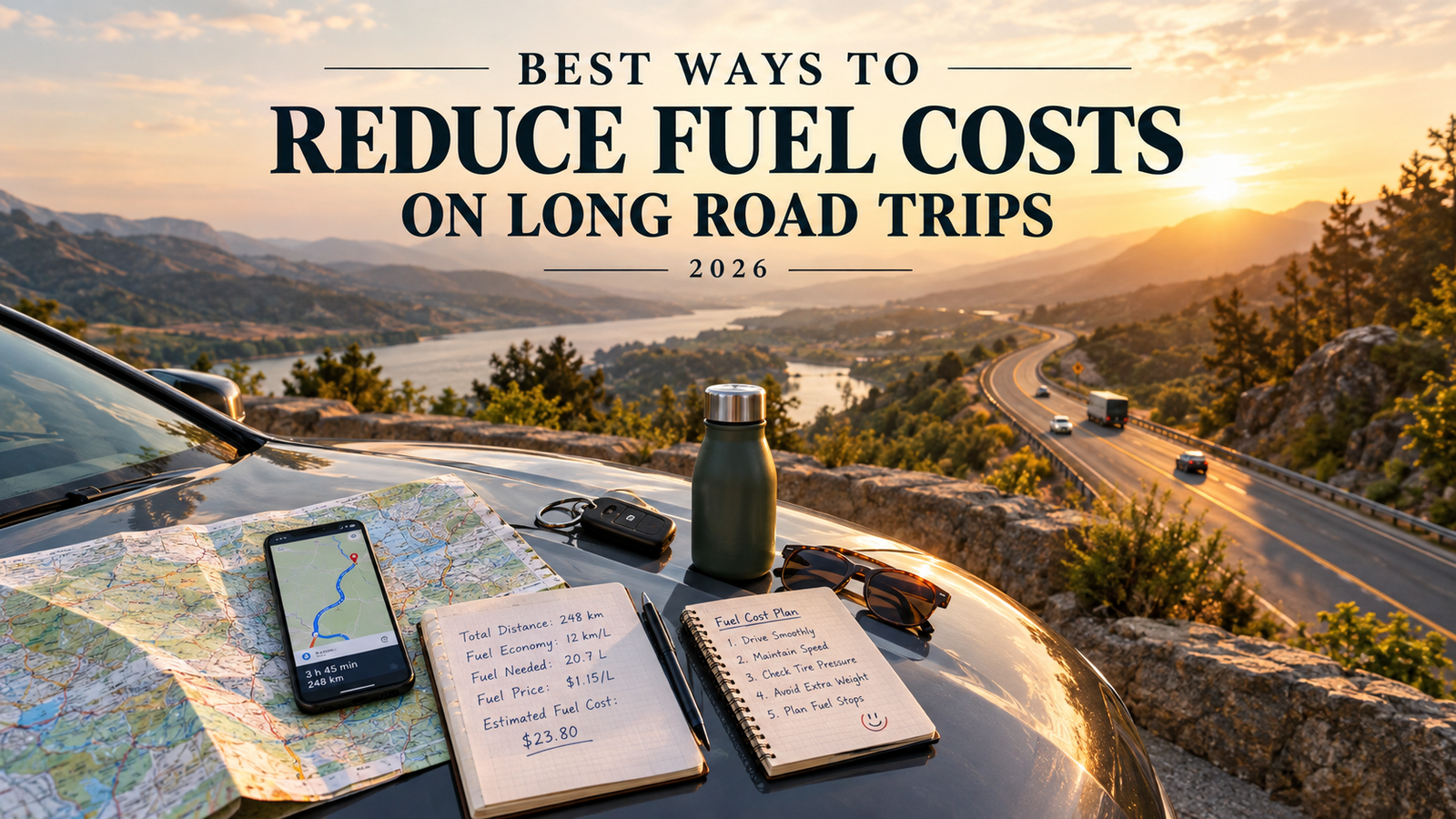
Best Ways to Reduce Fuel Costs on Long Road Trips
Fuel can easily become one of the biggest expenses on a long road trip. The longer you drive, the more small differences in fuel economy, driving habits, route planning, and gas prices can add up.
The good news is that you don’t need complicated tricks to spend less at the pump. With a few practical changes, you can reduce unnecessary fuel consumption while still enjoying a comfortable trip.
In this guide, you’ll learn the best ways to reduce fuel costs on long road trips, how to calculate your expected fuel bill, how to improve fuel efficiency, and which common mistakes can quietly increase your expenses.
Why Fuel Costs Add Up So Quickly on Long Road Trips
A short drive may not make a noticeable difference to your budget, but a road trip covering hundreds or thousands of miles is different.
For example, imagine your vehicle averages 30 MPG and you drive 1,500 miles.
Fuel needed:
1,500 ÷ 30 = 50 gallons
If the fuel price were $3.50 per gallon, your estimated fuel cost would be:
50 × $3.50 = $175
That’s only an example. Actual fuel prices vary by location and date, and your vehicle may get a different MPG.
The important point is that every improvement in fuel economy matters more as your total mileage increases.
How to Calculate Your Road Trip Fuel Cost
Before looking for ways to save, calculate what you’re likely to spend.
The basic formula is:
Fuel required = Total distance ÷ Vehicle MPG
Then:
Estimated fuel cost = Fuel required × Fuel price
Example
Suppose your road trip is 1,200 miles and your car gets 28 MPG.
1,200 ÷ 28 = 42.86 gallons
If fuel costs $3.40 per gallon:
42.86 × $3.40 = about $145.72
Your estimated fuel expense would therefore be around $146.
Remember that real-world mileage can be lower than the number shown on a vehicle’s official fuel-economy rating. Traffic, weather, passengers, luggage, hills, road conditions, and driving style can all affect fuel consumption.
Don’t Forget the Return Trip
One common budgeting mistake is calculating only the distance to the destination.
If your destination is 600 miles away and you’re returning home by car, your fuel calculation should normally use approximately:
600 + 600 = 1,200 miles
Also account for extra driving during the trip, such as sightseeing, restaurant stops, shopping, or exploring nearby towns.
The Best Ways to Reduce Fuel Costs on Long Road Trips
1. Plan Your Route Before You Leave
Route planning isn’t just about finding the fastest road. A poorly planned route can add unnecessary miles, which means more fuel consumption.
Before leaving, check your complete route and look for:
- Unnecessary detours
- Backtracking
- Repeated trips through the same area
- Avoidable city traffic
- Convenient fuel stops
- Potential toll-road alternatives
A few extra miles here and there may seem insignificant, but they can become substantial over a multi-day trip.
2. Compare Fuel Prices Along Your Route
Fuel prices can vary between different locations, so avoid automatically stopping at the first station you see.
Before a fuel stop, check available fuel-price information along your route and consider where you’ll likely need to refuel.
However, don’t drive far out of your way just to save a few cents per gallon. The additional distance can consume some or all of the savings.
The goal is to combine a necessary fuel stop with a reasonably priced station.
3. Keep Your Tires Properly Inflated
Tire pressure is one of the simple vehicle-maintenance details worth checking before a long drive.
Use the vehicle manufacturer’s recommended tire pressure rather than guessing based on how the tires look.
Check the pressure when the tires are cold and inspect them before departure. Properly maintained tires can also contribute to safer, more predictable driving.
4. Avoid Aggressive Acceleration
Rapid acceleration followed by hard braking is an inefficient way to drive.
On a long road trip, smoother acceleration and braking can help you maintain more consistent fuel consumption.
This doesn’t mean driving dangerously slowly or interfering with normal traffic. Instead, focus on anticipating traffic conditions and avoiding unnecessary speed changes.
5. Maintain a Steady Highway Speed
Frequent speed changes can make your driving less efficient.
When road and traffic conditions allow, maintain a consistent legal speed instead of repeatedly accelerating and slowing down.
There’s an important balance here: don’t sacrifice safety just to save fuel. Follow posted speed limits and adjust your driving for traffic, weather, construction, and road conditions.
6. Use Cruise Control When Appropriate
On suitable stretches of highway, cruise control can help maintain a consistent speed.
This can be useful when traffic is light and the road is relatively steady.
It’s not something to use automatically in every situation. Avoid relying on cruise control when roads are slippery, congested, winding, or otherwise require frequent speed adjustments.
7. Remove Unnecessary Weight
Take a look inside your vehicle before the trip.
Extra equipment, boxes, unused luggage, and other heavy items add weight that you may not need to carry hundreds or thousands of miles.
Pack what you actually need and remove unnecessary items before departure.
8. Don’t Carry More Luggage Than Necessary
Road trips often encourage people to pack “just in case” items.
A few extra bags may not seem important, but unnecessary cargo can add weight and make the vehicle harder to organize.
Create a packing list based on the actual length and conditions of your trip.
For family road trips, this can be especially useful because several passengers can quickly turn a lightly loaded vehicle into a very full one.
9. Check Your Vehicle Before the Trip
A basic pre-trip inspection can help you avoid problems that could become expensive during the journey.
Before leaving, check:
- Tire pressure
- Tire condition
- Engine oil
- Fluid levels
- Lights
- Windshield wipers
- Battery condition
- Spare tire or tire-repair equipment
Follow your vehicle manufacturer’s maintenance recommendations.
Fuel savings should never come at the expense of proper maintenance or safety.
10. Combine Your Stops
Every unnecessary trip away from your main route adds distance.
Instead of making separate trips for fuel, groceries, coffee, and other supplies, combine stops when practical.
For example, you might refuel and buy snacks during the same stop.
This saves time as well as avoiding unnecessary driving around unfamiliar areas.
11. Pack Snacks and Drinks
Food isn’t technically a fuel expense, but it can indirectly affect your fuel budget.
If you stop frequently at convenience stores or restaurants, you may be tempted to drive off your route to find food.
Packing snacks and drinks can reduce those extra stops.
A simple cooler with water, fruit, sandwiches, and other easy-to-carry foods can make long driving days more convenient.
12. Avoid Unnecessary Idling
Leaving the engine running while parked uses fuel without moving the vehicle.
If you’re stopped for an extended period and it is safe and appropriate to turn the engine off, avoid unnecessary idling.
Don’t turn the engine off in situations where doing so could create a safety or comfort problem, such as extreme weather or when you’re required to keep the vehicle running.
13. Use Air Conditioning Wisely
Air conditioning can affect fuel consumption, although the impact depends on the vehicle, weather, speed, and other conditions.
On a hot road trip, comfort and safety come first.
Instead of avoiding air conditioning completely, use it sensibly and avoid setting the system unnecessarily cold.
Keep windows and doors closed when the air conditioning is running so you’re not constantly losing cooled air.
14. Think Carefully About Roof Cargo
Roof boxes, racks, and other external cargo can affect airflow around a vehicle.
If you don’t need a roof-mounted accessory for the trip, consider leaving it at home.
If you do need one, pack it efficiently and remove it after the trip rather than leaving it installed permanently when it isn’t needed.
15. Choose a Fuel-Efficient Vehicle When You Have a Choice
If you’re renting a vehicle or choosing between multiple cars for a road trip, fuel economy can be an important part of the total cost.
Don’t look only at the rental price.
A vehicle that costs slightly more to rent but uses considerably less fuel could change the overall transportation expense, depending on the mileage and fuel prices.
Calculate the complete cost instead of comparing rental prices alone.
How Much Can Better Fuel Economy Change Your Trip Cost?
Small differences in MPG can become meaningful over long distances.
Consider this example:
| Vehicle Efficiency | Distance | Fuel Required |
|---|---|---|
| 20 MPG | 2,000 miles | 100 gallons |
| 25 MPG | 2,000 miles | 80 gallons |
| 30 MPG | 2,000 miles | 66.67 gallons |
| 35 MPG | 2,000 miles | 57.14 gallons |
If fuel costs $3.50 per gallon, these would correspond to approximate fuel costs of:
| Vehicle Efficiency | Estimated Fuel Cost* |
|---|---|
| 20 MPG | $350 |
| 25 MPG | $280 |
| 30 MPG | $233 |
| 35 MPG | $200 |
*Illustrative example only. Fuel prices vary by location and date.
This is why fuel economy matters so much on long road trips. You don’t necessarily need to make dramatic changes; better efficiency multiplied across a lot of miles can make a noticeable difference.
A Simple Fuel-Saving Road Trip Strategy
If you want to keep things simple, use this five-step approach.
Before the Trip
- Calculate your total driving distance.
- Add expected sightseeing and local driving.
- Check your vehicle’s realistic MPG.
- Estimate your fuel requirement.
- Check fuel prices along your route.
During the Trip
- Keep tires at the recommended pressure.
- Drive smoothly.
- Avoid unnecessary acceleration and braking.
- Combine stops.
- Avoid unnecessary detours.
- Remove unnecessary cargo.
- Refuel at convenient, reasonably priced locations.
This approach is much more reliable than chasing complicated fuel-saving tricks.
Common Mistakes That Increase Road Trip Fuel Costs
Only Calculating the Main Route
Your map may show 1,000 miles, but your actual trip could be longer once you include restaurants, attractions, hotels, and local driving.
Add a reasonable amount for extra mileage.
Driving Out of the Way for Cheaper Fuel
Saving a few cents per gallon isn’t always worthwhile if you have to drive several extra miles.
Calculate the potential savings before making a detour.
Ignoring Tire Pressure
A pre-trip tire check takes very little time but is an important part of vehicle preparation.
Don’t wait until you’re hundreds of miles from home to discover a tire-pressure problem.
Packing Too Much
Extra luggage can add weight and make your vehicle less efficient.
Pack according to the actual trip rather than every possible situation.
Focusing Only on Fuel Price
The cheapest station isn’t necessarily the cheapest overall option if reaching it requires a long detour.
Consider price, distance, route, and convenience together.
Forgetting Extra Driving
Your destination mileage isn’t necessarily your final mileage.
If you’re spending several days exploring, include those miles in your fuel estimate.
How to Build a More Accurate Fuel Budget
A simple spreadsheet or note on your phone can make this much easier.
Use these numbers:
Total trip distance: 2,000 miles
Estimated vehicle efficiency: 30 MPG
Estimated fuel requirement: 2,000 ÷ 30 = 66.67 gallons
Example fuel price: $3.50/gallon
Estimated fuel cost: 66.67 × $3.50 = about $233
You could then add a small planning cushion because actual mileage and fuel prices may differ from your assumptions.
For example:
| Fuel Budget Item | Example |
|---|---|
| Planned distance | 2,000 miles |
| Estimated MPG | 30 MPG |
| Estimated fuel | 66.67 gallons |
| Example fuel price | $3.50/gal |
| Estimated fuel cost | $233 |
| Planning cushion | Add according to your situation |
The cushion isn’t a guarantee of your final cost. It’s simply a way to avoid building a road trip budget that is too tight.
What Affects Your Real-World Fuel Economy?
Your vehicle’s advertised MPG is only one part of the calculation.
Actual fuel consumption can vary because of:
- Vehicle size and engine
- Driving speed
- Traffic
- Hills and mountains
- Weather
- Wind
- Tire condition and pressure
- Vehicle load
- Stop-and-go driving
- Road surface
- Driving habits
- Highway versus city driving
This is why it’s better to treat your fuel estimate as a planning number rather than an exact prediction.
If you’ve driven the vehicle on previous trips, your own fuel records may provide a more useful starting point than relying entirely on a published MPG figure.
FAQ
Final Thoughts
The best ways to reduce fuel costs on long road trips are usually simple: plan your route, understand your vehicle’s real fuel economy, keep the vehicle properly maintained, drive smoothly, avoid unnecessary weight, and choose fuel stops intelligently.
Start by calculating your total mileage and estimated fuel requirement. Then build your fuel budget using a realistic MPG figure and current local fuel prices, while leaving some room for extra driving and changing conditions.
You don’t need to turn your road trip into a fuel-saving experiment. The goal is simply to eliminate unnecessary fuel expenses while keeping the journey safe, comfortable, and enjoyable.