 DriveQuest
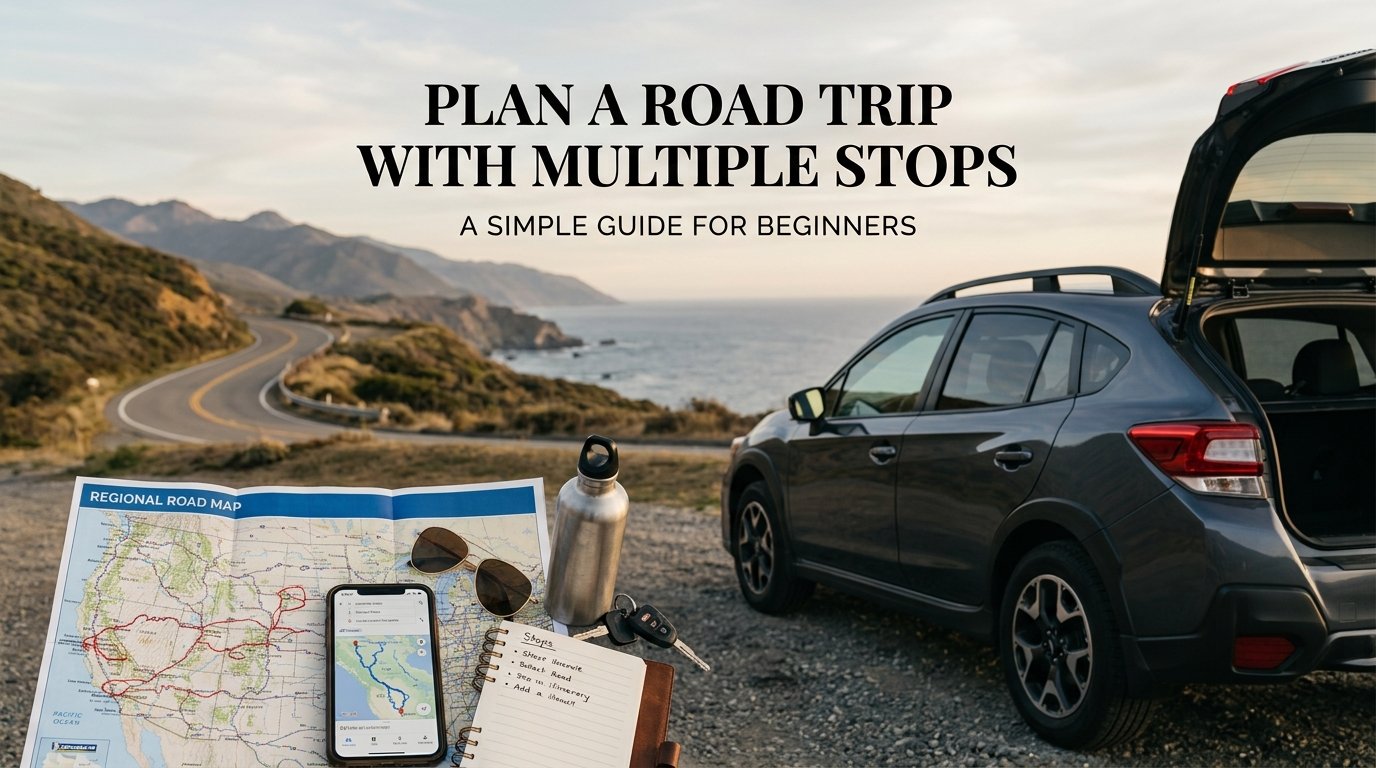
How to Plan a Road Trip With Multiple Stops: A Simple Guide for Beginners
A good road trip should feel exciting, not like you’re constantly rushing to reach the next destination.
When your route includes multiple stops, planning becomes even more important. You need to think about driving time, overnight stays, fuel, food, activities, parking, and the amount of time you’ll actually have to enjoy each place.
The good news is that planning a road trip doesn’t have to be complicated.
With a simple route, realistic schedule, and basic budget, you can create a road trip itinerary that gives you enough structure without taking away the fun.
In this guide, I’ll walk you through how to plan a road trip with multiple stops, including how to choose your route, calculate driving time, organize overnight stays, estimate fuel costs, and avoid common planning mistakes.
What Makes a Good Road Trip Plan?
A good road trip plan gives you direction without making every minute of your trip rigid.
Before choosing individual stops, think about five basic things:
- Where are you starting?
- Where do you want to end?
- Which places do you want to visit?
- How many days do you have?
- How much driving are you comfortable doing each day?
These answers create the foundation for your road trip.
For example, if you have seven days, you could divide your trip into:
| Day | Road Trip Plan |
|---|---|
| Day 1 | Start → Stop 1 → Overnight |
| Day 2 | Explore Stop 1 → Stop 2 |
| Day 3 | Explore Stop 2 |
| Day 4 | Stop 2 → Stop 3 |
| Day 5 | Explore Stop 3 |
| Day 6 | Stop 3 → Stop 4 |
| Day 7 | Stop 4 → Home |
This is only an example. Your ideal schedule depends on the distance, destinations, and pace you prefer.
The main goal is to avoid creating a road trip itinerary that looks great on paper but leaves you exhausted.
Step 1: Decide What You Want From Your Road Trip
Before opening a map, decide what kind of trip you want.
Do you want to:
- Visit several cities?
- Spend more time in nature?
- Take a scenic drive?
- Visit family or friends?
- Explore attractions?
- Have a relaxing getaway?
- Combine several destinations into one trip?
Your answer should influence the number of stops you make.
For example, someone who wants a relaxing road trip may prefer three destinations over six.
Someone who enjoys sightseeing may be happy with more stops and shorter stays.
There isn’t one correct road trip style. The important thing is to build a route around the experience you actually want.
Step 2: Choose Your Main Road Trip Stops
Make a list of all the places you’d like to visit.
Then divide them into two groups.
Must-Visit Stops
These are places you definitely want to include.
Examples could include:
- Your main destination
- A national or state park
- A city you’ve always wanted to visit
- A family visit
- A specific attraction
Optional Stops
These are places you’d visit if you have enough time.
They could include:
- Small towns
- Scenic viewpoints
- Local restaurants
- Short hikes
- Roadside attractions
- Interesting landmarks
This simple distinction can save your itinerary.
If the road trip starts taking longer than expected, remove optional stops instead of making every day more stressful.
Step 3: Build a Logical Road Trip Route
Now put your destinations on a map.
Try to organize your road trip so that you’re moving naturally from one destination to the next.
For example:
Home → City A → National Park → City B → Beach Town → Home
is generally easier to manage than constantly driving in different directions.
Look for unnecessary backtracking.
A stop that looks interesting might not be worth adding if it requires a major detour and gives you very little time at the destination.
Think About the Route, Not Just the Destination
The road itself can be part of the experience.
You might intentionally choose a slightly longer route because it offers:
- Scenic landscapes
- Mountain views
- Coastal roads
- Historic towns
- Interesting food stops
- Scenic viewpoints
That’s perfectly reasonable.
The key is to know why you’re taking the longer route.
Step 4: Calculate Your Total Road Trip Distance
Once your route is roughly planned, calculate the distance between every major stop.
Don’t only calculate the distance from home to your main destination.
Your total road trip mileage should include:
- Home → Stop 1
- Stop 1 → Stop 2
- Stop 2 → Stop 3
- Local driving
- Detours
- Stop 3 → Home
For example:
| Route | Distance |
|---|---|
| Home → Stop 1 | 220 miles |
| Stop 1 → Stop 2 | 150 miles |
| Stop 2 → Stop 3 | 180 miles |
| Local driving | 70 miles |
| Stop 3 → Home | 280 miles |
| Total | 900 miles |
In this example, the road trip isn’t 830 miles. It’s 900 miles after local driving is included.
That difference matters when you’re calculating fuel costs.
Step 5: Plan Realistic Driving Times
Distance is only part of road trip planning.
You also need to consider how long you’ll actually spend on the road.
A navigation app might show a three-hour drive, but your real travel time could be longer because of:
- Fuel stops
- Rest breaks
- Meals
- Traffic
- Construction
- Weather
- Bathroom breaks
- Unexpected delays
If you’re traveling with children, older adults, or a large group, you may also need more frequent stops.
Don’t Fill Every Hour of Your Day
One of the biggest road trip planning mistakes is creating a schedule with no flexibility.
If you plan:
8:00 AM departure → 11:00 AM arrival → 11:15 AM attraction → 1:00 PM lunch → 2:00 PM next destination
one delay can affect everything afterward.
Instead, leave some open time.
A flexible schedule gives you room to stop for an unexpected viewpoint, grab lunch, or simply take a break when you’re tired.
Step 6: Decide How Long to Stay at Each Stop
Not every stop needs the same amount of time.
A small roadside attraction might need 30 minutes.
A major city could deserve two or three days.
A national park might require an entire day—or longer.
Before adding a destination, ask:
“What do I actually want to do there?”
If you can’t name anything you want to see or experience, the stop may not deserve space in your itinerary.
Use the Must-Do Method
For every major destination, choose:
1–2 must-do activities
Then add:
2–3 optional activities
This keeps your road trip organized without making it feel like a checklist.
Step 7: Plan Overnight Stops
Where you sleep can have a major effect on your road trip schedule.
If you’re arriving late at night and leaving early the next morning, don’t necessarily choose accommodation based only on the lowest price.
Consider:
- Distance from the highway
- Distance from attractions
- Parking
- Check-in times
- Restaurants nearby
- Cancellation policies
- Additional fees
Sometimes a hotel that’s slightly more expensive but much closer to your next destination can save you time and unnecessary driving.
Think About Tomorrow’s Route
When choosing an overnight stop, ask:
“Where do I need to be tomorrow morning?”
This simple question can help you avoid starting the next day with an unnecessary long drive.
Step 8: Plan Fuel Stops for Your Road Trip
Fuel planning is an important part of any longer road trip.
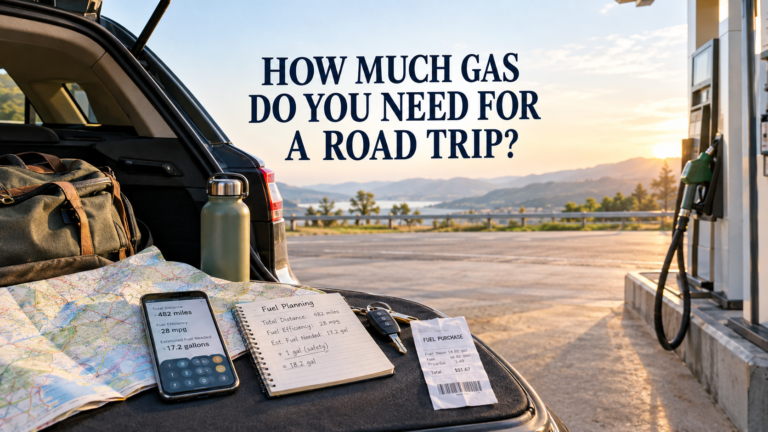
First, estimate your total mileage and use your vehicle’s actual fuel economy.
For example, suppose your road trip is 900 miles and your vehicle averages 30 MPG.
The calculation is:
900 ÷ 30 = 30 gallons
If fuel costs $3.50 per gallon:
30 × $3.50 = $105
Your estimated fuel cost would therefore be $105.
This is an example rather than a guaranteed cost. Actual fuel prices vary by location and date, while your vehicle’s real-world MPG can change because of traffic, speed, weather, passengers, luggage, and driving conditions.
Simple Road Trip Fuel Formula
Fuel needed = Total miles ÷ MPG
Estimated fuel cost = Fuel needed × price per gallon
You can reuse this formula for almost any road trip.
Step 9: Create a Food Plan
You don’t need to plan every restaurant before leaving.
A simple food strategy is usually enough.
Consider bringing:
- Water
- Sandwiches
- Fruit
- Granola bars
- Nuts
- Crackers
- Other easy snacks
A cooler can also help with drinks and foods that need to stay cold.
Then decide where you’ll probably buy meals.
For example:
| Meal | Simple Road Trip Plan |
|---|---|
| Breakfast | Hotel breakfast or packed food |
| Lunch | Packed meal or casual restaurant |
| Snacks | Cooler + shelf-stable snacks |
| Dinner | Local restaurant |
This can help you control food spending without turning your road trip into a strict meal schedule.
Step 10: Budget for the Entire Road Trip
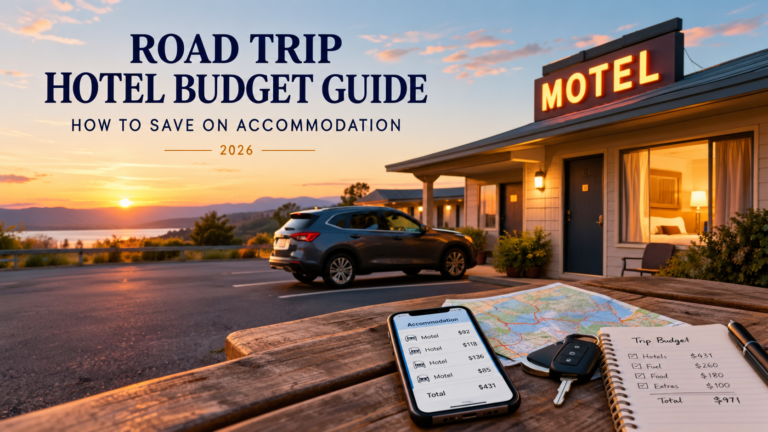
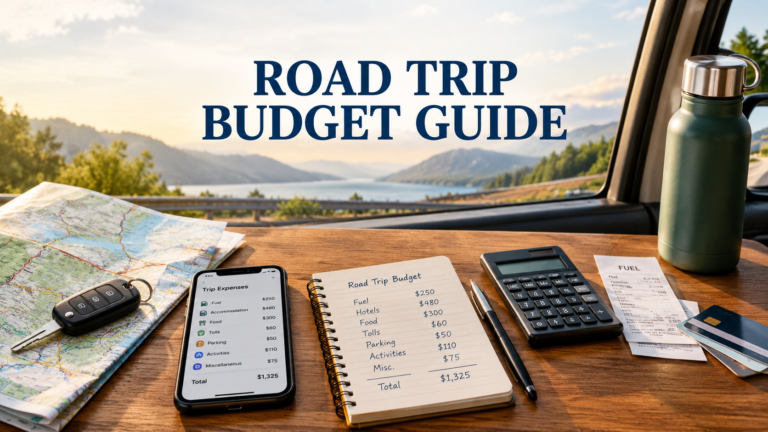
Your road trip budget should include more than fuel.
Think about all the expenses you’ll encounter.
| Expense | Example |
|---|---|
| Fuel | $105 |
| Hotels | $450 |
| Food | $300 |
| Tolls | $60 |
| Parking | $50 |
| Activities | $150 |
| Emergency buffer | $150 |
| Total | $1,265 |
These numbers are illustrative, not current universal prices.
Your actual road trip cost will depend on your destination, vehicle, travel dates, number of passengers, accommodation choices, food preferences, tolls, parking, and activities.
Separate Your Costs
It can help to divide expenses into two groups.
Planned expenses
- Hotels
- Attraction tickets
- Rental car
- Some parking
- Certain reservations
Variable expenses
- Fuel
- Food
- Extra parking
- Unexpected activities
- Detours
- Emergency expenses
This makes it easier to see where your budget might change.
Step 11: Add an Emergency Buffer
Even a carefully planned road trip can have unexpected costs.
You might need to deal with:
- A tire problem
- An unexpected hotel night
- Higher fuel prices
- A medical or personal expense
- A missed reservation
- An unplanned detour
You don’t need to assume something will go wrong.
Just avoid spending your entire road trip budget before you leave.
Having some money set aside for unexpected expenses gives you more flexibility if plans change.
Step 12: Check Weather and Road Conditions
Your road trip itinerary shouldn’t be considered final until you’ve checked conditions closer to departure.
Weather can affect:
- Driving speed
- Visibility
- Mountain routes
- Road closures
- Traffic
- Outdoor activities
Before a major driving day, check current weather and road conditions for the areas you’ll travel through.
If conditions are poor, consider changing your departure time, route, or overnight location rather than forcing yourself to follow the original plan.
Step 13: Keep Your Road Trip Itinerary Flexible
A road trip should have a plan—but it shouldn’t feel like you’re following a train timetable.
A useful itinerary might include:
8:00 AM: Leave hotel
11:30 AM: Arrive at Stop 1
11:30 AM–1:00 PM: Explore
1:00–2:00 PM: Lunch
2:00–5:00 PM: Drive toward Stop 2
5:00 PM onward: Check in and relax
Notice that there isn’t something scheduled every five minutes.
That flexibility gives you room to deal with real-world delays.
A Simple Road Trip Planning Template
You can use this template when building your own itinerary.
| Day | Route | Driving | Main Activity | Overnight |
|---|---|---|---|---|
| 1 | Home → Stop 1 | 3–4 hrs | Explore | Stop 1 |
| 2 | Stop 1 → Stop 2 | 2–3 hrs | Sightseeing | Stop 2 |
| 3 | Stop 2 | Minimal | Full-day activities | Stop 2 |
| 4 | Stop 2 → Stop 3 | 3–4 hrs | Scenic stops | Stop 3 |
| 5 | Stop 3 → Home | 4–5 hrs | Return journey | Home |
Adjust the schedule according to your own route.
The important thing is to make your driving time, activities, and overnight stays work together.
Common Road Trip Planning Mistakes
Trying to Visit Too Many Places
More destinations don’t automatically create a better road trip.
If you’re constantly packing, checking out, driving, and checking in, you may spend more time managing the trip than enjoying it.
Forgetting Local Driving
Your main route may be 800 miles, but driving around cities and attractions can add another 100 miles or more.
Include reasonable local mileage when estimating fuel.
Planning Around Perfect Timing
Traffic and unexpected delays happen.
Don’t build your entire road trip around exact arrival times unless a reservation genuinely requires it.
Ignoring Parking
Parking costs and availability can affect both your budget and schedule.
Check parking arrangements at hotels and major attractions before arriving.
Forgetting the Return Journey
It’s easy to focus on reaching your destination and forget that you’ll eventually have to drive home.
Include the return trip when calculating mileage, fuel, and driving time.
Making Every Day a Driving Day
A road trip with six straight days of long-distance driving can become exhausting.
Try mixing longer travel days with slower days where you spend more time exploring.
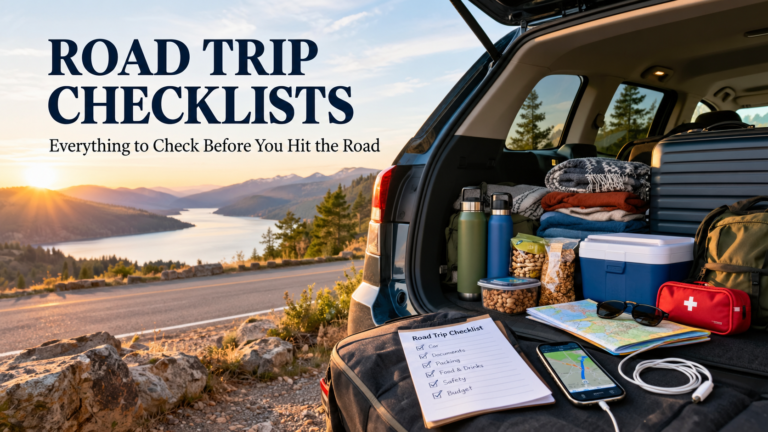
Road Trip Checklist Before You Leave
Route
- Starting point confirmed
- Main destinations selected
- Stops arranged in a logical order
- Total mileage calculated
- Alternative route considered
Driving
- Daily driving time estimated
- Fuel stops identified
- Rest breaks planned
- Weather checked
- Road conditions checked
Accommodation
- Hotels confirmed
- Parking checked
- Check-in times confirmed
- Cancellation policies reviewed
Budget
- Fuel included
- Hotels included
- Food included
- Tolls included
- Parking included
- Activities included
- Emergency buffer added
Vehicle
- Tires checked
- Fluids checked
- Spare tire or repair equipment available
- Vehicle documents ready
- Emergency supplies packed
FAQs About Road Trip Planning
Final Thoughts
A successful road trip isn’t about squeezing the maximum number of destinations into the fewest possible days.
Start with the places that matter most, build a logical route, calculate your total mileage, and give yourself realistic driving times. Then add accommodation, fuel, food, activities, and an emergency buffer to create a complete plan.
Before leaving, check your vehicle and review current weather and road conditions.
Most importantly, leave some room in your schedule. The best part of a road trip isn’t always the destination you planned—it can be the scenic stop, small town, local restaurant, or unexpected viewpoint you discover along the way.