 DriveQuest
Road Trip Tips: 25 Practical Ways to Plan a Safer, Easier & More Affordable Trip
A road trip can be one of the easiest ways to travel at your own pace, but small planning mistakes can quickly turn into extra costs, long driving days, or unnecessary stress.
The good news is that you don’t need an elaborate travel system to have a better trip. With a sensible route, realistic budget, prepared vehicle, and a few simple habits, you can make your road trip smoother from the moment you leave home.
This guide covers 25 practical road trip tips for beginners, families, couples, solo travelers, and anyone who wants to travel comfortably without wasting money.
1. Plan the Route Before You Leave
You don’t need to plan every minute of your trip, but you should know the basics before getting behind the wheel.
Check:
- Starting point and destination
- Total driving distance
- Estimated driving time
- Major highways
- Planned fuel stops
- Overnight stops
- Rest areas
- Tolls
- Road closures or construction
- Weather conditions
Build some flexibility into the route. A plan that allows an extra stop or a change of route is usually more practical than one that depends on perfect timing.
2. Calculate the Total Distance
One of the easiest road trip mistakes is calculating only the distance between your home and destination.
Your actual mileage may include:
- Detours
- Restaurant stops
- Attractions
- Hotel trips
- Scenic routes
- Local driving at your destination
For example, if the main route is 800 miles but you expect 100 miles of additional local and detour driving, your estimated trip mileage is:
800 + 100 = 900 miles
That extra distance matters when estimating fuel and vehicle costs.
3. Estimate Fuel Costs Before the Trip
Your vehicle’s fuel economy is one of the most important numbers for a road trip budget.
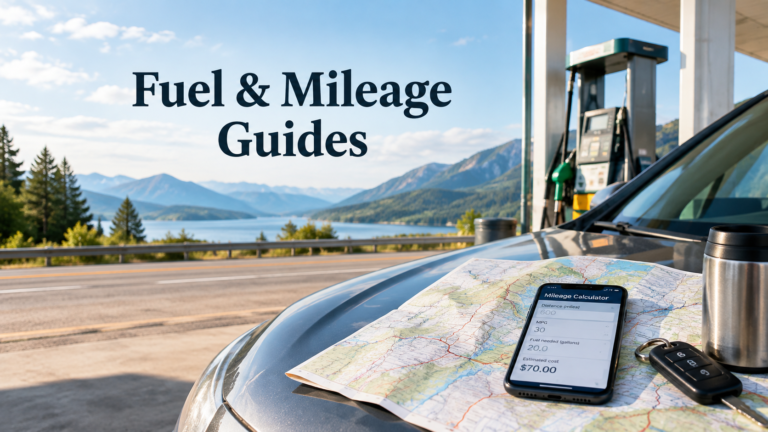
A simple formula is:
Fuel required = Total miles ÷ MPG
Then:
Fuel cost = Fuel required × Price per gallon
For example, suppose your trip is 900 miles, your vehicle gets 30 MPG, and you use an example fuel price of $3.50 per gallon.
900 ÷ 30 = 30 gallons
30 × $3.50 = $105
So the estimated fuel cost would be $105.
This is only an example. Actual fuel prices vary by location and date, and your real-world MPG can change because of traffic, weather, speed, vehicle load, and driving conditions.
If You Use KM/L
For vehicles rated in kilometers per liter:
Fuel required = Total kilometers ÷ KM/L
Then multiply the liters required by the current price per liter.
4. Don’t Budget Only for Fuel
Fuel is easy to remember because you know you’ll need it. Other expenses are easier to overlook.
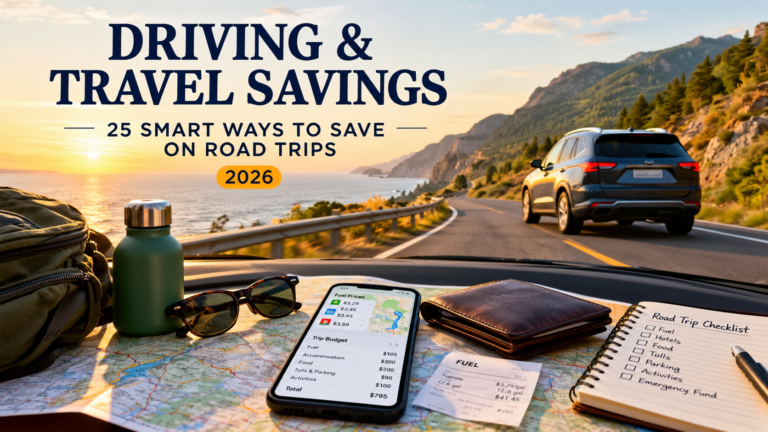
Your road trip budget may also include:
| Expense | What to Consider |
|---|---|
| Fuel | Highway and local driving |
| Accommodation | Hotels, motels, campsites |
| Food | Restaurants, groceries, snacks |
| Tolls | Highways, bridges, tunnels |
| Parking | Hotels, attractions, cities |
| Activities | Attractions and entertainment |
| Maintenance | Oil, tires, servicing |
| Emergency fund | Unexpected costs |
| Miscellaneous | Small purchases and detours |
A realistic budget should account for the entire trip rather than just the biggest expense.
5. Add an Emergency Buffer
Even a carefully planned trip can produce unexpected expenses.
You might need to pay for:
- An unplanned hotel night
- A tire repair
- A replacement item
- Extra fuel
- A medical or roadside expense
- A route change
Instead of spending your entire travel budget, keep a separate emergency amount that you don’t plan to use.
The exact amount depends on your trip length, vehicle, destination, and personal finances. The important point is to leave room for surprises.
6. Check Your Vehicle Before Leaving
A road trip puts more miles on your vehicle than an ordinary day of driving, so a basic pre-trip inspection is worth doing.
Check:
- Tire pressure
- Tire condition
- Spare tire
- Engine oil
- Coolant
- Brake condition
- Lights
- Windshield wipers
- Battery
- Washer fluid
If your vehicle is due for scheduled maintenance, taking care of it before a long trip can be more sensible than waiting until you’re hundreds of miles from home.
7. Don’t Ignore Tire Pressure
Tire pressure affects handling, tire wear, and fuel efficiency.
Check the recommended pressure listed by your vehicle manufacturer rather than simply guessing based on how the tire looks.
It’s particularly useful to check pressure when the tires are cold and before a long drive.
Also inspect the tires for visible damage or unusual wear.
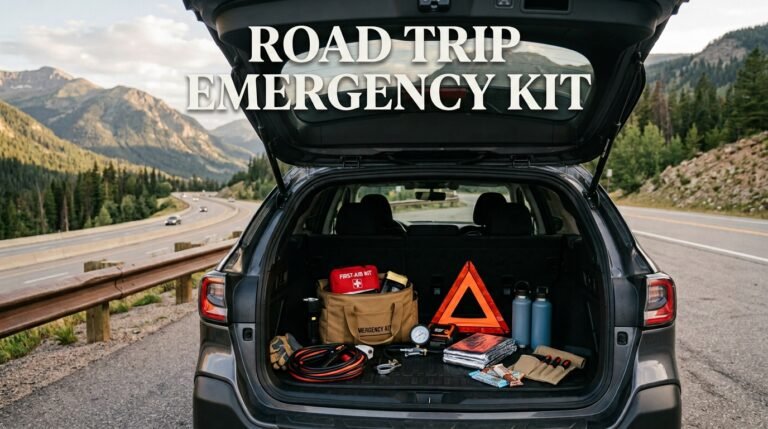
8. Pack an Emergency Car Kit
You don’t need to fill your vehicle with equipment, but a basic emergency kit can be useful.
Consider carrying:
- First-aid supplies
- Flashlight
- Phone charging cable
- Portable power bank
- Jumper cables or a suitable jump starter
- Basic tools
- Tire-pressure gauge
- Water
- Blankets or weather-appropriate clothing
- Reflective warning equipment
- Necessary medications and personal items
Your kit should also reflect the destination and season.
9. Keep Important Items Easy to Reach
Don’t bury everything under three suitcases.
Keep frequently needed items where you can access them without unpacking the entire vehicle:
- Water
- Snacks
- Phone charger
- Maps or travel documents
- Sunglasses
- Tissues
- First-aid supplies
- Cleaning wipes
- Necessary medication
This simple organization can make repeated stops much less frustrating.
10. Plan Fuel Stops in Advance
Don’t always wait until the fuel gauge is nearly empty.
Fuel availability can become less convenient on remote stretches of road, particularly when you’re unfamiliar with the area.
Before leaving, identify a few potential fuel stops along longer sections of your route.
You don’t necessarily need to stop at every planned location. Think of them as backup points that give you options.
11. Compare Fuel Prices Without Chasing Tiny Savings
Checking fuel prices along your route can help control costs, but don’t drive far out of your way just to find a slightly cheaper station.
Suppose your vehicle holds 15 gallons and one station is $0.10 cheaper per gallon.
Your maximum saving would be:
15 × $0.10 = $1.50
If getting there requires a significant detour, the fuel and time spent on the detour may eliminate the saving.
The better approach is to compare prices when convenient stops are already along your route.
12. Pack Snacks and Some Food
Buying every snack at gas stations or convenience stores can make a road trip surprisingly expensive.
Pack practical options such as:
- Fruit
- Sandwiches
- Nuts
- Crackers
- Granola bars
- Water
- Other foods that travel well
You don’t have to bring every meal from home. A combination of packed food and local meals can give you both convenience and variety.
13. Plan Rest Stops Before You Get Tired
A common mistake is treating breaks as something you’ll figure out later.
Instead, identify reasonable stopping points before the trip.
A good stop can give you time to:
- Stretch
- Use the restroom
- Eat
- Drink water
- Check your route
- Refuel
- Reset before continuing
If you’re becoming tired, don’t rely on coffee or music as a substitute for proper rest.
14. Don’t Try to Drive Too Far in One Day
A longer driving day isn’t automatically a more efficient driving day.
An overly aggressive schedule can leave you exhausted and make the trip less enjoyable.
When planning your daily mileage, consider:
- Traffic
- Weather
- Road quality
- Mountain or rural roads
- Number of stops
- Children traveling with you
- Your normal driving tolerance
Leave enough time for unexpected delays instead of assuming everything will go exactly according to the navigation estimate.
15. Check the Weather Before Each Major Driving Day
Weather can change your plans significantly.
Before leaving each morning, check conditions along the route, especially if you’re traveling through areas with:
- Heavy rain
- Snow or ice
- Strong winds
- Extreme heat
- Flooding risks
- Mountain weather
If conditions are poor, adjusting the schedule may be safer than trying to maintain your original arrival time.
16. Download Important Information for Offline Use
Mobile coverage isn’t guaranteed everywhere.
Before entering remote areas, consider downloading:
- Offline maps
- Hotel information
- Booking details
- Important addresses
- Travel documents
- Emergency contact information
Keep your phone charged, but don’t make your entire trip dependent on a constant internet connection.
17. Make Your Accommodation Strategy Flexible
For longer road trips, accommodation can become one of the largest expenses.
You can manage it by deciding where flexibility matters and where certainty matters more.
For example:
Book ahead when:
- Traveling during a busy period
- Visiting a popular destination
- You need a specific hotel
- Traveling with children
- You have a fixed schedule
Consider flexibility when:
- Your route is open-ended
- You’re traveling outside busy periods
- You don’t know exactly how far you’ll drive
Always check the final price, including applicable taxes, parking charges, resort fees, or other mandatory charges where relevant.
18. Don’t Forget Parking Costs
Parking is one of those small expenses that can quietly increase your total budget.
This is particularly relevant when visiting busy cities, attractions, hotels, beaches, or event areas.
Before choosing accommodation, check whether parking is included or charged separately.
Sometimes a slightly cheaper hotel isn’t actually cheaper after adding parking and other mandatory fees.
19. Consider Tolls When Planning Your Route
Your navigation app may offer several route choices, but the fastest route isn’t always the cheapest.
Compare:
- Toll roads
- Toll-free alternatives
- Extra mileage
- Additional driving time
- Fuel consumption
A toll-free route isn’t necessarily better if it adds several hours of driving. The goal is to compare the total cost and time, not just one expense.
20. Give Yourself a Daily Spending Limit
A daily spending target can make a long trip easier to manage.
You could divide your budget into categories such as:
- Food
- Fuel
- Accommodation
- Activities
- Miscellaneous spending
This doesn’t mean you have to follow the number perfectly every day. It simply gives you a reference point so one expensive day doesn’t unexpectedly consume the rest of your budget.
21. Combine Stops When Possible
Small detours add up.
If you need fuel, groceries, and a restroom break, look for a convenient location where you can handle several tasks during one stop.
This saves time and can reduce unnecessary driving.
It also makes your trip feel less like a series of errands.
22. Keep Your Vehicle Organized
A messy car becomes much more frustrating during a multi-day road trip.
Use simple organization:
- One bag for snacks
- One bag for electronics
- A small toiletry bag
- A dedicated document folder
- Separate luggage from items you’ll need during the drive
Don’t put important items underneath everything else.
23. Have a Backup Plan
Your main route isn’t guaranteed to work perfectly.
Road closures, traffic, bad weather, vehicle problems, or unexpected delays can change your plans.
Before leaving, know:
- An alternative route
- The next reasonable overnight stop
- Where you can refuel
- Where you can safely stop
- How to contact roadside assistance if needed
A backup plan doesn’t make your trip more complicated. It gives you options when something doesn’t go as expected.
24. Tell Someone Your General Travel Plan
If you’re traveling alone or through remote areas, consider sharing your general itinerary with someone you trust.
They don’t need minute-by-minute updates.
A simple plan containing your destination, approximate route, and expected arrival timeframe can be useful if your plans change unexpectedly.
25. Leave Room for the Unexpected
Perhaps the most useful road trip tip is to avoid making your schedule so tight that there’s no room for anything unexpected.
You may discover a viewpoint you want to visit, find a great local restaurant, need a longer rest, or encounter traffic that wasn’t in your original plan.
A little flexibility can make the trip more enjoyable without requiring a bigger budget.
A Simple Road Trip Planning Checklist
Use this checklist a few days before departure.
Vehicle
- Check tires and tire pressure
- Check fluids
- Check lights and wipers
- Check brakes
- Confirm spare tire or tire-repair equipment
- Complete scheduled maintenance if needed
Route
- Calculate total mileage
- Check driving time
- Identify fuel stops
- Check tolls
- Look for possible road closures
- Download offline maps
Budget
- Estimate fuel
- Estimate accommodation
- Plan food spending
- Include tolls and parking
- Budget for activities
- Add an emergency buffer
Packing
- Water
- Snacks
- Phone charger
- First-aid supplies
- Important documents
- Weather-appropriate clothing
- Emergency car supplies
Example Road Trip Budget
Here’s a simple illustrative budget for a hypothetical three-day road trip:
| Expense | Example Budget |
|---|---|
| Fuel | $120 |
| Accommodation | $240 |
| Food | $150 |
| Tolls | $40 |
| Parking | $30 |
| Activities | $75 |
| Miscellaneous | $50 |
| Emergency buffer | $100 |
| Total | $805 |
These numbers are examples, not typical or guaranteed costs. Your actual total can be significantly different depending on destination, travel dates, vehicle, number of travelers, accommodation choices, fuel prices, and spending habits.
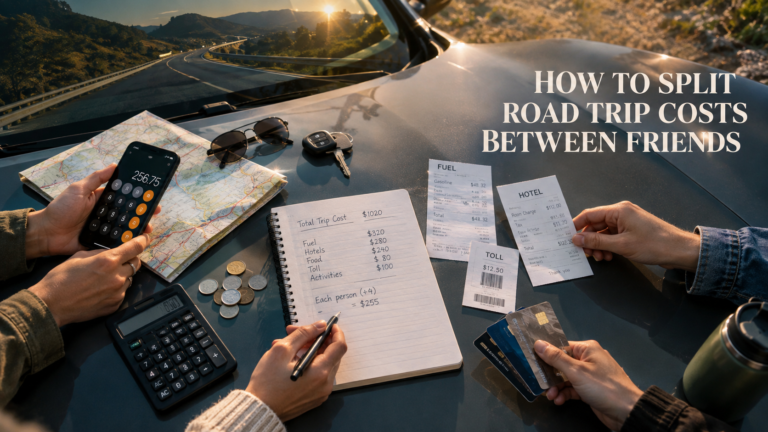
If four people share the $805 trip cost equally, the basic average would be:
$805 ÷ 4 = $201.25 per person
But that doesn’t necessarily mean every traveler will spend exactly $201.25. Some costs, such as food and activities, may vary by person.
Common Road Trip Mistakes to Avoid
Budgeting Only for Fuel
Fuel may be a major expense, but hotels, food, tolls, parking, and activities can add considerably to the final bill.
Forgetting the Return Trip
If you’re calculating a round trip, make sure your mileage includes both directions.
Ignoring Local Driving
The distance between your home and destination isn’t always your total mileage. Attractions, restaurants, hotels, and detours add miles.
Planning Every Minute
A schedule that leaves no room for delays can make a relaxing road trip stressful.
Skipping Vehicle Preparation
Saving a little time before departure isn’t worth discovering a preventable vehicle issue halfway through the trip.
Using Your Entire Budget
If your planned budget is $800, don’t plan an itinerary that costs exactly $800. Unexpected expenses are easier to handle when you have money left over.
FAQs About Road Trip Tips
Final Thoughts
Good road trip tips aren’t about squeezing every possible mile or dollar out of your trip. They’re about removing avoidable problems before they happen.
Before you leave, calculate your total mileage, estimate fuel costs, build a complete budget, prepare your vehicle, check the weather, and leave some room for unexpected expenses and delays.
A few hours of sensible preparation can make the actual trip much easier—and give you more time to enjoy the road instead of worrying about what you forgot.