 DriveQuest
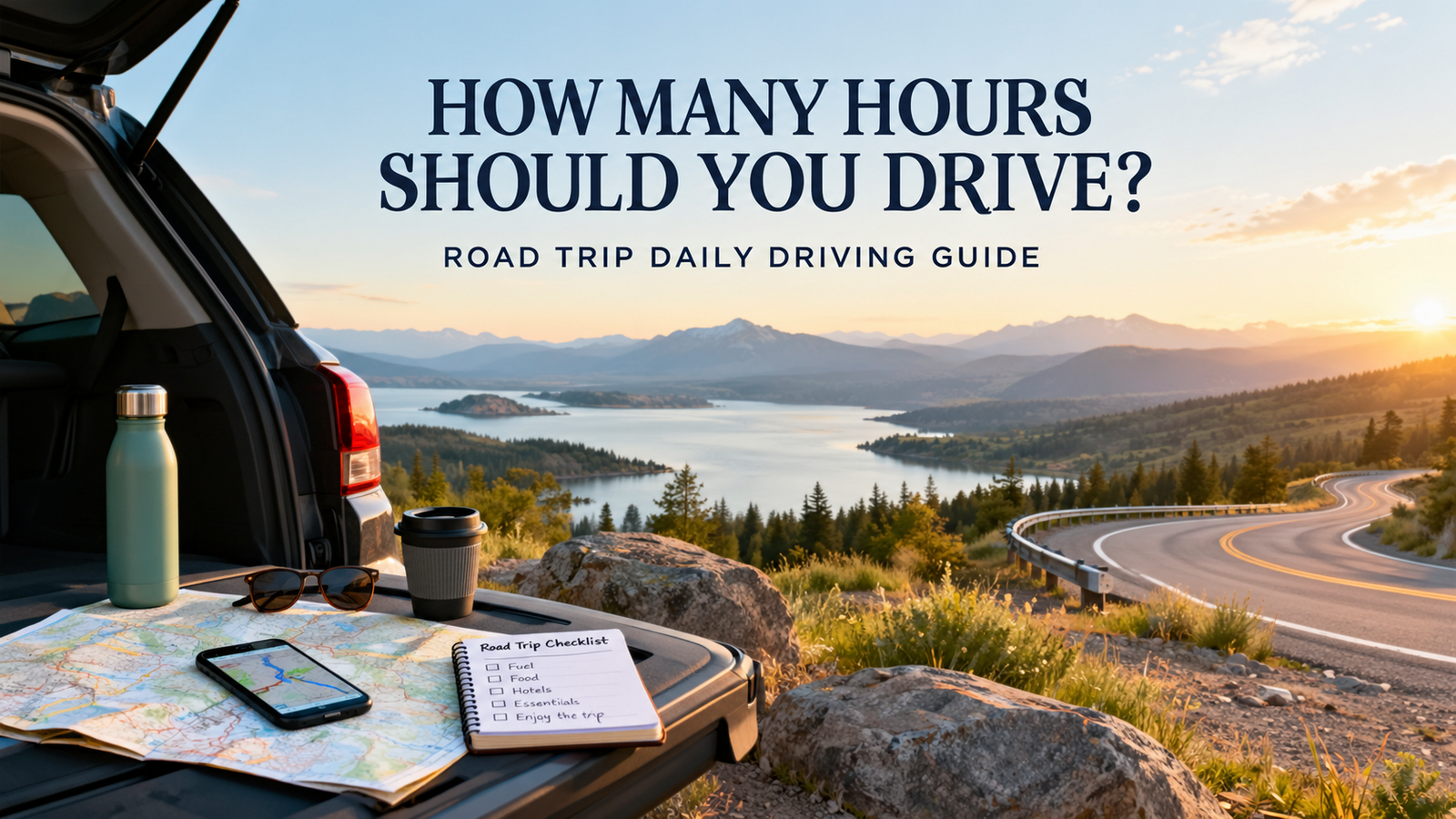
How Many Hours Should You Drive Each Day on a Road Trip?
A road trip can be exciting, but trying to cover too many miles in one day can quickly turn a fun trip into a tiring one.
So, how many hours should you drive each day on a road trip? There is no single number that works for everyone. Your ideal driving time depends on the road, traffic, weather, number of stops, your experience, and most importantly, how rested you are.
For many travelers, planning around 6–8 hours of actual driving in a day can be a practical starting point, but that does not mean spending only 6–8 hours on the road. Fuel stops, meals, bathroom breaks, sightseeing, traffic, and rest stops can easily add several more hours.
The goal is not to drive as far as possible. The goal is to arrive safely with enough energy to enjoy the rest of your trip.
How Many Hours Should You Drive Each Day on a Road Trip?
For a typical road trip, 6–8 hours of driving time per day can work well for many drivers when conditions are good and regular breaks are included.
However, treat this as a planning range rather than a safety limit.
| Driving Time | Best For | What to Expect |
|---|---|---|
| 3–4 hours | Relaxed trips, families, sightseeing | Plenty of time for stops and activities |
| 5–6 hours | Comfortable travel days | Good balance between driving and exploring |
| 6–8 hours | Longer travel days | More distance covered but requires planning |
| 8–10 hours | Experienced travelers with good conditions | Long and tiring day; frequent breaks become important |
| 10+ hours | Only when genuinely necessary | Fatigue can become a serious concern |
A key point is that driving time is not the same as total travel time.
If your navigation app says a route takes 7 hours, you may actually spend 8–10 hours traveling after adding fuel, food, traffic, bathroom, and rest stops.
NHTSA recommends planning enough time during long trips to stop, stretch, eat, change drivers, or rest if you become drowsy.
Why 6–8 Hours Can Be a Practical Road Trip Target
The biggest advantage of limiting your daily driving time is that you leave some energy for the destination.
Imagine arriving at a hotel after 11 hours behind the wheel. You may technically have reached your destination, but you could be too exhausted to have dinner, explore the area, or enjoy the next morning.
A more moderate driving day gives you room for:
- Fuel stops
- Meals
- Bathroom breaks
- Short rest periods
- Unexpected traffic
- Road construction
- Scenic viewpoints
- Weather delays
- Hotel check-in
- A little sightseeing
This is especially useful for first-time road trippers who may underestimate how much time normal stops consume.
How Long Should You Drive Before Taking a Break?
There is no universal break schedule that guarantees safe driving for every person.
Instead, build regular stops into your route and pay attention to your condition. If you are becoming sleepy, struggling to concentrate, repeatedly yawning, or having difficulty keeping your eyes open, do not try to push through just because your planned driving time is not finished.
NHTSA identifies adequate sleep as the primary protection against drowsy driving and advises drivers to stop when they become sleepy. It also notes that drowsiness can occur during long drives and at different times of day.
A simple road-trip approach is:
- Drive for a reasonable stretch.
- Stop before you become exhausted.
- Get out and move around.
- Drink water and eat if needed.
- Change drivers if another rested driver is available.
- Continue only when you are alert enough to drive safely.
Don’t wait until you are struggling to stay awake before deciding that you need a break.
How Many Miles Can You Drive in a Day?
Daily mileage depends heavily on the type of roads you’re using.
For example, 400 highway miles may be very different from 400 miles through cities, mountain roads, construction zones, or areas with frequent stops.
A simple planning formula is:
Estimated miles = Average driving speed × Driving hours
For example:
60 mph × 7 hours = 420 miles
That does not mean you should automatically plan for 420 miles every day.
Your real average speed may be lower because of traffic, fuel stops, road conditions, construction, and slower sections of the route.
For trip planning, it’s usually better to underestimate the distance you can comfortably cover rather than create a schedule that leaves no room for delays.
Example: Planning a 1,200-Mile Road Trip
Suppose you have a 1,200-mile road trip and want to avoid exhausting driving days.
If you plan for roughly 400 miles of travel per day:
1,200 ÷ 400 = 3 driving days
You could organize the trip like this:
| Day | Approx. Distance | Driving Goal |
|---|---|---|
| Day 1 | 350–400 miles | Moderate travel day |
| Day 2 | 400 miles | Main driving day |
| Day 3 | 400–450 miles | Final travel day |
The exact schedule should depend on the route rather than forcing every day to have the same mileage.
If Day 2 contains heavy traffic or difficult terrain, for example, you may want to reduce the mileage and make up the difference on an easier section.
Don’t Confuse Driving Time With Travel Time
This is one of the most common road trip planning mistakes.
Suppose your route has:
7 hours of estimated driving
You might also need:
- 30 minutes for fuel stops
- 45 minutes for meals
- 20 minutes for bathroom breaks
- 30 minutes for stretching and rest
- 45 minutes for traffic or delays
That can turn a 7-hour driving route into a trip that takes roughly 9 hours or more.
This is why a road trip itinerary should not simply copy the estimated arrival time from a navigation app.
Give yourself a buffer.
How Many Hours Should Families Drive Each Day?
Families often need shorter and more flexible driving days.
Children may need more frequent bathroom breaks, food stops, movement, and entertainment. Parents also have to manage luggage, meals, changing schedules, and unexpected stops.
For a family road trip, 4–6 hours of actual driving may feel more manageable than trying to drive 8–10 hours every day.
You can also plan the most interesting stops around natural breaks in the journey.
For example:
Morning: Drive 2–3 hours
Lunch: Stop and stretch
Afternoon: Drive another 2–3 hours
Evening: Arrive, check in, and relax
The shorter driving day may mean the trip takes an extra day, but that can be worthwhile if it makes the experience less stressful.
How Many Hours Should Solo Travelers Drive?
Solo road trips require extra caution because there is no second driver to share the workload.
A solo traveler may want to plan shorter driving days, especially on unfamiliar roads.
Instead of asking, “How many hours can I physically drive?” ask:
“How many hours can I drive while remaining consistently alert and comfortable?”
Those are not always the same thing.
If you notice yourself becoming sleepy, losing concentration, or having difficulty remembering sections of the drive, stop somewhere safe.
NHTSA specifically warns against trying to overcome serious sleepiness with short-term tricks alone. A short nap and caffeine may temporarily increase alertness, but they are not substitutes for adequate sleep.
When Should You Drive Fewer Hours?
Your planned driving time should decrease when road or weather conditions make driving more demanding.
Consider shortening the day when you have:
- Heavy rain
- Snow or ice
- Strong winds
- Mountain roads
- Heavy city traffic
- Construction zones
- Poor visibility
- Unfamiliar roads
- Night driving
- A poorly rested driver
NHTSA advises checking weather and traffic conditions before long trips and allowing extra time for stops or delays.
A 6-hour drive in clear daylight conditions may feel very different from a 6-hour drive through heavy rain at night.
Is It Better to Drive Longer or Add Another Day?
For most relaxed road trips, adding another day can make the schedule easier.
For example, instead of turning a 1,000-mile trip into two 500-mile driving days, you might spread it over three days:
Day 1: 325 miles
Day 2: 350 miles
Day 3: 325 miles
This gives you more flexibility for stops and reduces the pressure to stay on the road for most of the day.
Of course, an extra hotel night adds accommodation costs, so your decision should balance time, money, comfort, and safety.
How to Plan Your Daily Road Trip Schedule
A simple planning process can help you avoid overly ambitious driving days.
1. Calculate Your Total Distance
Start with your actual route.
Don’t forget that sightseeing detours and local driving can increase the total mileage.
2. Choose a Comfortable Daily Driving Target
For a typical trip, you might begin with a target of around 5–8 hours of actual driving, then adjust based on your experience and route.
3. Add Time for Stops
Include fuel, food, bathroom, stretching, and rest stops.
4. Check the Route
Look for:
- Major cities
- Construction
- Mountain passes
- Remote areas
- Fuel availability
- Hotels
- Rest areas
- Weather concerns
5. Choose an Overnight Stop
Instead of choosing a hotel after you’re already exhausted, identify reasonable stopping points before leaving.
6. Leave Some Flexibility
Avoid planning every minute.
A road trip should have enough room for unexpected traffic, interesting stops, and changes in weather.
A Simple 8-Hour Road Trip Day Example
Here’s what a comfortable long driving day might look like:
| Time | Activity |
|---|---|
| 7:00 AM | Breakfast and departure |
| 9:00 AM | Short rest/fuel stop |
| 11:30 AM | Longer break |
| 12:00 PM | Lunch |
| 1:00 PM | Continue driving |
| 3:00 PM | Stretch/fuel stop |
| 5:00 PM | Arrive at destination |
| Evening | Dinner and rest |
The actual times will vary, but the important idea is to avoid treating the entire day as uninterrupted driving.
What If You Need to Drive 10+ Hours?
Sometimes a long driving day is unavoidable.
You may have limited vacation time, a fixed hotel booking, or a destination that is difficult to reach in shorter stages.
If you need to drive for a very long day:
- Start well-rested.
- Avoid unnecessary late-night driving.
- Take regular breaks.
- Share driving with another rested driver when possible.
- Keep food and water available.
- Monitor weather and traffic.
- Don’t continue if you become drowsy.
- Have an alternative stopping point in mind.
NHTSA notes that the highest-risk periods for drowsy driving include midnight to 6 a.m. and the late afternoon, and recommends avoiding driving during peak sleepiness periods when possible.
A long day should be treated as an exception, not a target.
Common Road Trip Driving Mistakes
Planning Based Only on Google Maps or GPS Time
Navigation estimates are useful, but they don’t represent every stop or delay.
Trying to Maximize Miles Every Day
Covering more miles isn’t necessarily better if you arrive exhausted.
Forgetting About the Return Trip
If you’re planning a round trip, calculate both directions rather than budgeting only for the outbound journey.
Ignoring Weather
Bad weather can significantly change your expected travel time.
Driving When Sleepy
This is the mistake you should never try to “power through.”
If you’re struggling to stay awake, stop driving and rest. NHTSA recommends getting adequate sleep and stopping when drowsiness develops.
Booking Hotels Too Far Apart
If your hotel is hundreds of miles away, you may feel pressured to continue driving even when you’re tired.
Choose overnight stops that give you reasonable flexibility.
How to Make Long Road Trip Days More Comfortable
A few simple habits can make long drives easier:
- Start after getting enough sleep.
- Keep the vehicle comfortable without making yourself sleepy.
- Take breaks before you feel exhausted.
- Keep water accessible.
- Pack easy-to-eat snacks.
- Rotate drivers when possible.
- Check traffic before leaving.
- Check weather along the route.
- Keep your phone charged.
- Avoid unnecessary detours.
- Keep your daily schedule flexible.
Most importantly, don’t treat reaching the destination at a specific time as more important than arriving safely.
FAQ
Final Thoughts
How many hours should you drive each day on a road trip? For many travelers, planning around 5–8 hours of actual driving provides a useful starting point, but there is no universal number that is safe or comfortable for everyone.
Build your itinerary around the real conditions of your trip. Consider distance, traffic, weather, road type, stops, passengers, and your own energy level.
Before leaving, calculate your total mileage, choose realistic overnight stops, allow extra time for breaks, and make sure you start each driving day well-rested.
A successful road trip isn’t about seeing how many miles you can cover. It’s about reaching your destination safely while still having enough energy to enjoy the journey.