 DriveQuest
How to Plan Rest Stops on a Long Road Trip
A long road trip can be exciting until you realize you’ve been driving for hours without a proper break. Skipping rest stops may save a few minutes on paper, but it can leave you tired, uncomfortable, distracted, and less prepared for unexpected delays.
Knowing how to plan rest stops on a long road trip makes the entire drive easier. You can organize bathroom breaks, meals, fuel stops, stretching time, and short rest periods before you leave home instead of trying to figure everything out while driving.
This guide explains how to build a practical rest-stop schedule, how often to stop, what to do during each break, and how to adjust your plan for children, older travelers, solo driving, weather, traffic, and long-distance routes.
Why Rest Stops Matter on a Long Road Trip
A rest stop is more than a quick bathroom break.
A good stop gives you an opportunity to get out of the car, move around, drink water, eat something, check your route, and reset before continuing.
Long periods of uninterrupted driving can also make a trip feel much harder than the actual distance suggests. A well-planned schedule gives you natural points to pause instead of pushing yourself until you are exhausted.
Rest stops can help you:
- Take bathroom breaks
- Stretch your legs
- Get food and water
- Refuel the vehicle
- Check the route
- Give children a break from the car
- Let pets stretch when appropriate
- Check weather or road conditions
- Take a short mental break
- Deal with unexpected delays
The goal is not to stop at exactly the same interval every time. The goal is to create a flexible plan that keeps everyone reasonably comfortable and alert.
How Often Should You Stop on a Long Road Trip?
There is no single rest-stop schedule that works for every driver.
Your ideal stopping frequency depends on the driver, passengers, vehicle, weather, traffic, road type, and total trip length.
For planning purposes, many travelers find it useful to think in rough blocks of driving time rather than exact mileage.
For example, you might structure a long driving day like this:
| Trip Stage | Possible Break |
|---|---|
| Start | Vehicle and route check |
| After a period of driving | Short bathroom/stretch break |
| Later in the drive | Fuel + food break |
| Midday | Longer meal/rest break |
| Later afternoon | Short stretch and refreshment break |
| Before arrival | Final fuel or bathroom stop |
These are planning examples, not mandatory rules.
If you feel tired, uncomfortable, distracted, or unwell, take a break sooner rather than trying to reach the next planned stop.
A Simple Rest Stop Formula
One easy way to plan is to divide your driving day into driving blocks.
For example, suppose you have an 800-mile road trip and expect to drive for several hours each day.
Instead of thinking:
“I’ll just drive until I need to stop.”
Create planned opportunities for:
- Bathroom breaks
- Fuel stops
- Meals
- Stretching
- Route checks
- Longer rest periods
You can then combine some of these stops.
For example, a fuel stop can also become a bathroom and stretching break. A lunch stop can give everyone enough time to eat, walk around, and reset.
Combining necessary stops is one of the easiest ways to avoid wasting time.
Plan Rest Stops Before You Leave
You don’t need to schedule every minute of your trip, but identifying several likely stopping points before departure can make a long drive much smoother.
Start by looking at your route and identifying:
- Rest areas
- Service plazas
- Gas stations
- Restaurants
- Grocery stores
- Safe parking areas
- Visitor centers
- Highway travel centers
- Hotels or overnight stops
Mark several options rather than relying on one specific location.
A planned rest area could be closed, crowded, difficult to access, or simply too far away when you need a break.
Having alternatives gives you flexibility.
Build Your Rest Stops Around Your Route
Your route should influence your stop schedule.
A road trip through a major highway corridor may have frequent services, while a remote route may have much longer stretches between fuel, food, and restroom facilities.
Before leaving, ask:
- Where is the next reliable fuel stop?
- Where can I use a restroom?
- Where can I safely pull over?
- Where can I get food?
- Are there long stretches with limited services?
- Are there mountain, desert, rural, or isolated sections?
- Is bad weather possible?
- Are there road closures or construction areas?
If a section of your route has limited services, plan ahead instead of assuming another convenient stop will appear.
Don’t Make Every Stop a Fuel Stop
One common mistake is connecting every break to fuel.
You don’t need to wait until the fuel tank is nearly empty before stopping.
Likewise, you don’t need to refuel every time you stretch your legs.
A useful approach is to separate your stops into different types.
Short Rest Stop
A short stop might include:
- Bathroom
- Water
- Stretching
- Quick snack
- Route check
Fuel Stop
A fuel stop can include:
- Refueling
- Bathroom
- Walking
- Water
- Quick snack
Meal Stop
A longer stop may include:
- Lunch or dinner
- Walking
- Bathroom
- Hydration
- Route review
Longer Recovery Stop
If the driver is becoming tired, the priority changes.
Instead of trying to make a scheduled stop as short as possible, take enough time to properly recover. If you remain tired after a break, continuing to drive may not be the right choice.
Plan Fuel Stops Separately
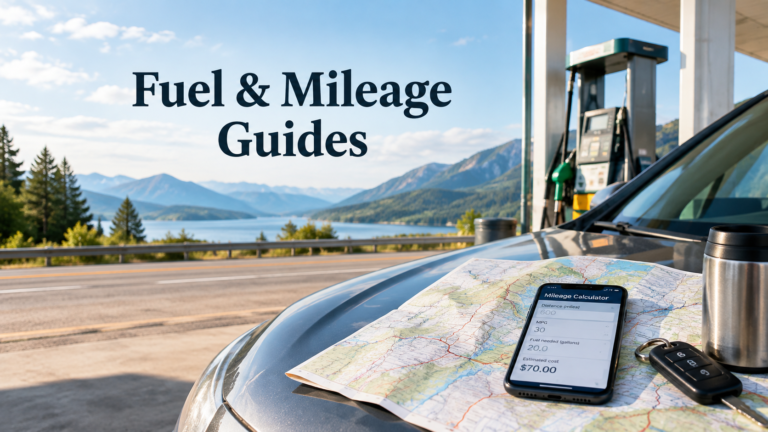
Fuel planning and rest-stop planning work well together, but they aren’t exactly the same thing.
Suppose your car gets 30 MPG and you expect to drive 600 miles.
Estimated fuel required:
600 ÷ 30 = 20 gallons
If your usable fuel capacity and starting fuel allow you to comfortably cover that distance, you still may want to stop before the tank gets very low.
Why?
Because fuel availability can change along the route, and an unexpected detour or traffic delay can increase your distance.
A practical road trip plan should leave some flexibility instead of depending on the vehicle reaching an extremely low fuel level.
Use Meal Stops to Create Longer Breaks
Meals are useful opportunities to build longer breaks into a driving day.
Instead of eating while driving whenever possible, consider stopping for a proper meal when the schedule allows.
A 30–60 minute break can provide time to:
- Eat
- Walk
- Stretch
- Use the restroom
- Refill water
- Check the next section of the route
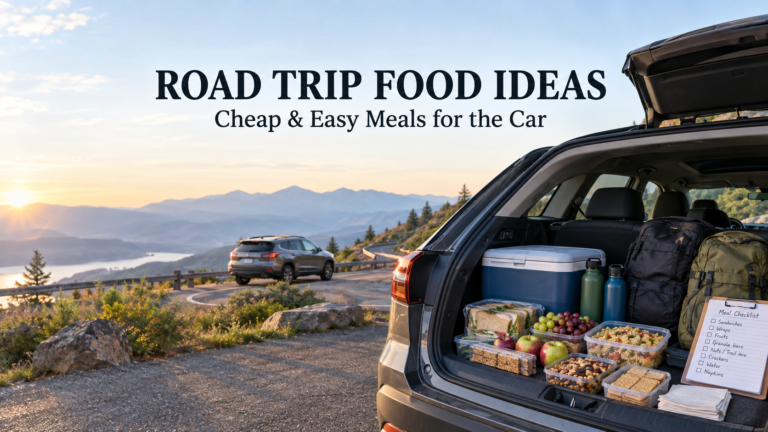
You can also save money by packing some food and snacks.
For example, bringing sandwiches, fruit, nuts, water, and other suitable road-trip foods can reduce the need to buy every meal at highway restaurants.
How to Plan Rest Stops With Children
Traveling with children usually requires more flexibility.
A schedule that works for two adults may not work for a family with young children.
Children may need more frequent bathroom breaks, food, movement, and entertainment changes.
When planning a family road trip, look for stops that provide:
- Clean restrooms
- Safe walking areas
- Seating
- Food options
- Space for children to move around
- Easy parking
You can also turn some breaks into small activities.
Instead of saying, “We have to stop again,” give the stop a purpose:
Bathroom → snack → stretch → five-minute walk → back on the road.
This can make the trip feel less frustrating for everyone.
How to Plan Rest Stops for Solo Road Trips
Solo drivers need to pay particular attention to fatigue because there is no second driver to share the workload.
Before leaving, identify several potential stopping points along the route.
More importantly, don’t treat your schedule as a promise that you must follow regardless of how you feel.
If you’re becoming sleepy or struggling to stay focused, take a proper break.
A short stop may help you refresh, but if you remain tired, consider a longer rest period or changing your overnight plans.
Arriving later is better than turning a road trip into an unsafe driving situation.
Plan Longer Breaks During Very Long Driving Days
A long road trip becomes much easier when you distinguish between a quick stop and a genuine break.
For example:
| Break Type | Typical Purpose |
|---|---|
| Quick stop | Bathroom + water |
| Short break | Bathroom + stretching + snack |
| Fuel break | Fuel + bathroom + movement |
| Meal break | Food + walking + longer rest |
| Extended break | Recovery when tired or stressed |
The exact duration depends on your needs.
Don’t make the mistake of believing that every break must be completed as quickly as possible. Saving 10 minutes is not useful if everyone gets back into the car tired, uncomfortable, or irritated.
Account for Unexpected Delays
Your rest-stop plan should include some spare time.
Traffic, construction, weather, road closures, parking problems, long fuel lines, and unexpected bathroom breaks can all change your schedule.
If your plan assumes that every stop will take exactly 10 minutes, the entire day can quickly fall behind.
Instead, build some flexibility into the itinerary.
For example:
Planned driving time + planned stops + buffer time = realistic travel day
The buffer is especially useful on family trips and long-distance routes.
Don’t Ignore Weather and Road Conditions
Weather can change how often you need to stop and how long the journey takes.
Rain, snow, strong winds, extreme heat, mountain roads, and poor visibility can all affect driving conditions.
If conditions become difficult, adjust your schedule.
You may need to:
- Stop more frequently
- Take longer breaks
- Reduce your driving distance for the day
- Find an earlier overnight stop
- Refuel sooner
- Check updated road conditions
A rest-stop plan should support safe and comfortable travel rather than force you to maintain an unrealistic timetable.
Create a Rest Stop Checklist
Before leaving, create a simple checklist you can use during the trip.
At Every Major Stop
- Use the restroom
- Drink water
- Stretch or walk
- Check fuel level
- Check route
- Collect trash from the vehicle
- Check passengers’ needs
- Confirm the next stop
This takes very little time but can prevent small problems from becoming bigger ones later.
A Sample Long Road Trip Rest-Stop Plan
Imagine you’re planning a 500-mile driving day.
Instead of attempting to complete the entire distance with only one meal break, you could create a flexible schedule like this:
| Stage | Planned Action |
|---|---|
| Start | Full vehicle check + route review |
| Early drive | Short stretch/bathroom stop |
| Next section | Fuel + bathroom + snack |
| Midday | Meal + longer walk |
| Afternoon | Short bathroom/stretch break |
| Later drive | Fuel if needed + refreshment |
| Final section | Adjust based on fatigue and traffic |
| Arrival | Park, unload, and rest |
This isn’t a fixed timetable. Your actual stops should depend on your starting fuel level, passengers, traffic, weather, and how everyone feels during the drive.
How Much Time Should You Add for Rest Stops?
This is one of the most useful calculations when planning a road trip.
Suppose your navigation app estimates 8 hours of driving time.
If you plan:
- 3 short breaks of 10 minutes = 30 minutes
- 1 meal break of 40 minutes = 40 minutes
- 1 fuel stop of 15 minutes = 15 minutes
Your planned stop time is:
30 + 40 + 15 = 85 minutes
So your basic travel estimate becomes:
8 hours + 1 hour 25 minutes = 9 hours 25 minutes
You may also want some additional buffer for traffic, parking, construction, or unexpected delays.
This is much more realistic than telling yourself an 8-hour navigation estimate means you’ll arrive exactly eight hours after departure.
Common Rest-Stop Planning Mistakes
1. Planning Only for Fuel
Fuel is important, but it isn’t the only reason to stop.
Your passengers need bathroom breaks, food, movement, and rest too.
2. Waiting Until You’re Exhausted
Don’t treat extreme tiredness as the signal that you should finally stop.
Plan breaks before the drive becomes uncomfortable.
3. Making the Schedule Too Tight
A schedule with no spare time can turn a small delay into a stressful situation.
Give yourself some breathing room.
4. Choosing Stops Without Checking Access
Some locations may look convenient on a map but may require a detour or have limited facilities.
Check your planned stops before the trip when possible.
5. Forgetting Children or Pets
A stop schedule based only on the driver’s needs may not work for everyone.
Consider the needs of every passenger.
6. Skipping Longer Breaks on Very Long Drives
A quick bathroom stop isn’t always enough.
If the driver needs a genuine reset, allow enough time for it.
7. Treating the GPS Arrival Time as a Guarantee
Navigation estimates can change because of traffic, weather, construction, and stops.
Use arrival times as estimates rather than promises.
Ways to Make Rest Stops More Efficient
You don’t need to spend 30 minutes at every stop.
The trick is to combine tasks.
At a fuel stop, for example:
Fuel → bathroom → water → stretch → route check → leave
At a meal stop:
Eat → bathroom → walk → refill water → check route → leave
Preparing before you stop also helps.
Keep frequently used items easy to reach so you aren’t searching through luggage every time someone needs a snack, water bottle, or charging cable.
Should You Plan Every Rest Stop in Advance?
You should plan the general structure of your stops, but you don’t need to lock yourself into an exact schedule.
A good approach is to identify:
- Your likely first stop
- Several fuel options
- Meal locations
- Backup rest areas
- A few longer-break opportunities
- Your overnight destination
Then adjust the plan during the trip.
This gives you structure without turning the road trip into a rigid timetable.
Frequently Asked Questions
Final Thoughts
Learning how to plan rest stops on a long road trip is really about creating a comfortable and flexible driving day.
Before you leave, review your route, identify possible fuel and rest locations, plan meal breaks, and leave room for unexpected delays. Don’t be afraid to change the schedule if traffic, weather, passengers, or fatigue make your original plan unrealistic.
A practical road trip schedule should answer three simple questions:
Where can I stop? When will I probably need a break? What will I do during that break?
Plan those basics in advance, then give yourself enough flexibility to enjoy the road instead of constantly watching the clock.