 DriveQuest
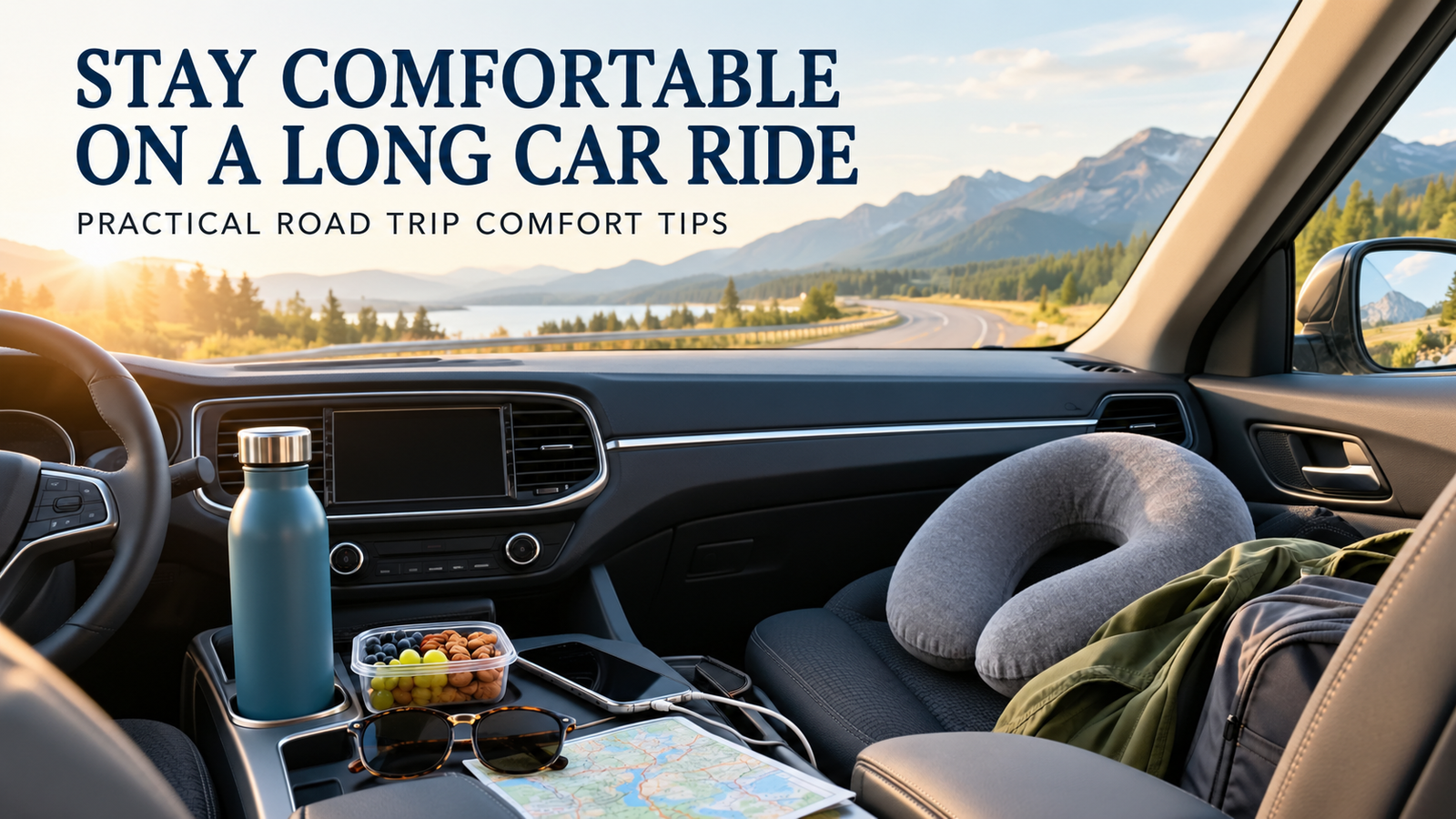
How to Stay Comfortable During a Long Car Ride
A long car ride can be exciting, but several hours in the same seat can quickly lead to a stiff back, tired legs, dehydration, boredom, or an uncomfortable driving schedule.
The good news is that you don’t need expensive equipment or complicated tricks to make a long drive more comfortable. With the right seating position, planned breaks, comfortable clothing, snacks, entertainment, and a realistic driving schedule, you can make the journey much easier.
This guide explains how to stay comfortable during a long car ride, whether you’re driving across several states, taking a family road trip, or spending most of the day on the highway.
How to Stay Comfortable During a Long Car Ride
Comfort starts before you leave the driveway. A few minutes spent preparing the car and planning your stops can prevent many of the problems that appear several hours into the trip.
Focus on these areas:
- Adjust your seat and mirrors before departure
- Keep frequently used items within easy reach
- Take regular breaks
- Stay hydrated without overdoing it
- Choose comfortable clothing
- Bring simple snacks
- Keep the cabin temperature comfortable
- Plan entertainment before leaving
- Avoid trying to drive for too many hours without a meaningful break
- Prepare for unexpected delays
The goal isn’t to eliminate every minor discomfort. It’s to make the entire trip manageable without constantly feeling like you need to stretch, eat, stop, or change positions.
Adjust Your Seat Before Starting the Drive
One of the simplest ways to improve long-distance driving comfort is to set up your driver’s seat correctly.
Don’t wait until you’re already uncomfortable to make adjustments.
Check Your Driving Position
Your seat should allow you to comfortably reach the pedals without stretching your legs too far.
Your back should be supported by the seat, while your shoulders should remain reasonably relaxed when holding the steering wheel.
Before leaving, check:
- Seat distance from the pedals
- Seat height
- Backrest angle
- Headrest position
- Steering-wheel position
- Mirror position
- Lumbar support, if available
You should be able to operate the controls without repeatedly leaning forward or twisting your body.
Don’t Sit Too Far Back
A common mistake is moving the seat too far away from the steering wheel because it initially feels spacious.
That can leave you reaching for the wheel and pedals for hours.
Instead, aim for a position that gives your legs and arms comfortable movement while allowing you to maintain good control of the vehicle.
Use Breaks to Move, Not Just Refuel
When planning a long car ride, don’t think of a fuel stop as the only reason to get out of the vehicle.
A short movement break can make the next portion of the trip much more comfortable.
When you stop:
- Get out of the car.
- Walk around for a few minutes.
- Move your shoulders and arms.
- Gently stretch your legs.
- Get some water.
- Use the restroom if necessary.
- Check the vehicle before getting back on the road.
You don’t need an elaborate exercise routine at every stop.
The important thing is to avoid spending the entire day sitting without meaningful movement.
Plan Your Long Car Ride Around Breaks
Instead of asking, “How many hours can I drive without stopping?” plan your journey around sensible breaks.
Your exact schedule depends on the driver, passengers, road conditions, weather, traffic, and trip length.
A simple approach is to identify several potential stopping areas before departure:
| Stop Type | What It’s Useful For |
|---|---|
| Fuel stop | Gas, restroom, quick movement |
| Rest area | Walking, restroom, short break |
| Meal stop | Food and a longer break |
| Scenic stop | Fresh air and a mental reset |
| Overnight stop | Ending the day’s driving safely |
Don’t force yourself to continue driving simply because the GPS says you will arrive sooner.
A slightly longer trip with sensible breaks can be much easier than spending hours trying to avoid stopping.
Wear Comfortable Clothes
You don’t need special road-trip clothing.
Choose clothes that allow you to sit comfortably for several hours.
Good options often include:
- Stretchable pants or shorts
- Comfortable shirts
- Lightweight layers
- Breathable socks
- Comfortable shoes
Avoid clothing that restricts your legs or becomes uncomfortable when you’re sitting for a long time.
For passengers, loose layers can also make it easier to adjust to changing temperatures inside the car.
Keep the Car at a Comfortable Temperature
Cabin temperature can have a surprisingly large effect on how comfortable a long drive feels.
If the car is too warm, you may become tired or uncomfortable. If it’s too cold, passengers may spend hours trying to stay warm.
Instead of setting the temperature once and forgetting about it, adjust it when necessary.
It’s also useful to keep a light jacket or sweater accessible rather than packed underneath luggage.
Don’t Block Airflow With Luggage
Make sure bags and other belongings don’t interfere with ventilation.
Passengers may also prefer different temperatures, so having a light extra layer available can be easier than repeatedly changing the entire cabin temperature.
Stay Hydrated Without Creating Constant Stops
Water is useful on a long road trip, but hydration needs to be practical.
Keep a reusable water bottle within easy reach when you’re a passenger. Drivers should only handle drinks when the vehicle is safely stopped if doing so would distract them.
At the same time, don’t feel that you need to constantly drink large amounts of water just because you’re traveling.
Plan restroom stops naturally into your route.
A simple approach is:
Water + planned stops + listening to your body
If you’re driving, never let the need to drink, eat, or reach for an item distract you from the road.
Pack Better Road Trip Snacks
Hunger can make a long car ride feel much harder.
Rather than depending entirely on gas stations or fast-food restaurants, bring a small selection of easy-to-eat snacks.
Useful choices can include:
- Nuts
- Fresh fruit
- Crackers
- Granola or oat bars
- Sandwiches
- Cheese
- Dried fruit
- Water
- Other familiar snacks that travel well
For family road trips, individual snack portions can also reduce arguments over sharing and make it easier to control how quickly food disappears.
Use a small cooler for foods that need to stay cold.
Avoid Eating Extremely Heavy Meals Before Driving
A very large meal can leave you feeling uncomfortable during a long period of sitting.
If you’re about to drive for several hours, a moderate meal may be easier to manage than eating until you’re extremely full.
You can also divide food into smaller meals and snacks throughout the day.
The right approach depends on your normal eating habits and individual needs.
Make the Passenger Area Comfortable
Passengers have different comfort needs from drivers because they aren’t responsible for controlling the vehicle.
If you’re traveling with family or friends, consider giving passengers easy access to:
- Water
- Snacks
- Headphones
- Chargers
- Books
- Tablets or other entertainment
- Blankets
- Small pillows
- Personal items
Keep frequently used items somewhere they can be reached without digging through large suitcases.
Give Children Their Own Travel Kit
For children, a small personal bag can make a long road trip easier.
It might contain:
- Headphones
- Books
- Coloring supplies
- Games
- Snacks
- Water bottle
- Small comfort item
- Tablet or other approved entertainment
This can also prevent the entire car from becoming disorganized.
Consider a Small Travel Pillow
A small travel pillow can be useful for passengers who want additional support.
However, don’t assume that a large pillow is automatically better.
A bulky pillow can force your head or neck into an awkward position.
Look for something that provides comfortable support without pushing your head too far forward.
For drivers, avoid adding cushions or accessories that interfere with proper control of the vehicle.
Keep Frequently Used Items Accessible
A comfortable road trip can become frustrating when every small item requires opening the trunk.
Before leaving, organize the cabin so essential items are easy for passengers to reach.
A simple setup might look like this:
| Item | Suggested Location |
|---|---|
| Water | Cup holder |
| Snacks | Small cabin bag |
| Phone charger | Center console |
| Tissues | Door pocket |
| Sunglasses | Easy-access compartment |
| Jacket | Seat or accessible bag |
| Travel documents | Secure organizer |
Drivers should keep their attention on driving and avoid reaching for loose objects while moving.
Reduce Cabin Clutter
Too much stuff inside the car can make a long journey feel cramped.
Try to keep only frequently used items in the passenger area.
Put larger luggage securely in the trunk or designated storage area.
A cleaner cabin makes it easier to find what you need and gives passengers more usable space.
Plan Entertainment Before You Leave
Boredom can make a long road trip feel much longer.
Prepare entertainment before departure rather than trying to organize everything while traveling.
Depending on the passenger, options include:
- Downloaded podcasts
- Audiobooks
- Music playlists
- Offline maps
- Downloaded movies or shows for passengers
- Road-trip games
- Conversation topics
- Travel journals
If you’re driving, choose entertainment that doesn’t require you to look at or operate your phone.
Set up navigation and audio before starting whenever possible.
Don’t Try to Finish the Trip as Fast as Possible
One of the biggest mistakes on a long road trip is treating the journey like a race.
A schedule that looks manageable on paper can become exhausting when you add:
- Traffic
- Fuel stops
- Meals
- Restrooms
- Construction
- Weather
- Unexpected delays
- Navigation mistakes
If your route says you’ll drive for eight hours, remember that the total travel day can be longer once breaks are included.
Build some flexibility into your schedule.
Know When You Need a Real Break
There’s a difference between being mildly uncomfortable and being too tired to continue driving safely.
If you notice that you’re struggling to stay alert, repeatedly losing focus, missing road signs, or having difficulty remembering the last part of your drive, don’t simply turn up the music and keep going.
Stop driving and take a proper break.
If you’re still too tired after resting, arrange a safer alternative, such as changing drivers when another qualified and alert driver is available or stopping for the night.
No arrival time is worth taking unnecessary risks.
Long Car Ride Comfort Checklist
Before leaving, run through this quick checklist:
- Seat adjusted
- Mirrors adjusted
- Comfortable clothing packed
- Water available
- Snacks packed
- Phone charged
- Navigation prepared
- Entertainment downloaded
- Rest stops identified
- Fuel stops considered
- Light jacket or extra layer available
- Travel documents accessible
- Emergency supplies packed
- Vehicle checked before departure
This takes only a few minutes but can prevent many small problems during the journey.
A Simple Long-Distance Comfort Plan
Here’s an example of how you might structure a full driving day.
Imagine you’re planning a long road trip with several hours of highway driving.
Before Departure
Set up the seat, mirrors, navigation, music, water, and snacks before starting.
During the First Driving Period
Focus on settling into a comfortable driving position rather than constantly changing your seat.
First Break
Get out, walk around, use the restroom, and check whether you need fuel.
Meal Break
Have a reasonable meal and spend some time away from the vehicle.
Afternoon Driving
Keep water and snacks available, but continue making proper stops rather than pushing through discomfort.
Final Portion
Pay close attention to fatigue. If you’re becoming too tired, reconsider the plan instead of forcing yourself to complete the original schedule.
Common Long Car Ride Comfort Mistakes
1. Sitting in the Same Position for Hours
Even a good seat can become uncomfortable if you never leave it.
Better approach: Plan movement breaks into your route.
2. Packing Everything in the Trunk
If every useful item is buried under luggage, passengers may become frustrated.
Better approach: Keep a small cabin bag for items you’ll use during the drive.
3. Ignoring Small Discomforts
A minor seating problem can become much more annoying after several hours.
Better approach: Make reasonable adjustments during safe stops.
4. Forgetting About Temperature Changes
Morning, afternoon, and evening temperatures can feel very different.
Better approach: Keep a light extra layer accessible.
5. Planning an Unrealistically Long Driving Day
A schedule with no room for breaks leaves little flexibility when something goes wrong.
Better approach: Allow extra time for stops and unexpected delays.
6. Treating Fatigue Like a Comfort Problem
Sometimes you’re not uncomfortable—you’re simply too tired to keep driving.
Better approach: Stop and rest rather than trying to overcome serious fatigue with music, caffeine, or other distractions.
How to Make a Long Car Ride More Comfortable for Families
Family road trips require a little more preparation because children may become uncomfortable or bored before adults do.
Consider:
- Planning regular restroom stops
- Keeping snacks accessible
- Bringing entertainment
- Packing extra clothes
- Carrying tissues and cleaning supplies
- Using a small cooler
- Giving children personal activity bags
- Allowing some flexibility in the schedule
Don’t try to make every minute of the journey perfectly structured.
A little flexibility can make unexpected stops much less stressful.
How to Stay Comfortable as a Solo Road Tripper
Solo travelers have one major limitation: there’s nobody else to take over driving or handle navigation while the vehicle is moving.
Prepare as much as possible before departure.
Set up:
- Navigation
- Phone charging
- Audio
- Water
- Snacks
- Sunglasses
- Road information
- Planned stops
Most importantly, take fatigue seriously.
A solo driver should have an even lower tolerance for pushing through significant tiredness because there is no second driver available.
FAQ:
Final Thoughts
Knowing how to stay comfortable during a long car ride comes down to preparation and pacing rather than expensive travel accessories.
Set up your seat before leaving, organize the cabin, bring simple food and water, plan sensible stops, and give yourself enough time to deal with traffic and unexpected delays.
Before your next road trip, spend a few minutes preparing your car and planning your breaks. A little preparation can make several hours behind the wheel feel much more manageable—and help you arrive ready to enjoy the destination rather than exhausted from getting there.