 DriveQuest
Road Trip Planning Guides: A Simple Step-by-Step Guide for Beginners
Planning a road trip sounds simple: choose a destination, get in the car, and start driving. In reality, a little planning can make the difference between a relaxed trip and one filled with rushed stops, unexpected costs, and unnecessary stress.
The good news is that you don’t need a complicated spreadsheet or hours of research to plan a great road trip.
This beginner-friendly guide walks you through the key parts of road trip planning, including choosing a route, estimating driving time, planning stops, budgeting for fuel and food, booking accommodation, preparing your vehicle, and creating an emergency plan.
What Should You Plan Before a Road Trip?
A good road trip plan should cover more than just your destination.
Before leaving, think about:
- Your total distance
- Driving time
- Planned stops
- Fuel stops
- Accommodation
- Food and drinks
- Tolls and parking
- Weather and road conditions
- Vehicle preparation
- Travel documents
- Emergency expenses
- Your overall budget
You don’t need to plan every minute. The goal is to know the important details while leaving enough flexibility to enjoy the trip.
Road Trip Planning Guides: Start With Your Route
The route is the foundation of your road trip.
Start by entering your starting point and destination into a reliable navigation app or mapping service. Then look beyond the shortest route.
A route that saves 30 minutes but has fewer fuel stations, limited food options, or difficult driving conditions may not be the most practical choice.
Check These Route Details
Before finalizing your route, look at:
- Total distance
- Estimated driving time
- Major highways
- Toll roads
- Rest areas
- Fuel stations
- Food options
- Potential overnight locations
- Construction zones
- Weather-sensitive areas
- Alternative routes
If you’re traveling with children, older passengers, or someone who gets tired easily, allow additional time for breaks.
Don’t Plan to Drive the Entire Distance Without Breaks
One of the most common road trip planning mistakes is focusing only on the destination.
For example, a navigation app might estimate a trip at eight hours of driving. That doesn’t mean your complete travel day will take only eight hours.
You may need time for:
- Fuel
- Restroom breaks
- Meals
- Stretching
- Traffic
- Unexpected delays
- Short sightseeing stops
A better approach is to treat the navigation estimate as driving time, not your complete schedule.
A Simple Example
Imagine your route requires 8 hours of actual driving.
You could add:
| Activity | Example Time |
|---|---|
| Driving | 8 hours |
| Fuel/restroom stops | 45 minutes |
| Meal breaks | 1 hour |
| Short rest breaks | 30 minutes |
| Possible delays | 30 minutes |
| Approximate day | 10 hours 45 minutes |
These are planning examples, not guarantees. Traffic, weather, road conditions, and personal needs can change the actual travel time.
Decide How Many Days You Need
Don’t automatically choose the shortest possible schedule.
If you have a 1,000-mile journey, dividing the distance across several days may make the trip much more comfortable than attempting to complete it in one exhausting drive.
For example:
1,000 miles ÷ 4 days = 250 miles per day
That doesn’t mean you must drive exactly 250 miles every day. It simply gives you a starting point for building your itinerary.
Consider shorter driving days if you want time for sightseeing.
If the purpose of your trip is simply getting from one location to another, you may choose longer driving days—but make sure the schedule remains realistic.
Plan Stops Before You Leave
You don’t need to reserve every stop, but it helps to identify a few useful locations along the route.
Look for:
- Rest areas
- Gas stations
- Grocery stores
- Restaurants
- Scenic viewpoints
- Parks
- Hotels
- Hospitals or urgent-care facilities in remote areas
Planning stops in advance can be especially helpful when driving through rural areas where services may be spread far apart.
Use the “Next Major Stop” Method
Instead of trying to plan every mile, divide the journey into manageable sections.
For example:
Home → Fuel Stop → Lunch Stop → Scenic Stop → Overnight Hotel
This gives you structure without making the trip feel like a rigid schedule.
Estimate Your Fuel Costs
Fuel is one of the easiest road trip expenses to underestimate because people sometimes calculate only the distance from the starting point to the destination.
Remember to consider the return trip if you’re driving home.
Basic Fuel Cost Formula
You can calculate estimated fuel costs with:
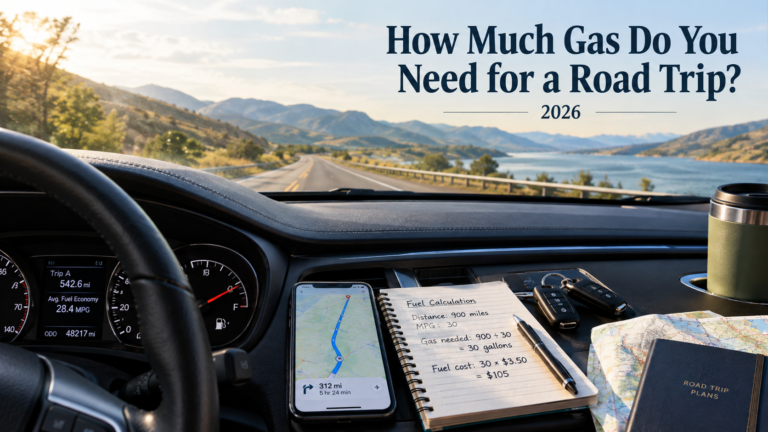
Fuel required = Total distance ÷ Vehicle fuel economy
Then:
Fuel cost = Fuel required × Fuel price
Example
Suppose your vehicle gets 30 MPG and your total trip distance is 900 miles.
900 ÷ 30 = 30 gallons
If fuel costs $3.50 per gallon:
30 × $3.50 = $105
So the estimated fuel cost would be $105.
This is only an example. Actual fuel expenses depend on your vehicle, driving conditions, fuel prices, traffic, vehicle load, and driving style.
If your vehicle uses kilometers per liter, you can use the same basic concept with your local units.
Remember That Real-World Mileage Can Differ
Your vehicle’s advertised fuel economy isn’t necessarily what you’ll achieve during a road trip.
Fuel economy can be affected by:
- Highway vs. city driving
- Speed
- Traffic
- Tire pressure
- Heavy luggage
- Roof cargo
- Weather
- Hills and mountains
- Aggressive acceleration
- Frequent stops
For budgeting purposes, using a slightly conservative fuel-economy estimate can give you some extra breathing room.
Create a Road Trip Budget
A road trip budget should include more than fuel.
Start with your major expenses and estimate each one separately.
| Expense | Estimated Cost |
|---|---|
| Fuel | $105 |
| Accommodation | $300 |
| Food | $180 |
| Tolls | $50 |
| Parking | $40 |
| Activities | $100 |
| Emergency buffer | $150 |
| Example total | $925 |
These figures are purely illustrative. Actual costs vary significantly by destination, travel dates, vehicle, accommodation type, number of travelers, and personal spending habits.
Separate Fixed and Variable Costs
This makes budgeting easier.
Fixed or mostly planned costs may include:
- Hotel bookings
- Attraction tickets
- Rental car reservations
- Certain parking reservations
Variable costs may include:
- Fuel
- Restaurant meals
- Snacks
- Parking
- Tolls
- Shopping
- Unexpected repairs
Keeping these categories separate makes it easier to adjust your budget if prices change.
Plan Accommodation Strategically
You don’t always need to book accommodation at the exact halfway point of your journey.
Instead, consider where you’ll realistically finish your driving day.
A slightly longer first day may put you in a better location for the next morning. On the other hand, pushing yourself too far just to reach a particular hotel can make the trip unnecessarily tiring.
When comparing hotels, look beyond the advertised nightly rate.
Check whether the final price includes additional charges such as:
- Parking
- Taxes
- Resort or facility fees
- Breakfast
- Cancellation restrictions
The advertised price isn’t always the amount you’ll ultimately pay.
Plan Your Food Before the Trip
Food costs can quietly become one of the larger road trip expenses.
Buying every meal, drink, and snack at restaurants or convenience stores can add up quickly.
Consider packing:
- Water
- Fruit
- Sandwiches
- Nuts
- Crackers
- Granola bars
- Other easy-to-store snacks
You don’t have to pack every meal. Even replacing a few expensive stops with food you’ve brought from home can make your budget more predictable.
Check Weather and Road Conditions
Weather can change your road trip plan significantly.
Before departure, check the forecast for:
- Your starting location
- Major areas along the route
- Your destination
- Your planned overnight stops
Also check road conditions when traveling through areas that may experience snow, heavy rain, flooding, extreme heat, or other difficult conditions.
If conditions are poor, be prepared to change your schedule rather than forcing yourself to maintain the original itinerary.
Prepare Your Vehicle
A few basic checks before leaving can prevent avoidable problems.
Check These Items
- Tire pressure
- Tire condition
- Engine oil
- Coolant
- Windshield washer fluid
- Lights
- Brakes
- Spare tire or tire-repair equipment
- Battery condition
- Wipers
If your vehicle is due for scheduled maintenance, consider handling it before the trip rather than waiting until after you return.
For an older vehicle or a particularly long journey, a professional inspection may also be worth considering.
Build an Emergency Plan
Even well-planned road trips can experience unexpected problems.
Keep an emergency buffer in both your budget and your schedule.
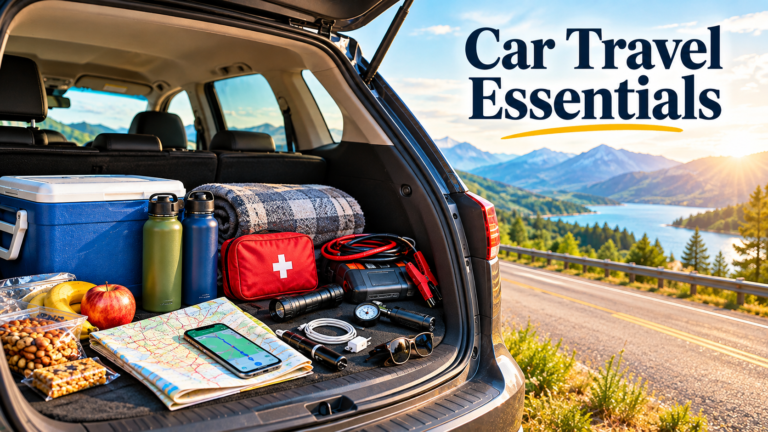
Your emergency planning might include:
- Emergency contact information
- Basic first-aid supplies
- Phone charger
- Flashlight
- Water
- Basic roadside equipment
- Vehicle documents
- Insurance information
- Some extra money
You should also know what you would do if your vehicle breaks down.
Before leaving, save the relevant roadside-assistance contact information and understand what services your vehicle insurance or roadside plan provides.
Keep Important Travel Documents Accessible
Don’t bury important documents underneath your luggage.
Depending on your trip, you may need:
- Driver’s license
- Vehicle registration
- Insurance documents
- Hotel reservations
- Attraction tickets
- Rental car information
- Identification documents
Keep digital copies where practical, but don’t rely entirely on your phone if you may lose connectivity or battery power.
Plan Fuel Stops Around Your Route
Waiting until your fuel gauge is nearly empty isn’t always a good strategy, particularly on long stretches of road.
Before entering a remote area, check where your next reliable fuel opportunities are located.
A simple approach is:
Current fuel level → next major fuel station → destination/next stop
You don’t need to stop every time you see a gas station. You simply want to avoid turning a routine fuel stop into an emergency.
Leave Room for Flexibility
One of the best road trip planning tips is to avoid overplanning.
If your schedule says:
- 8:00 AM departure
- 8:47 AM coffee
- 9:32 AM fuel
- 10:15 AM viewpoint
- 11:04 AM lunch
you may spend more time watching the clock than enjoying the trip.
Instead, establish a few important milestones and leave room between them.
For example:
Morning: Drive toward destination
Late morning: Fuel/rest stop
Afternoon: Lunch + optional sightseeing
Evening: Hotel check-in
This gives you a plan without making every minute mandatory.
Common Road Trip Planning Mistakes
1. Planning Only the Outbound Journey
If you’re returning by car, remember to include the return distance and fuel.
2. Underestimating Breaks
A navigation app’s driving estimate doesn’t include every stop you will make.
3. Ignoring Tolls and Parking
Small charges can become significant over a long trip.
4. Booking Every Night Too Early
A highly rigid itinerary can become difficult when weather, traffic, or personal plans change.
5. Forgetting Vehicle Preparation
A road trip is not the best time to discover that your tires, battery, or maintenance are overdue.
6. Leaving No Emergency Buffer
Don’t spend your entire planned budget before the trip even begins.
7. Trying to Cover Too Much
More destinations aren’t always better if you spend most of the trip rushing between them.
8. Treating Estimated Costs as Guaranteed
Fuel prices, hotels, food, parking, tolls, and activities can change by location and date.
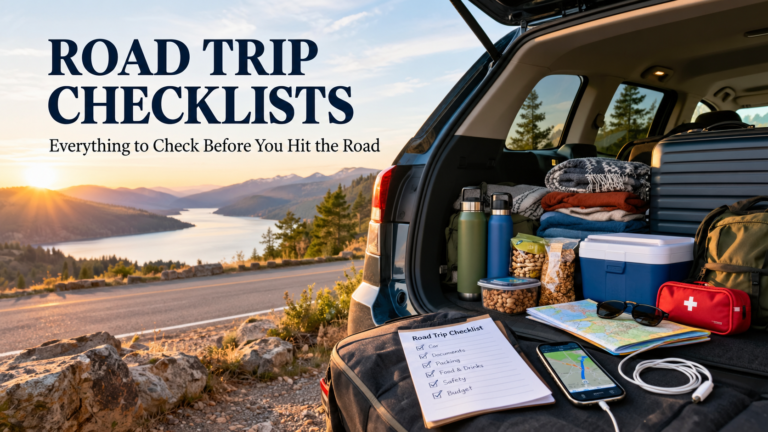
A Simple Road Trip Planning Checklist
Use this checklist before departure.
Route
- Confirm starting point and destination
- Check total distance
- Review major roads
- Identify alternative routes
- Check toll roads
Schedule
- Estimate daily driving distance
- Plan reasonable breaks
- Choose overnight stops
- Leave some flexibility
Fuel
- Check expected fuel economy
- Estimate total mileage
- Calculate fuel requirements
- Check fuel opportunities along the route
- Add some budget flexibility
Money
- Estimate fuel
- Estimate hotels
- Estimate food
- Check tolls
- Plan parking
- Budget activities
- Add an emergency buffer
Vehicle
- Check tires
- Check fluids
- Check lights
- Check brakes
- Check spare tire/repair equipment
- Complete overdue maintenance
Safety and Documents
- Driver’s license
- Registration
- Insurance
- Emergency contacts
- Phone charger
- Basic emergency supplies
Frequently Asked Questions
How far in advance should I plan a road trip?
For a simple domestic road trip, basic planning can often be done several weeks ahead. Longer trips, popular destinations, holidays, and trips requiring multiple hotel bookings may benefit from earlier planning.
How do I calculate the total cost of a road trip?
Add your estimated fuel, accommodation, food, tolls, parking, activities, and other planned expenses. Then add an emergency buffer so an unexpected expense doesn’t completely disrupt your budget.
Should I plan every stop on a road trip?
No. It’s useful to identify important fuel, food, rest, and overnight stops, but leaving some flexibility makes the trip easier to manage.
How much driving should I do per day?
There isn’t one appropriate number for every traveler. Consider your experience, road conditions, weather, passengers, planned sightseeing, and how much time you need for breaks.
Is it better to book hotels in advance?
Booking ahead can make sense when traveling during busy periods or when you need a specific location. For flexible trips, leaving some nights open may provide more freedom, but availability and prices can vary.
Should I calculate fuel for the return trip?
Yes, if you’re driving back to your starting point. Calculate the total distance for the complete driving itinerary rather than only the outbound journey.
How much emergency money should I bring?
There isn’t a universal amount because vehicle type, trip length, destination, and personal circumstances vary. The important point is to keep a separate buffer rather than allocating every dollar of your planned budget to normal expenses.
What should I check on my car before a road trip?
At minimum, check tire condition and pressure, fluids, lights, brakes, wipers, battery condition, and your spare tire or tire-repair equipment. If maintenance is due, consider completing it before departure.
Final Thoughts
Good road trip planning isn’t about creating a perfect schedule. It’s about knowing your major costs, understanding the route, allowing enough time, preparing your vehicle, and leaving room for things you can’t predict.
Start by calculating your total distance and realistic driving time. Then plan fuel stops, accommodation, food, activities, and an emergency buffer.
The best Road Trip Planning Guides should make your trip feel easier—not more complicated. A simple plan gives you the structure you need while still leaving room to take an unexpected scenic detour, enjoy a long lunch, or simply slow down when the road calls for it.