 DriveQuest
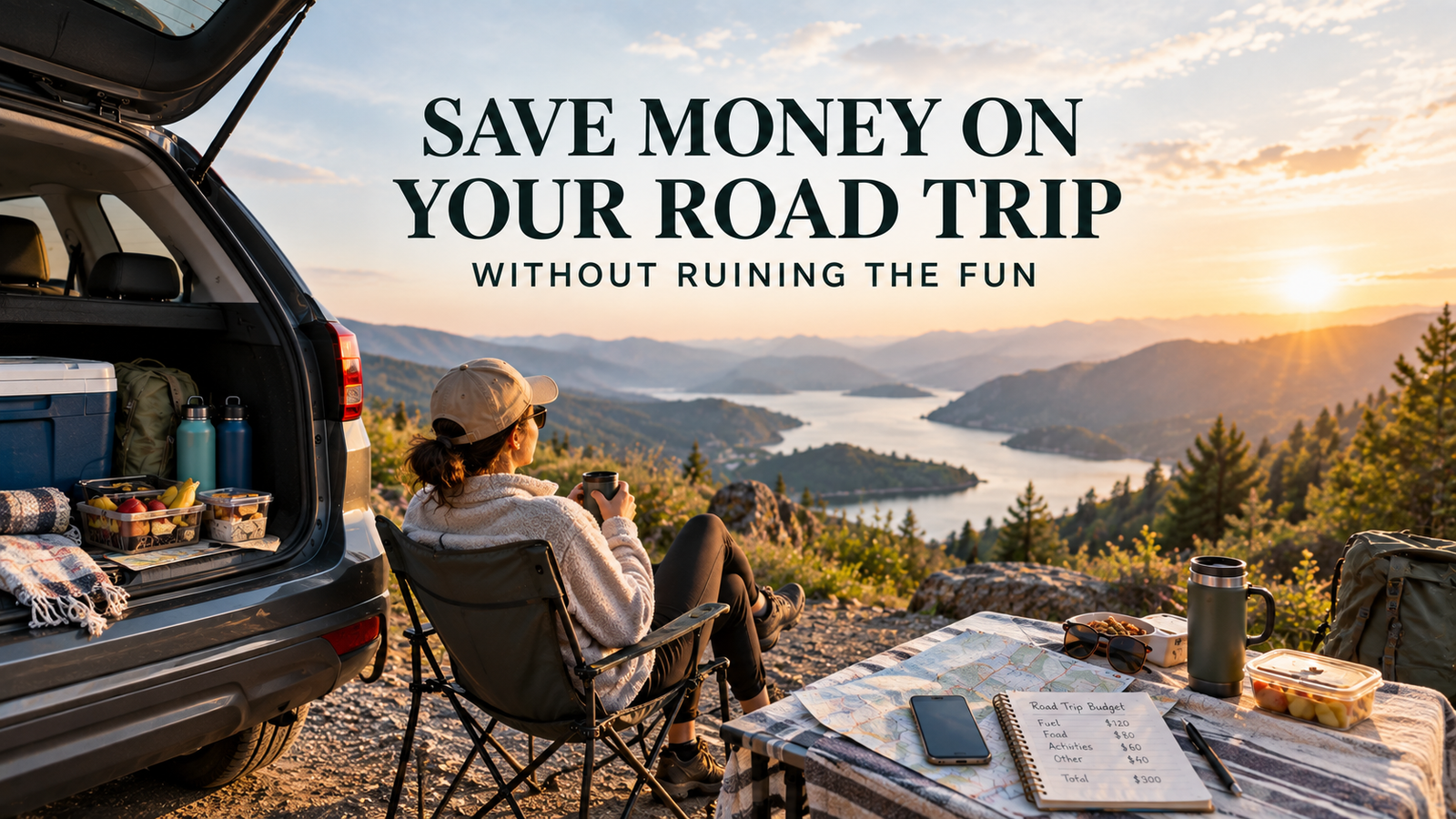
How to Save Money on a Road Trip Without Ruining the Fun
A road trip can be one of the most enjoyable ways to travel, but the costs can quietly pile up. Fuel, hotels, restaurant meals, parking, tolls, attractions, and unexpected car expenses can turn a carefully planned trip into an expensive one.
The good news is that saving money on a road trip doesn’t mean cutting out everything that makes the trip enjoyable. The goal is to spend less on the things that don’t matter much to you and keep your money available for the experiences you actually care about.
In this guide, you’ll learn how to save money on a road trip without making it feel cheap, uncomfortable, or overly restrictive.
The Best Way to Save Money on a Road Trip
Before looking for individual savings, divide your trip into its major spending categories:
- Fuel
- Accommodation
- Food and drinks
- Tolls and parking
- Attractions and activities
- Vehicle costs
- Miscellaneous spending
- Emergency expenses
You don’t need to make every category as cheap as possible. Instead, decide which expenses are worth paying for and where you can reduce unnecessary spending.
For example, you might choose a comfortable hotel after a long driving day but pack breakfast and snacks for the following morning. That can save money without making the trip less enjoyable.
1. Set a Road Trip Budget Before You Leave
One of the easiest ways to overspend is to start driving without knowing how much money you can comfortably spend.
Create a simple budget before departure.
| Expense | Example Budget |
|---|---|
| Fuel | $180 |
| Accommodation | $360 |
| Food | $240 |
| Tolls & parking | $80 |
| Activities | $150 |
| Miscellaneous | $75 |
| Emergency buffer | $150 |
| Total | $1,235 |
These are illustrative numbers, not universal prices. Your actual costs will depend on your route, vehicle, travel dates, accommodation choices, number of travelers, and spending habits.
A useful approach is to create three numbers:
- Expected budget — what you realistically expect to spend.
- Comfortable maximum — an amount you’re willing to spend without financial stress.
- Emergency reserve — money you don’t plan to spend unless something unexpected happens.
That gives you flexibility instead of forcing you to track every dollar.
2. Calculate Fuel Costs Before Your Trip
Fuel is often one of the largest road trip expenses, so estimating it before leaving can make your budget much more realistic.
The basic formula is:
Fuel needed = Total miles ÷ Vehicle MPG
Then:
Fuel cost = Fuel needed × Fuel price per gallon
Example
Suppose your road trip covers 900 miles, your vehicle averages 30 MPG, and the fuel price you use for planning is $3.50 per gallon.
Fuel needed:
900 ÷ 30 = 30 gallons
Estimated fuel cost:
30 × $3.50 = $105
So you’d budget about $105 for fuel under those assumptions.
Remember that your actual MPG may be lower than the vehicle’s advertised figure because of traffic, hills, weather, heavy luggage, driving speed, and frequent stops. Fuel prices also vary considerably by location and date.
For a more realistic budget, consider adding some extra mileage for local driving and detours.
3. Compare Fuel Prices Along Your Route
You don’t need to drive miles out of your way to find the absolute cheapest gas station.
Instead, check fuel prices along your planned route and look for reasonably priced stations near places where you already expect to stop.
A small difference can add up on a long trip.
For example, if you purchase 25 gallons:
- At $3.50 per gallon = $87.50
- At $3.25 per gallon = $81.25
The difference is $6.25.
That’s useful, but it probably isn’t worth taking a 20-minute detour that burns extra fuel and wastes travel time.
The cheapest fuel isn’t always the cheapest choice overall.
4. Pack Snacks and a Few Simple Meals
Food can become a surprisingly large road trip expense because it’s easy to buy something every time you stop.
You don’t have to pack every meal. A better strategy is to bring inexpensive basics such as:
- Water
- Fruit
- Granola bars
- Sandwiches
- Nuts
- Crackers
- Simple breakfast foods
- Coffee or tea supplies where practical
Then choose a few meals to enjoy at restaurants or local spots.
This creates a good balance: you save money on routine food while still having room in the budget for meals that are part of the travel experience.
5. Don’t Try to Make Every Meal Cheap
Saving money doesn’t mean eating the cheapest possible food throughout the trip.
If trying a local restaurant is something you’re genuinely excited about, budget for it.
Instead, reduce spending on meals that aren’t particularly memorable.
For example:
Save on:
- Airport-style or highway convenience food
- Expensive bottled drinks
- Unplanned snacks at every stop
- Restaurant breakfasts when a simple breakfast is available
Spend on:
- A restaurant you’ve specifically wanted to visit
- A memorable local meal
- A special dinner at your destination
Think of it as choosing where your food budget matters most.
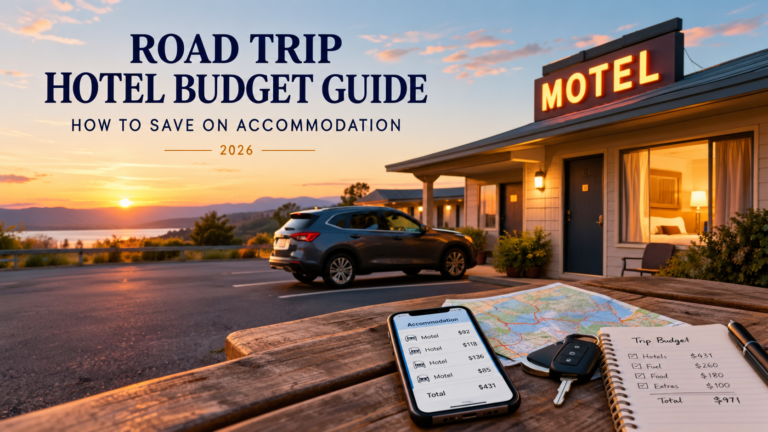
6. Save Money on Accommodation Without Choosing the Worst Hotel
Hotels can consume a large part of a road trip budget, especially when you’re traveling for several nights.
You can often reduce accommodation costs by being strategic rather than simply choosing the cheapest property.
Consider:
- Comparing several nearby towns
- Staying slightly outside expensive tourist areas
- Booking earlier when practical
- Looking for properties that include useful amenities
- Avoiding unnecessary room upgrades
- Checking the total price rather than just the advertised nightly rate
A cheaper room isn’t necessarily cheaper if it adds expensive parking, resort fees, or other charges.
Consider Location Carefully
Sometimes staying 10–20 minutes outside a popular destination can significantly change your accommodation options.
But calculate the extra driving first.
If a cheaper hotel requires a long daily detour, the additional fuel, time, and parking may reduce or eliminate the savings.
7. Use Free and Low-Cost Attractions
You don’t need an expensive attraction every day to have a great road trip.
Look for experiences such as:
- Scenic viewpoints
- Beaches
- Parks
- Walking trails
- Historic districts
- Public markets
- Free museums or community events
- Scenic drives
- Local neighborhoods
- Sunrise or sunset viewpoints
The important thing is to research access rules, opening hours, parking requirements, and any current fees before visiting.
One paid attraction you genuinely care about can be more satisfying than several expensive activities chosen simply because they’re available.
8. Plan Your Route to Avoid Expensive Detours
A route that looks interesting on a map can become expensive if it adds hundreds of unnecessary miles.
Before leaving, identify:
- Major destinations
- Overnight stops
- Fuel stops
- Grocery stops
- Attractions
- Rest areas
- Potential detours
Try to group nearby activities together.
For example, visiting three attractions in the same area on one day is generally more efficient than driving back and forth between them on separate days.
This saves fuel while also giving you more time to enjoy the destination.
9. Don’t Automatically Avoid Every Toll Road
Toll roads can add to your budget, but avoiding every toll isn’t always the cheapest strategy.
Suppose a toll route costs $12 but saves 70 miles.
If your vehicle gets 25 MPG and fuel costs $3.50 per gallon:
70 ÷ 25 = 2.8 gallons
2.8 × $3.50 = $9.80
The toll route would cost approximately $12 in tolls plus the fuel used for the shorter journey, while the toll-free route could require about $9.80 more in fuel alone.
The difference isn’t huge, and the toll route may also save time.
The point isn’t that toll roads are always better. Compare the toll, additional mileage, fuel consumption, and travel time before choosing.
10. Keep Your Tires Properly Inflated
Before a long road trip, check your tire pressure against the vehicle manufacturer’s recommended pressure.
Underinflated tires can affect vehicle handling and fuel efficiency, while incorrect tire pressure can also contribute to uneven tire wear.
Don’t use the maximum pressure printed on the tire sidewall as a substitute for the vehicle manufacturer’s recommended pressure.
Also check:
- Tire condition
- Spare tire
- Engine oil
- Coolant
- Windshield washer fluid
- Lights
- Wipers
- Battery condition
A few minutes of preparation can help you avoid turning a small vehicle issue into a major travel expense.
11. Avoid Aggressive Driving
Rapid acceleration, unnecessary speeding, and frequent hard braking can increase fuel consumption and make driving more stressful.
Instead:
- Accelerate smoothly
- Maintain a steady speed where conditions allow
- Avoid unnecessary idling
- Anticipate traffic
- Use cruise control when appropriate and safe
Don’t sacrifice safety to save fuel. Arriving safely is more important than squeezing a few extra miles from every gallon.
12. Set a Daily Spending Limit
A daily spending limit can make budgeting much easier.
Suppose you have $500 available for discretionary spending over a five-day road trip.
That’s an average of:
$500 ÷ 5 = $100 per day
You don’t have to spend exactly $100 every day.
You might spend $60 one day and $140 the next because of a special activity. The average simply gives you a reference point.
This works particularly well for food, activities, shopping, and miscellaneous purchases.
13. Bring Reusable Water Bottles
Buying drinks repeatedly at gas stations and convenience stores can quietly increase your spending.
Bring reusable bottles and refill them where safe and practical.
You can also pack a small cooler for cold drinks and perishable foods when appropriate.
It’s a simple change, but it can reduce the number of small purchases that happen almost automatically during a long drive.
14. Give Yourself a “Fun Money” Budget
One of the biggest mistakes in trying to save money is making the budget so restrictive that the trip stops being enjoyable.
Instead, create a dedicated fun money category.
For example:
| Category | Example Amount |
|---|---|
| Fuel | $200 |
| Hotels | $400 |
| Food | $250 |
| Tolls & parking | $75 |
| Fun money | $150 |
| Emergency reserve | $150 |
| Total | $1,225 |
The fun-money amount is intentionally available for things like souvenirs, an unexpected attraction, a nice meal, or another experience.
When that money is built into the plan, you don’t have to feel guilty about spending it.
15. Use a Simple “Worth It?” Test Before Spending
When you’re tempted by an unplanned purchase, ask:
“Will I still be glad I spent this money after the trip?”
If the answer is yes, it may be worth including.
If you’re only buying something because you’re tired, bored, hungry, or surrounded by other tourists buying it, waiting a few minutes can help.
This doesn’t mean saying no to everything. It simply creates a pause between the impulse and the purchase.
16. Leave Room for Unexpected Costs
Even a well-planned road trip can have surprises.
You might need:
- An unexpected hotel night
- A replacement item
- A minor vehicle repair
- Extra fuel because of a detour
- Unexpected parking
- A change caused by weather
- Additional food or accommodation
That’s why your entire budget shouldn’t be allocated to planned expenses.
A dedicated emergency buffer gives you breathing room.
The right amount depends on your overall trip budget, vehicle, destination, and personal financial situation. The important part is having some money reserved specifically for things you didn’t plan for.
A Simple Road Trip Savings Strategy
If you want a straightforward system, use these five steps.
Step 1: Calculate Your Mileage
Estimate the total distance, including reasonable local driving.
Step 2: Estimate Fuel
Use:
Total miles ÷ MPG × fuel price = estimated fuel cost
Step 3: Price the Major Expenses
Estimate:
- Accommodation
- Food
- Tolls
- Parking
- Activities
Step 4: Decide What Matters Most
Choose the experiences you’re willing to spend money on.
Step 5: Add a Buffer
Keep money available for unexpected costs instead of spending your entire budget before departure.
Sample Road Trip Budget
Here’s an example for a hypothetical 1,000-mile road trip.
Assume the vehicle averages 28 MPG and you’re using $3.50 per gallon as a planning assumption.
Fuel required:
1,000 ÷ 28 ≈ 35.7 gallons
Estimated fuel cost:
35.7 × $3.50 ≈ $124.95
A sample budget could look like this:
| Expense | Example Cost |
|---|---|
| Fuel | $125 |
| Accommodation | $400 |
| Food | $250 |
| Tolls & parking | $80 |
| Activities | $150 |
| Miscellaneous | $75 |
| Emergency buffer | $150 |
| Estimated total | $1,230 |
These figures are examples for demonstrating the budgeting process, not a prediction of what your trip will cost.
If your vehicle gets 20 MPG instead of 28 MPG, or your accommodation costs twice as much, the total will change significantly.
What Not to Cut From Your Road Trip Budget
Some expenses are worth protecting even when you’re trying to save.
Don’t cut corners on:
- Safe vehicle maintenance
- Necessary repairs
- Appropriate tires
- Safe accommodation
- Required insurance
- Emergency funds
- Reasonable rest breaks
- Food and water
- Safety equipment
A cheaper road trip isn’t a successful road trip if you’re creating unnecessary safety risks.
Common Road Trip Money Mistakes
Budgeting Only for Fuel
Fuel may be easy to calculate, but hotels, food, parking, tolls, and activities can make up a much larger portion of the final bill.
Forgetting Local Driving
Your destination mileage isn’t necessarily your total mileage. Add the driving you’ll do after arriving.
Spending Because You’re “On Vacation”
Small purchases can add up quickly when repeated every day.
Choosing the Cheapest Hotel Automatically
A low nightly rate doesn’t tell you the complete cost. Consider parking, taxes, location, transportation, and other fees.
Having No Emergency Buffer
If every dollar is assigned to planned expenses, one unexpected problem can disrupt the entire trip.
Driving Too Far to Save a Few Dollars
A long detour for slightly cheaper fuel may cost more in fuel and time than it saves.
Cutting Out All the Fun
A budget that doesn’t allow any enjoyable spending can make the trip feel restrictive.
The better strategy is to spend intentionally rather than simply spend less.
How to Save Money on a Road Trip Without Ruining the Fun
The easiest way to save money on a road trip is not to eliminate everything enjoyable. It’s to identify the expenses that don’t add much value and redirect that money toward experiences you actually care about.
Pack some food, compare accommodation options, plan your fuel stops, combine activities, avoid unnecessary detours, and track your major expenses.
At the same time, leave room for a great meal, a memorable attraction, or an unexpected experience.
That’s the balance that makes a road trip budget work: save where you won’t notice the difference and spend where you will.
FAQs
Final Thoughts
How to save money on a road trip without ruining the fun comes down to making deliberate choices, not turning your vacation into a strict spending challenge.
Start by calculating your mileage and fuel cost. Then estimate accommodation, food, tolls, parking, activities, and miscellaneous expenses. Add an emergency buffer and set aside some money specifically for fun.
Before you leave, make one final check of your route and vehicle. A realistic budget gives you something even more valuable than savings: the freedom to enjoy the trip without constantly wondering whether you’ve spent too much.