 DriveQuest

Road Trip Route Planner: How to Choose the Best Route
Planning a road trip is about more than choosing a destination and pressing “Start” on your navigation app.
The route you choose can affect your driving time, fuel costs, tolls, rest stops, hotel needs, meals, and overall stress. A slightly longer route may be worth it if it offers better roads, useful stops, or a more comfortable driving schedule.
A good road trip route planner helps you look at the entire journey before you leave, so you can choose a route that actually fits your vehicle, budget, schedule, and travel style.
In this guide, you’ll learn how to compare routes, calculate realistic driving time, plan fuel and food stops, handle overnight stays, and avoid common route-planning mistakes.
What Is a Road Trip Route Planner?
A road trip route planner is a tool or planning method that helps you organize your journey from one location to another.
Instead of looking only at the fastest route, you can compare factors such as:
- Total distance
- Estimated driving time
- Highway and local-road sections
- Toll roads
- Fuel stops
- Rest areas
- Food stops
- Hotels
- Attractions
- Weather conditions
- Road conditions
- Scenic detours
- Charging stations for electric vehicles
- Overnight stopping points
Navigation apps are useful for getting directions, but effective road trip planning goes one step further.
You want to know why you are choosing a particular route and whether that route makes sense for your actual trip.
Road Trip Route Planner: How to Choose the Best Route
There isn’t one perfect route for every traveler.
The best route depends on what matters most to you. A solo traveler trying to reach a destination quickly may choose differently from a family that wants frequent breaks and comfortable overnight stops.
Before selecting your route, consider these five basic questions:
- How far do I need to drive?
- How much time do I have?
- What is my realistic daily driving limit?
- What will the route cost?
- Where do I need to stop?
Answering these questions first makes route planning much easier.
1. Start With Your Total Distance
The first step is determining the approximate distance between your starting point and destination.
For a round trip, don’t forget to account for both directions.
Simple example
Suppose your destination is 450 miles away.
Your basic round-trip distance would be:
450 miles × 2 = 900 miles
If you add a few local drives, sightseeing stops, or detours, your actual mileage could be higher.
For example:
| Driving | Estimated Distance |
|---|---|
| Home to destination | 450 miles |
| Local driving | 100 miles |
| Destination to home | 450 miles |
| Estimated total | 1,000 miles |
This is why using only the distance between your home and destination can result in an inaccurate trip plan.
2. Compare More Than the Fastest Route
The fastest route isn’t automatically the best route.
When using a road trip route planner, compare at least two or three reasonable options when available.
Look at:
- Distance
- Driving time
- Toll costs
- Number of major stops
- Road quality
- Mountain or difficult driving sections
- Traffic-prone areas
- Fuel availability
- Hotel availability
- Weather exposure
- Scenic value
For example, imagine you have these two options:
| Route | Distance | Estimated Drive | Tolls | Main Benefit |
|---|---|---|---|---|
| Route A | 500 miles | 7 hr 30 min | $25 | Faster |
| Route B | 535 miles | 8 hr 15 min | $5 | Lower toll cost |
Route A saves 45 minutes but costs more in tolls.
Route B adds distance but may be more attractive if you want to reduce toll expenses.
There is no universal right answer. The important thing is understanding the trade-off before you leave.
3. Decide How Many Hours You Actually Want to Drive
One of the easiest route-planning mistakes is creating a schedule based on maximum driving time instead of comfortable driving time.
A navigation app might estimate that you can drive a route in eight hours. That doesn’t necessarily mean you should plan your entire day around eight hours behind the wheel.
You may also need time for:
- Fuel
- Bathroom breaks
- Meals
- Stretching
- Traffic
- Parking
- Unexpected delays
- Vehicle checks
- Short rest periods
If your route shows eight hours of driving, your actual travel day could take considerably longer.
A better approach
Start with the number of hours you are comfortable driving in one day.
Then build stops around that limit.
For example:
Day 1
- 7:00 AM — Depart
- 9:00 AM — Fuel and rest
- 11:30 AM — Lunch
- 2:00 PM — Short break
- 4:00 PM — Hotel or overnight destination
This gives you a much more realistic schedule than assuming you’ll drive continuously.
4. Build Your Route Around Important Stops
Your route should include more than your starting point and final destination.
Think about where you’ll need to stop along the way.
Useful planned stops can include:
- Fuel stations
- Rest areas
- Grocery stores
- Restaurants
- Hotels
- Scenic viewpoints
- Attractions
- EV charging stations
- Medical facilities
- Vehicle service locations
You don’t have to schedule every minute.
Instead, identify the important stopping points so you’re not searching for everything at the last minute.
5. Plan Fuel Stops Before You Leave
Fuel planning is an important part of route planning because gas stations aren’t equally convenient everywhere.
Your vehicle’s fuel economy also affects how often you’ll need to stop.
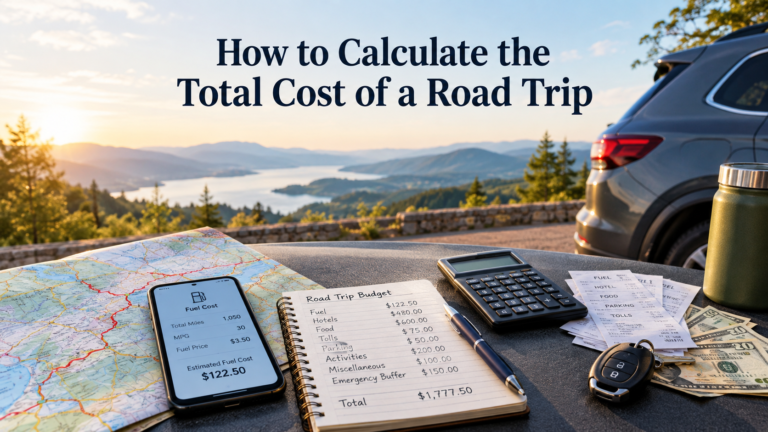
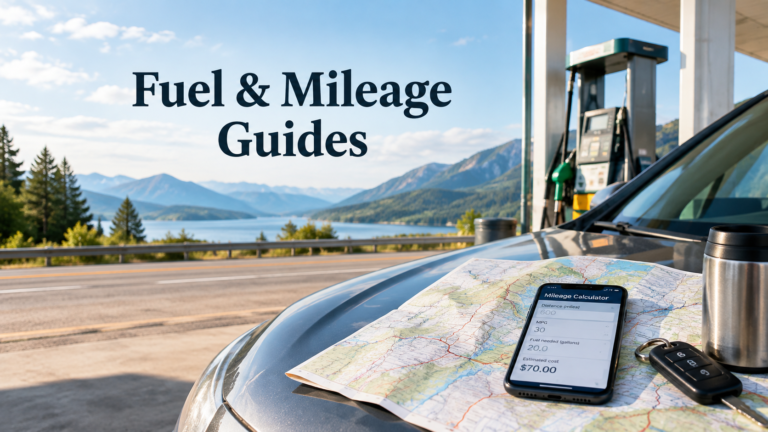
For example, suppose your vehicle gets 30 MPG and you expect to drive 900 miles.
The estimated fuel required is:
900 ÷ 30 = 30 gallons
If fuel costs $3.50 per gallon, the example fuel cost would be:
30 × $3.50 = $105
This is only an example. Actual fuel prices vary by location and date.
You can also build fuel stops into your route rather than waiting until the fuel gauge is nearly empty.
A practical approach is to identify several fuel options along longer stretches of the journey.
6. Don’t Forget Highway Tolls
A route that looks cheaper because it is shorter may include toll roads.
Before choosing between routes, check whether tolls apply.
Your route comparison might look like this:
| Factor | Route A | Route B |
|---|---|---|
| Distance | 480 miles | 510 miles |
| Driving time | 7 hr 20 min | 7 hr 50 min |
| Tolls | $30 | $5 |
| Fuel | Depends on vehicle | Depends on vehicle |
| Stops | Several | Several |
The extra 30 miles may or may not matter to you.
If avoiding tolls is important, Route B could fit your priorities better. If saving time matters more, Route A may be more convenient.
The key is to compare the total trip impact, not distance alone.
7. Plan Overnight Stops for Long Road Trips
For a multi-day road trip, your overnight location can make a major difference.
Don’t simply choose a hotel because it happens to appear near the end of your driving day.
Think about what you need the next morning.
A useful overnight stop should ideally:
- Keep the next day’s drive manageable
- Have convenient fuel options
- Have food nearby
- Offer suitable accommodation
- Avoid creating a large backtrack
- Leave you reasonably positioned for the next destination
Example
Suppose your destination is 1,200 miles away.
Trying to drive the entire distance in one day may create an exhausting schedule.
Instead, you might divide it into three days:
| Day | Approx. Driving |
|---|---|
| Day 1 | 400 miles |
| Day 2 | 400 miles |
| Day 3 | 400 miles |
The exact distances should depend on your preferred driving schedule, road conditions, stops, and personal circumstances.
8. Consider Scenic Routes Carefully
Sometimes the shortest route isn’t the most enjoyable route.
A scenic road can make the trip itself part of the experience.
However, scenic detours can also add:
- Extra mileage
- More fuel consumption
- Additional driving time
- More complicated navigation
- Potentially fewer services
Before adding a detour, ask:
Is the experience worth the additional time and cost for this particular trip?
If the answer is yes, include it intentionally rather than discovering the detour accidentally.
9. Check Weather and Road Conditions
A route that looks ideal on a map can become much less convenient when conditions change.
Before departure, check current forecasts and road conditions for the areas you’ll travel through.
Pay particular attention to:
- Heavy rain
- Snow or ice
- Strong winds
- Flooding
- Mountain roads
- Construction
- Major traffic disruptions
For longer trips, check conditions again during the journey.
Weather can change your practical route even when the original plan looked perfect.
10. Leave Room for Unexpected Delays
A road trip route planner should help you create a plan, not lock you into a rigid schedule.
Unexpected delays happen.
You could encounter:
- Traffic
- Road construction
- Longer fuel stops
- Restaurant delays
- Vehicle problems
- Weather
- Difficulty finding parking
- Unplanned sightseeing opportunities
Instead of scheduling every minute, leave some flexibility.
A route that gives you 30–60 minutes of breathing room can be easier to manage than one where a small delay causes the entire schedule to fall apart.
11. Think About Your Vehicle
The best route for a small fuel-efficient car may not be the same as the best route for a large SUV, camper, or electric vehicle.
Consider:
- Fuel economy
- Fuel tank capacity
- Tire condition
- Vehicle size
- Ground clearance
- Cargo load
- Charging requirements
- Passenger comfort
If you’re driving an EV, charging locations become an important part of route planning.
Don’t simply look at the total distance. Make sure charging opportunities fit within the vehicle’s practical range and your planned stops.
12. Plan Food and Rest Stops
Food is another part of route planning that is easy to underestimate.
You don’t need to reserve every meal in advance, but having a rough plan can prevent unnecessary spending and delays.
Consider carrying:
- Water
- Snacks
- Simple meals
- Coffee or drinks
- Basic emergency food
You can also identify affordable grocery stores or restaurants along your route.
For families, planned food stops can be especially useful because everyone may have different needs and schedules.
13. Use a Route With Realistic Daily Targets
A common mistake is dividing a long journey into equal distances without considering the actual roads.
For example, two 350-mile days aren’t necessarily equal.
One day might involve mostly highways with frequent services.
Another might include:
- Mountain roads
- Heavy traffic
- Construction
- Small towns
- Fewer fuel stations
- Frequent stops
So don’t plan only by mileage.
Consider distance + driving time + road conditions + planned stops.
14. Keep a Backup Route
You don’t need a complete second itinerary, but having a backup plan is smart.
Know:
- An alternate major highway
- Possible overnight towns
- Additional fuel stops
- Nearby hotels
- Another way around major road closures
This is particularly useful on long trips where one unexpected problem could affect several hours of driving.
Common Road Trip Route Planning Mistakes
Planning Only the Fastest Route
The fastest route may have higher tolls, poor stopping options, or an uncomfortable schedule.
Ignoring Return-Trip Planning
A route may work well in one direction but be inconvenient on the return journey because of different timing, traffic, or overnight needs.
Adding Too Many Detours
A few interesting stops can improve a road trip. Too many can turn a manageable journey into an exhausting one.
Forgetting Fuel Stops
Don’t assume you’ll always find a convenient fuel station exactly when you need one.
Making the Schedule Too Tight
A small delay should not destroy your entire itinerary.
Ignoring Weather
A route that works in normal conditions may need adjustment during severe weather.
Choosing Hotels at the Last Minute
During busy travel periods, suitable accommodation may be limited or more expensive.
Focusing Only on Distance
Ten fewer miles doesn’t necessarily mean a better route if the road is slower or has fewer useful services.
A Simple Road Trip Route Planning Checklist
Before leaving, check these items:
- Starting point and destination confirmed
- Total distance estimated
- Round-trip mileage considered
- Main route selected
- Alternate route identified
- Toll roads checked
- Fuel stops identified
- Rest stops planned
- Food stops considered
- Overnight locations selected
- Weather checked
- Road conditions checked
- Vehicle prepared
- Important travel documents ready
- Emergency buffer included
- Navigation available offline if needed
Frequently Asked Questions
Final Thoughts
A good Road Trip Route Planner: How to Choose the Best Route strategy isn’t about finding the route with the smallest number of miles.
It’s about finding a route that balances time, distance, fuel, tolls, stops, comfort, weather, and your actual travel goals.
Before you leave, calculate your total mileage, compare realistic route options, identify fuel and rest stops, plan overnight locations when needed, and leave room for unexpected delays.
The goal isn’t to create a perfect schedule. It’s to create a practical plan that gives you enough structure to stay organized while still allowing the road trip to feel enjoyable.