 DriveQuest
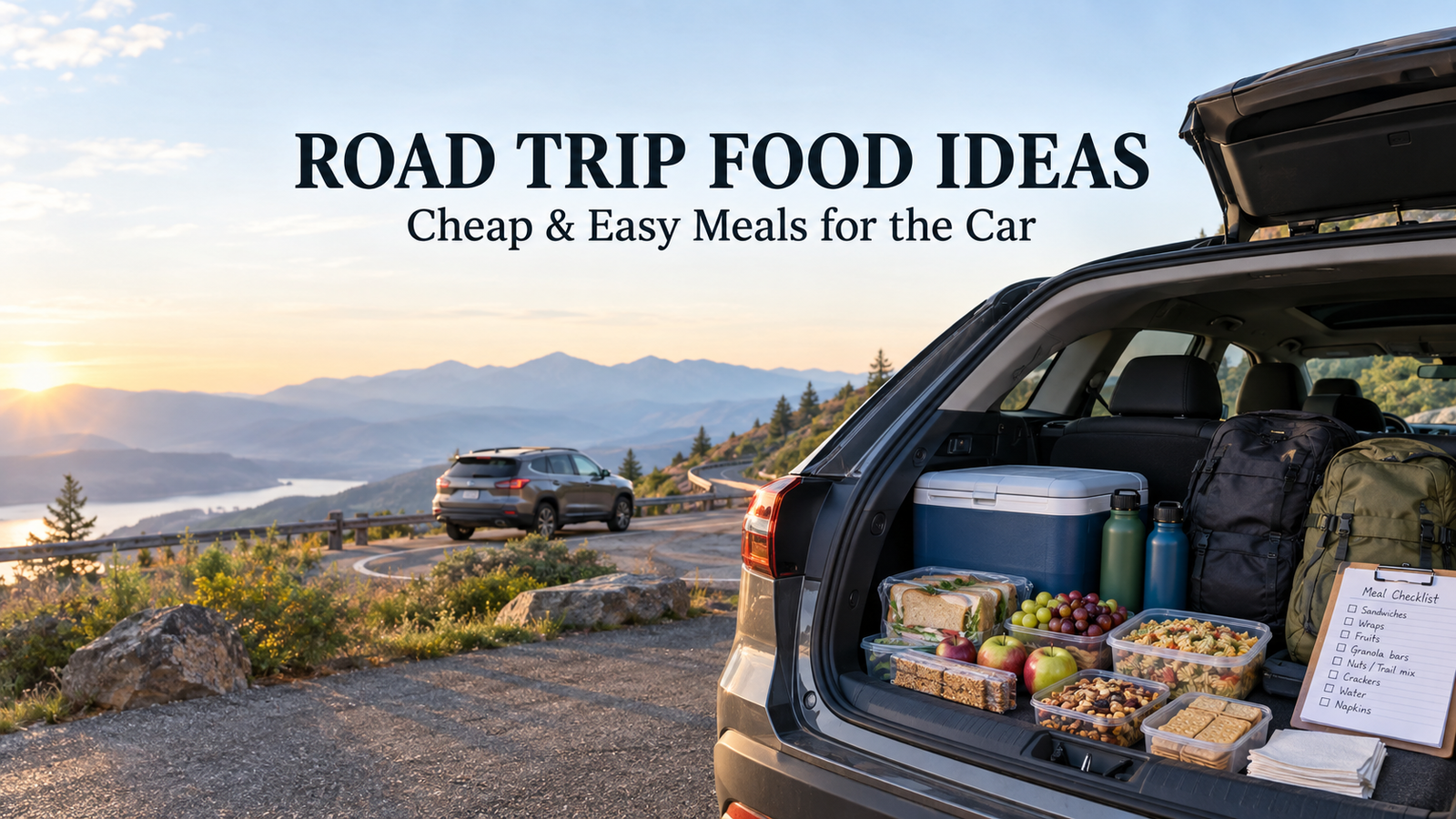
Road Trip Food Ideas: Cheap & Easy Meals for the Car
A road trip can get expensive surprisingly fast when you stop at restaurants, convenience stores, and drive-throughs several times a day. The good news is that you don’t need a complicated cooler setup or a huge meal-prep session to eat well on the road.
With a little planning, you can pack cheap road trip meals, filling snacks, easy car-friendly food, and simple drinks that save money without making your trip feel like a chore.
In this guide, you’ll find practical road trip food ideas for breakfast, lunch, dinner, snacks, drinks, and longer drives, plus tips for keeping food fresh and avoiding common packing mistakes.
Why Pack Your Own Road Trip Food?
Food is one of the easiest road trip expenses to underestimate.
A single restaurant meal may seem reasonable, but buying breakfast, lunch, snacks, coffee, and drinks for several days can add up quickly. Packing at least some of your food gives you more control over what you spend.
It also helps when you’re traveling through areas where restaurants are limited or when everyone gets hungry between planned stops.
The goal isn’t necessarily to bring every meal from home. A practical approach is to pack breakfasts, snacks, drinks, and a few easy meals, then leave room in the budget for restaurants or local food along the route.
Best Road Trip Food Ideas at a Glance
Here’s a simple starting point if you don’t want to overthink your food plan:
| Meal or Food | Easy Option | Why It Works |
|---|---|---|
| Breakfast | Overnight oats | Cheap and filling |
| Breakfast | Muffins + fruit | Easy to grab |
| Lunch | Wraps | Less messy than many sandwiches |
| Lunch | Pasta salad | Good cold meal |
| Dinner | Prepared grain bowls | Easy to portion |
| Snack | Popcorn | Affordable and lightweight |
| Snack | Nuts + dried fruit | No preparation needed |
| Snack | Fresh fruit | Simple and refreshing |
| Drink | Refillable water bottle | Reduces repeated drink purchases |
| Treat | Homemade cookies | Cheaper than frequent convenience-store snacks |
Cheap Road Trip Breakfast Ideas
Breakfast is a great meal to prepare ahead because you can eat it before leaving or during a planned stop.
1. Overnight Oats
Combine oats with milk or yogurt and add fruit, cinnamon, or a small amount of nut butter.
Prepare individual containers before the trip and keep them properly chilled.
2. Homemade Breakfast Muffins
Bake a batch of muffins before leaving.
Banana, blueberry, oat, or apple muffins are easy to portion and can work as a quick breakfast or snack.
3. Peanut Butter and Banana Sandwiches
For a simple option, make sandwiches with peanut butter and banana shortly before eating.
If you’re carrying them for several hours, consider the ingredients you’re using and keep perishable items properly chilled.
4. Hard-Boiled Eggs and Fruit
Hard-boiled eggs can provide a convenient protein-rich breakfast alongside fruit.
Keep eggs refrigerated in a properly chilled cooler and follow safe food-storage practices.
5. Bagels With Simple Toppings
Pack bagels separately and bring toppings such as peanut butter, cream cheese, or jam.
This gives you a quick breakfast without needing cooking equipment.
Easy Road Trip Lunch Ideas
Lunch is where messy food can become especially annoying.
For the car, choose meals that are easy to hold, don’t require complicated preparation, and can be eaten safely during a planned stop.
1. Chicken or Turkey Wraps
Wraps are one of the easiest road trip meals to customize.
Try combinations such as:
- Chicken + lettuce + cheese
- Turkey + cheese + spinach
- Hummus + vegetables
- Tuna + lettuce
- Peanut butter + banana for a simple meat-free option
Keep meat, dairy, and other perishable fillings properly chilled.
2. Pasta Salad
A cold pasta salad can make an inexpensive and filling lunch.
Combine cooked pasta with vegetables, beans, cheese, or another preferred protein. Portion it into individual containers before leaving.
3. Sandwiches
Classic sandwiches remain one of the most practical road trip food ideas.
Keep the ingredients simple to reduce mess. You can also pack bread and fillings separately if you want to prevent sogginess.
4. Hummus and Pita Boxes
Create individual snack-style lunch boxes with:
- Pita bread
- Hummus
- Carrot sticks
- Cucumber
- Bell peppers
- Olives
- Cheese
They’re easy to customize for different travelers.
5. DIY Lunch Boxes
Instead of preparing a traditional meal, build a balanced box from several small foods.
For example:
Lunch box idea:
- Whole-grain crackers
- Cheese
- Grapes
- Turkey slices
- Baby carrots
- A small homemade treat
This works particularly well when different people in the car prefer different foods.
Easy Road Trip Dinner Ideas
Dinner doesn’t have to mean cooking beside the highway.
If you’re staying at a hotel, campground, rental cabin, or another place with suitable food facilities, you can prepare simple meals there.
1. Pre-Made Grain Bowls
Prepare rice, quinoa, or another grain at home and combine it with vegetables and your preferred protein.
Pack individual portions and reheat them where appropriate.
2. Cold Chicken Pasta
Cook pasta and chicken ahead of time and combine them with vegetables and a simple dressing.
Keep the meal chilled and eat it cold or reheat it at your destination if appropriate.
3. Burrito Bowls
Prepare rice, beans, corn, vegetables, and your preferred protein.
Keep toppings such as salsa and cheese separate until you’re ready to eat.
4. Sandwich Dinner
Don’t underestimate a good sandwich.
For a particularly long driving day, sandwiches paired with fruit and vegetables can be a simple dinner when you don’t want to spend extra money at a restaurant.
Cheap Road Trip Snacks That Actually Fill You Up
Snacks can quietly become one of the biggest food expenses on a road trip.
Instead of buying several individual snacks at gas stations, purchase larger packages before leaving and portion them yourself.
Budget-Friendly Snack Ideas
- Popcorn
- Pretzels
- Crackers
- Trail mix
- Nuts
- Dried fruit
- Fresh apples
- Bananas
- Grapes
- Granola bars
- Homemade muffins
- Homemade cookies
- Rice cakes
- Peanut butter packets
- Roasted chickpeas
A combination of carbohydrates, protein, and fiber can make snacks more satisfying than relying only on candy or chips.
Best No-Cook Road Trip Food Ideas
If you don’t want to cook before the trip, you still have plenty of options.
Some easy choices include:
- Peanut butter sandwiches
- Hummus and pita
- Fresh fruit
- Crackers and cheese
- Nuts
- Granola bars
- Ready-to-eat vegetables
- Trail mix
- Tortillas with shelf-stable fillings
- Popcorn
- Dried fruit
The key is to choose food based on your actual travel conditions.
If you won’t have access to refrigeration, prioritize foods that are suitable for storage without refrigeration rather than assuming everything will remain safe in the car.
Road Trip Food for Long Drives
Long driving days require a slightly different strategy.
You don’t want to pack one enormous cooler and then constantly dig through it while you’re trying to organize the trip.
Instead, divide food into categories.
Keep Three Food Groups
1. Easy-access snacks
Keep these somewhere accessible when you’re safely stopped:
- Granola bars
- Crackers
- Nuts
- Fruit
- Popcorn
2. Cooler foods
Use a properly insulated cooler for foods that require refrigeration.
Examples include:
- Yogurt
- Cheese
- Deli meat
- Prepared meals
- Cut vegetables
- Other perishable foods
3. Backup foods
Keep a few longer-lasting foods available in case your plans change.
Examples include:
- Peanut butter
- Crackers
- Trail mix
- Dried fruit
- Granola bars
This setup makes it easier to manage food throughout a long trip.
How to Pack Food for a Road Trip
Good packing can make your food much easier to manage.
Step 1: Plan Your Meals
You don’t need a detailed menu for every bite.
Simply decide how many breakfasts, lunches, dinners, and snacks you’ll probably need.
For example, a three-day trip for two people might include:
- 4–6 breakfasts or breakfast portions
- 4–6 lunches
- Several snacks per day
- Drinks
- A small emergency food supply
Your actual quantities will depend on appetite, restaurant plans, and trip length.
Step 2: Portion Everything
Instead of bringing one large bag of trail mix or crackers, divide snacks into smaller containers or reusable bags.
This makes food easier to distribute and reduces the temptation to keep eating directly from a large package.
Step 3: Label Meals
For longer trips, simple labels such as Day 1 Lunch or Day 2 Snacks can save time.
You won’t need to unpack the entire cooler to figure out what should be eaten first.
Step 4: Pack the Cooler Strategically
Put foods that you’ll need first near the top.
Keep frequently accessed drinks separate if possible so the main food cooler doesn’t need to be opened repeatedly.
Use adequate ice or cold packs and monitor food temperatures appropriately.
How Much Can You Save by Packing Road Trip Food?
The exact savings depend heavily on where you travel and what you normally buy.
Here’s a simple hypothetical example.
Suppose two travelers would otherwise spend $25 per person per day on meals and snacks.
For a four-day trip:
$25 × 2 people × 4 days = $200
Now suppose they bring food from home and spend $80 on groceries for the same period.
$200 − $80 = $120
That would represent a potential $120 difference in this example.
These numbers are only an illustration, not a universal road-trip food cost. Restaurant prices, grocery prices, appetite, destination, and the number of meals purchased can change the result considerably.
A Simple Road Trip Food Budget
You can create your own food budget with a basic formula:
Estimated Food Budget = Number of Travelers × Food Budget Per Person Per Day × Number of Days
For example:
| Travelers | Daily Food Budget | Days | Example Total |
|---|---|---|---|
| 1 | $20 | 3 | $60 |
| 2 | $20 | 3 | $120 |
| 4 | $20 | 3 | $240 |
These are sample planning figures, not current average food prices.
If you’re mixing packed meals with restaurants, create separate categories for groceries and restaurant spending.
That gives you a much clearer picture of where your money is going.
What Drinks Should You Pack?
Drinks can be another easy place to overspend.
A reusable water bottle is useful for reducing repeated purchases, provided you have appropriate opportunities to refill it.
Depending on your preferences, you can also bring:
- Water
- Unsweetened tea
- Coffee in a travel mug
- Electrolyte drink mix
- Shelf-stable drinks
Don’t pack more liquid than you can comfortably and safely store.
And remember: hydration is important during long drives, but plan regular stops rather than trying to avoid bathroom breaks.
Road Trip Food Ideas for Families
Traveling with children usually works better when food is familiar, simple, and easy to portion.
Some practical choices include:
- Fruit slices
- Mini sandwiches
- Cheese portions
- Crackers
- Popcorn
- Homemade muffins
- Granola bars
- Yogurt if refrigeration is available
- Small portions of trail mix where appropriate
Pack a few familiar foods rather than relying entirely on finding something suitable at every stop.
It’s also helpful to keep napkins, wipes, disposable bags, and a small trash bag within easy reach.
Road Trip Food Ideas for Two People
For couples or two friends, you can keep things especially simple.
Try preparing a shared food box with:
- Sandwiches or wraps
- Fruit
- Vegetables
- Crackers
- Cheese
- Nuts
- Homemade snacks
- Drinks
You can also split responsibilities.
One person can handle the cooler while the other manages dry snacks and drinks.
Foods to Be Careful With in a Car
Not every food that sounds convenient is actually convenient during a road trip.
Foods can become problematic when they are:
- Extremely messy
- Very greasy
- Difficult to open
- Likely to spill
- Highly perishable
- Strong-smelling
- Difficult to eat safely while stopped
Avoid eating while actively driving. Food preparation, opening containers, and searching through bags are distractions, so use planned stops for meals and snacks.
Common Road Trip Food Mistakes
Packing Too Much
It’s easy to prepare for every possible craving and end up carrying far more food than you need.
Start with your planned meals and add a modest snack buffer.
Forgetting Refrigeration
Perishable food needs appropriate temperature control.
A cooler is not automatically a guarantee that food will remain safe indefinitely. Pack enough cold sources and avoid leaving perishable foods sitting in a hot vehicle.
Buying Everything at Gas Stations
Convenience stores are useful when you need something unexpectedly, but relying on them for every meal can make your food budget harder to control.
Packing Only Junk Food
Treats are completely reasonable on a road trip.
The problem comes when your entire food supply consists of highly snackable foods and you have nothing substantial to eat.
Pack a mixture of meals, fruit, vegetables, snacks, and drinks.
Forgetting Cleanup Supplies
Food is much easier to manage when you have:
- Napkins
- Wet wipes
- Paper towels
- Trash bags
- Reusable containers
- Zip bags
- Utensils
These items take little space and can make a messy situation much easier to handle.
A Simple Road Trip Food Checklist
Before leaving, check that you have:
Meals
- Breakfast items
- Lunches
- Dinner or backup meals
- Simple meal portions
Snacks
- Fresh fruit
- Crackers or pretzels
- Nuts or trail mix
- Granola bars
- A few treats
Drinks
- Water bottles
- Refillable bottles
- Coffee or tea if desired
- Other preferred drinks
Food Storage
- Cooler
- Ice or cold packs
- Reusable containers
- Reusable bags
- Utensils
Cleanup
- Napkins
- Wet wipes
- Paper towels
- Trash bags
Frequently Asked Questions
Final Thoughts
The best road trip food ideas are not necessarily complicated recipes. They’re foods that fit your route, budget, cooler space, appetite, and travel schedule.
For most travelers, a combination of packed breakfasts, easy lunches, affordable snacks, drinks, and a few planned restaurant meals is more practical than trying to prepare every meal yourself.
Before you leave, estimate how many meals you’ll need, make a grocery list, pack perishable foods safely, and leave some room in the budget for unexpected stops.
A little preparation can keep food costs under control while still leaving you plenty of freedom to enjoy the trip.